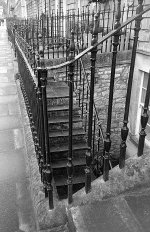
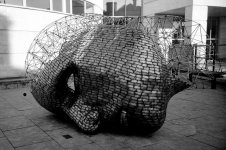
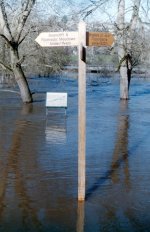
And they say film is dead

I saw this product in the Skymall catalog on a flight once, and it looked interesting. Has anyone used this for scans? Looks like it uses a CCD as if from a digital camera to take pictures of the slides/negative. I used to use a digital camera to take pictures of slides held in a unitary slide viewer, and they didn't turn out half bad (at least for web viewing), so I wouldn't necessarily say this can't work.
 
There is a mini review of this in Amateur Photographer's 16 February issue. They gave it 2 out of 5 stars citing noise, blown highlights, fringing and blooming as problems. The conclusion was that "for quality images, the Photofix Copier [as it is branded here] simply isn't good enough".

Shame really, since a well-executed version of the same idea would be very useful.

Matthew
 
I've sold a few and the customers reported very favourable results - although they just wanted to "digitise" old slides and maybe print 7"x5" occasionally, wanting ease of use mainly.
 
Hmmm, you have me wondering....

Hmmm, you have me wondering....

Peter_Jones said:
I've sold a few and the customers reported very favourable results - although they just wanted to "digitise" old slides and maybe print 7"x5" occasionally, wanting ease of use mainly.

The device looks interesting, but it seems to me that people would more likely want 5"X7" prints. Can't imagine wanting a 7X5.
 
Is it fast? That's my question.. If you can just pop off 5 megapixel images one by one in rapidfire, it'd be great compared to the hours I waste every night scanning my film with a flatbed using a lighted hood.
 
kuzano said:
The device looks interesting, but it seems to me that people would more likely want 5"X7" prints. Can't imagine wanting a 7X5.


😀 Six of one, half-dozen of the other. On the other hand, depends if photo is "portrait" or "landscape" 😉
 
I wonder if you could do the same thing with a DSLR and an old slide-copier. Some of you old guys know what I'm talking about. Hollow metal tube with a frosted slide holder at one end to shove a slide into. Then you photographed it with your color print or B&W film camera. Small loss of detail, usually not that bad. Wouldn't that work for slides (and negs) with a DSLR?
 
It is doable.
I tried with a slide copier (t-mount) in a nikon D70 a while ago.
The only 2 drawibacks I found were:
- "cropping factor" made impossible to copy full frame
- No 120 film

I have seen some slide copier for digicrams for something like $50 in eBay

bmattock said:
I wonder if you could do the same thing with a DSLR and an old slide-copier. Some of you old guys know what I'm talking about. Hollow metal tube with a frosted slide holder at one end to shove a slide into. Then you photographed it with your color print or B&W film camera. Small loss of detail, usually not that bad. Wouldn't that work for slides (and negs) with a DSLR?
 
I'm wondering about the speed as well.

There was a small scanner I saw in the late 90s which connected to the telly, you could then pass a film strip of any length through a slot and it would reverse/remove mask/whatever to show you the positive image in realtime. A super quick way to see which images are worthy of further enlarging/scanning.

Not being photo inclined at all I wondered why my dad's mate had bought such a gimmick but this copier reminded me and I'm thinking that it would be rather handy.

Anyone else remember/owned this? I think it was made by Fuji, Kodak or Agfa - one of the film manufacturers.
 
Last edited:
These units seem to be sold under various names - the one I have is called a veho-vfs001. For slides the results are disappointing - it just doesn't seem to capture the dynamic range of the slide. - I reckon it's a software issue as much as anything because if you use the 'video' capture app which comes with the scanner, then it manages this much better. - The driver doesn't have any colour / contrast control at all, so on images where you have a lot of dark or light, it doesn't do a good job of matching what the image should look like. - For some images it works pretty well though it seems to like a thicker / more contrasty negative than you might normally make.

When I bought this I couldn't find any samples anywhere on the web. - Yes, it is very quick. - You insert the negatives, wait around 5-10 seconds for it to set the levels and then push the button - the capture of the image takes 1 second then a couple more to transfer the image to the pc / invert etc. It's easy to scan a whole roll of 26 in under 30 minutes.

My feeling after running a few films through this thing are that it works best where it can establish a black / white points. If the neg doesn't have this then it struggles... Like a cheap digicam I suppose which is all it really is.

Attached images from scanner.

Pic 1. - Zorki1 - HP5+@400/Ilfosol-s
Pic 2. - LC-A - HP5+@??? / Caffenol test (underdeveloped)
Pic 3. - LC-A - Fomapan 200 / Caffenol test. (overdeveloped)

 

Attachments

  • Pic 1.JPG
    Pic 1.JPG
    113.9 KB · Views: 0
  • Pic 2.JPG
    Pic 2.JPG
    196.3 KB · Views: 0
  • pic 3.JPG
    pic 3.JPG
    140 KB · Views: 0
Couple more pics.

Pic 4. Zorki-1 HP5+@800 / Ilfosol
Pic 4 detail - detail of pic 4
Pic 5 - a colour neg. (not done much colour with it. just a couple of shots)
 

Attachments

  • Pic 4.jpg
    Pic 4.jpg
    143 KB · Views: 0
  • Pic 4_detail.JPG
    Pic 4_detail.JPG
    60.5 KB · Views: 0
  • Pic 5.JPG
    Pic 5.JPG
    117.9 KB · Views: 0
...and for MF negatives ???

...and for MF negatives ???

Hello
I made some experiments in using a flatbed scanner for MF negatives. Some results here
http://public.fotki.com/BlueWind/6x6-negatives---fla/
It certainly can be used, and improved, but I do not recommend it as it takes a lot of time (and patience) and needs a lot of PS work after scanning.
what I need is an Epson V500 (after selling my DiMage Dual scanner IV and my flatbed scanner🙂
Regards
Joao
 
Back
Top Bottom