

squirrel$$$bandit
Veteran
Just saw Moonlight, which I highly recommend to everyone here—it's a great movie, with amazing writing and acting. But the photography is especially terrific. The cinematographer, James Laxton, uses anamorphics throughout, along with one very strange lens that keeps only the middle of the frame in focus, with the top and bottom blurred,— in an almost shift-like effect. It's very evocative.
Here's the trailer.
Anyway. I cannot wrap my brain around why anamorphics render vertically oval highlights. If the in-focus elements of the frame are normally proportioned, why aren't the out-of-focus ones, too? If the highlights are going to be distorted at all, I'd expect the them to be oval horizontally, that is, in response to the lateral stretching of the frame.
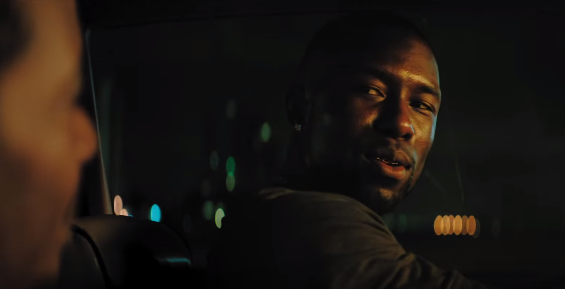
You can kind of see this effect in action when focus in a shot shifts from a background object to one in the foreground; as the foreground comes into focus, the background objects seem to laterally contract.
I understand, broadly speaking, how anamorphics work, but I just can't comprehend why objects at different distances would respond differently to the process. Can anyone explain it in a straightforward way?
Here's the trailer.
Anyway. I cannot wrap my brain around why anamorphics render vertically oval highlights. If the in-focus elements of the frame are normally proportioned, why aren't the out-of-focus ones, too? If the highlights are going to be distorted at all, I'd expect the them to be oval horizontally, that is, in response to the lateral stretching of the frame.
You can kind of see this effect in action when focus in a shot shifts from a background object to one in the foreground; as the foreground comes into focus, the background objects seem to laterally contract.
I understand, broadly speaking, how anamorphics work, but I just can't comprehend why objects at different distances would respond differently to the process. Can anyone explain it in a straightforward way?


