Summar - expected behavior

pschauss

Well-known
Local time
4:40 PM
Joined
Dec 9, 2007
Messages
606
Is this normal behavior for this lens in an extreme lighting situation?
The lens is a 5 cm/f 2.0 Summar (serial number 493xxx) mounted on a FED 1. I used a hood and a 36mm push-on filter (жC-18). Film was Eastman Double-X rated at 650 and developed in Diafine. I shoot quite a bit of this film rated and developed this way and I have not seen such extremely blown highlights.

 

Attachments

  • FED1_Summar_5222_001_small.jpg
    FED1_Summar_5222_001_small.jpg
    145.9 KB · Views: 1
Summar performance can vary considerably depending on the condition of the lens (haze, scratches, internal paint degradation). I did a comparison (link below) of three Summars in varying states and the difference was very obvious. One in good condition doesn't flare as badly as yours, so I'd guess yours has some haze or scratches on the front element (which is very common).

http://www.rangefinderforum.com/forums/showthread.php?t=153052
 
I would suggest carefully examining the front and rear elements, outer surfaces for scratches / cleaning marks, using a flashlight through the lens, and looking into it at an oblique angle.

If the glass is scratched, probably not worth having professionally cleaned.

If there are no or very light scratches, and mostly internal haze. then it might be worth sending for professional cleaning.

LF
 
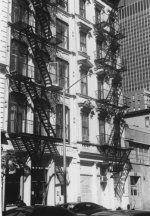
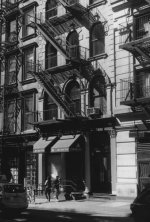
Thanks for the advice. I found that I could remove the front element by simply unscrewing it. There was a good bit of haze on it but no scratches that I could see so I cleaned it with lens cleaner on a microfiber cloth. The results are quite striking, considerably more contrast than I expected for an uncoated lens. (Leica IIIf - Eastman Double-X rated at 650 in Diafine.)
 

Attachments

  • LeicaIIIf_Summar_5222_001_small.jpg
    LeicaIIIf_Summar_5222_001_small.jpg
    140.2 KB · Views: 1
  • LeicaIIIf_Summar_5222_002_small.jpg
    LeicaIIIf_Summar_5222_002_small.jpg
    124.8 KB · Views: 1
  • LeicaIIIf_Summar_5222_003_small.jpg
    LeicaIIIf_Summar_5222_003_small.jpg
    109.3 KB · Views: 1
Your first images definitely look like a slightly hazed up Summar I used to have. Personally, I actually enjoyed the blown-out highlights, as they added a neat "glowing" look that I thought looked awesome. I've had a couple Summars, and when in nice clean condition they actually perform fairly well. With some light cleaning marks and haze, they definitely impart a "vintage" vibe onto the negative.

The Summar is a very cool 50mm lens. If I ever got back into Leica LTM, I'd defintely hunt down another.
 
Hi,

I've a Summar but don't often use it. As I see it, the Summar is for display between the Elmar and the Summitar on the appropriate camera. (It was a good lens when new but not brilliant. They raved about the Summitar which was a big jump forward and came out a couple of years later; probably based on the shortcomings of the Summar and further developments in glass making.)

The glass used in the Summar was "soft" and when badly cleaned could get scratched. I did discus getting it cleaned and repolished and even coated and edge blacked but the expert said it will cost so many hundreds and what's the point?

OTOH, it's uncoated and I was also told it is easy to dismantle and clean and far cheaper to have done. So I left it at that and cleaned it gently and took a picture or two and left it at that.

But, I have had other 30's uncoated lenses cleaned properly and it was well worth the money and dirt cheap. Mostly that was because the camera was sent with it for a repair and the postage on the lens alone (there and back) would have nearly doubled the price of the cleaning.

So in your shoes I'd ask the cost of cleaning, sort out the postage etc and then decide. Judging by the photo's you won't need to do anything else and have done it already.

Regards, David
 
Clear, cleaned and issues free Summar isn't any different from any uncounted lens.
OP picture shows what something in terms of the lens condition needs to be addressed.
Following pictures by OP shows what it was addressed. And in exactly same way I did it once.🙂
 
Jon's excellent photo test mirrors my Summar experiences. A lens w/ issues will readily exhibit them, a clean lens will be just fine. Summars are outstanding when cleaned up, but they need a good hood, like all uncoated lenses. I never owned a coated one and don't really see the need. I think they were just single coated anyway but could be wrong. A yellow filter and hood will boost contrast a bit. They're one of the finest lenses that Leitz ever produced in my opinion.
 
I never owned a coated one and don't really see the need. I think they were just single coated anyway but could be wrong. A yellow filter and hood will boost contrast a bit.

I have both: a very clean uncoated one and a postwar reworked fully coated one, also very clean. The difference of the results is striking. An uncoated Summar flares much more, thus lowering the contrast.

A hood - the FLQOO fits best - is always necessary.

Erik.
 
I had a coated Summar once but it was dreadful. I tried to get it sorted out but it was beyond it and in the end it was sold as unusable for parts.

But - a big but - it looked really good in the photo's but was badly scratched.

I was told that the factory were not the only ones coating them and that it seemed to be a cottage industry at one time.

Regards, David
 
Leica II, factory coated Summar 50mm f/2, Tmax400.

Erik.

10025812326_5ec2aa3b16_c.jpg
 
I had a coated Summar once but it was dreadful. I tried to get it sorted out but it was beyond it and in the end it was sold as unusable for parts.

But - a big but - it looked really good in the photo's but was badly scratched.

I was told that the factory were not the only ones coating them and that it seemed to be a cottage industry at one time.

Regards, David

Ditto. Mine was a 1936. It was a poor example. I should have turned it around and sent it back to the seller, but I persisted and had it professionally cleaned effectively sinking good money after bad. In the end I had to get rid of it at a loss. In the meantime I had a nice example of coated Elmar f3.5 (1946). Excellent lens that goes well with my IIIf.
 
The best Summars are the postwar factory reconditioned and coated ones. With a keen eye you can find them for the same price as the untouched prewar ones.

Erik.

Interesting, Erik!

Do you know from what serial number onwards are coated summars? How do you also know whether the summar lens was factory reconditioned and coated?
 
Interesting, Erik!

Do you know from what serial number onwards are coated summars? How do you also know whether the summar lens was factory reconditioned and coated?

This has nothing to do with serial numbers. After the war Leitz had a service to upgrade and recondition prewar cameras and lenses. You could have your camera upgraded, for instance from a model I into a model III, you could get a synch and you could have your lens coated. See the sticky "Conversion" thread.

Erik.
 
...and a number of other companies would offer the service of coating older lenses. Some of these are very soft coatings, often blueish to look at. From memory the factory coatings are a darker hue.

Careful though, some old lenses build up a sort of oily coloured purply/blue that is not coating but I believe is the result of something like oxidisation? Someone else will give the correct terminology.
 
Careful though, some old lenses build up a sort of oily coloured purply/blue that is not coating but I believe is the result of something like oxidisation? Someone else will give the correct terminology.

Yes, you mean oxidation. This is a kind of "natural" coating, usually only on the outside of the front lens of very old lenses. In fact this improves the performance of the lens, so is best left untouched. This phenomenon inspired the people at Zeiss to invent artificial coating.

Erik.

15858578105_68e2c5af33.jpg
 
Hi,

And if you only do research on the internet you'll get some strange versions of the story, f'instance that it was a military secret but I've a 30's magazine somewhere announcing it and - from memory so beware - saying that the USA and Germany had both developed a version of it.

Regards, David

PS The brown stuff is usually magnesium fluoride, again from memory.
 
Back
Top Bottom