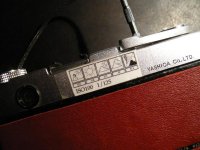
How do you do your picture taking with no meter?

Tikles

Member
Local time
6:21 PM
Joined
Nov 29, 2010
Messages
20
I went through a camera show today and saw lots of interesting vintage cameras. But of course, anything in the 40s, 50s, and probably early 60s had no meter!

Someday I'd like to evolve to a RF of that time period, but in the mean time, I'm curious to how one takes good shots with one without needing a meter or looking at a master chart of the perfect f stop/shutter speed to use.

I remember when I was little lad that extremely basic plastic RFs existed with no settings at all. You just dumped 35mm in it and started snapping everywhere. Do these old RFs have some type of setting for most shots?

I'm not trying to be lazy 😉 but I would like to be able to hand over a camera to my girlfriend at times without having to go through an entire training session.
 
With a meterless camera you either have to use a handheld meter or learn to estimate using Sunny 16. Old camera do not have electronics so they cannot have any "snap" mode or the like. No way around it! Sorry!

During the day, Sunny 16 metering is pretty straightforward. Just take the time to learn it and after a couple years "metering" in your head becomes second nature and you can actually shoot much faster and more efficiently when out taking pictures. I actually prefer meterless cameras and find that light meters throw me off and slow me down. I don't even use a meter for slides anymore.
 
Last edited:
Hi Mike 🙂

with negative film, you don't need a perfect exposure to get an okay print. those plastic P+S cameras are fixed at f/11 and 1/60 or something, so they'll produce reasonably exposed negatives in alot of outdoors conditions.

one of my 'tricks' to meterless shooting is to memorize a few common light situations. for example, on 400 ASA film:

-sunny 16. ex: bright, cloudless day. f/16 and 1/500.
-bright indoors. ex: stores and classrooms. f/2.8 and 1/125.
-regular indoors. ex: bright-ish house. f/2 and 1/60.

your other exposures would be variations of these: mild clouds? open up a stop. heavy rain? open up four (from S-16). dim room? 1/15 and f/1.4...


I'd also reccommend getting a good incident light meter. I've got a Gossen Lunasix, something like that might cost ~$50. you can learn alot by guessing first and then checking with the meter afterwards.


cheers.
 
you could pick up an inexpensive incident meter from eBay. Look at a scene, guess the exposure; then check your guess against the meter. Do this even when not photographing. You will get good at it!
 
you could pick up an inexpensive incident meter from eBay. Look at a scene, guess the exposure; then check your guess against the meter. Do this even when not photographing. You will get good at it!

Dear Rob,

Absolutely.

The only thing I'd add is: if you're not sure, expose generously. A stop or two over won't matter with neg film. A stop or two under will.

Cheers,

R.
 
it's all about a little routine, not difficult at all. in summer you can even shoot slidefilm easily without a meter.
nothing wrong with a handheld meter either.
 
The little exposure table on the inside of the film carton or end tab can be taped to the back of the camera. You, or your girl friend, will soon internalize the information and can then remove it 🙂 .

yours
FPJ
 
Thanks guys for all the responses! Honestly, I have no problem in reading a meter, but I'd like the camera to be easy to use for my GF. Hopefully, I will soon have a Canonet for her, but long term, I've been thinking about something a bit older and more classic looking for the 2 of us. I have a Konica T3N SLR, but have been wondering what all this hooraah about RFs are about. 😉

And the little exposure table is a great idea!
 
Last edited:
A couple options:

Just set the camera for f/11 and 1/60, using ISO400 film. Millions of box cameras and disposable cameras since the beginning of time have used this basic formula, including the disposable cameras on sale today at the convenience store. This exposure is best for outdoors in a no-shadow situation (either in the shade during a sunny day or in the open during an overcast day). When Miles Davis bought an M3, he reportedly had the camera salesperson set the exposure, and never changed it in ten years. (Davis was an accomplished visual artist.)

If you want to get a little more complicated, use TWO exposure settings. One is f/16 and 1/250, the other is f/11 and 1/60 (or f/8 and 1/125 if you want a little more shutter speed). The first is used in bright sunlight outdoors, the other is used outdoors in shade or overcast.

There you go: two settings covers all outdoor shots.

Doesn't seem so complicated now, right? Use print film only.
 
"I'm not trying to be lazy but I would like to be able to hand over a camera to my girlfriend at times without having to go through an entire training session."

Don't buy a camera without a meter. You're not the type. Stay with AE cams you'll be happier.
 
Back
Top Bottom