Developing 20 year old Kodak Tri-X 400

Dave S.

Well-known
Local time
8:12 AM
Joined
Nov 14, 2008
Messages
308
Location
Seattle, WA
I recently came across about 50 feet of Kodak Tri-X 400 bulk load which I bought back on March 2nd 1991 ($40 even + tax 😀), but never finished using. I must have shot half of it and then swapped it out for something else in my bulk loader? It's been kept more or less at room temperature over the years.

Any suggestions about development times or procedures? I'll be using D-76. It's been a long time since I've developed any film so I'm pretty rusty and I'll be using a Rondinax 35 U Daylight Development Tank. It'll be my first time trying the Rondinax - it's all that's left of my old development days (something I never got around to playing with).

Another question is whether it is even worth shooting / developing this film? Is it even possible this film is still good? My plan is to roll up a short 12 frame test roll, but if the consensus is it's rubbish - I just pitch it and buy a new bulk load of something.

Again, any development tips would be appreciated. Thanks!
 
I had a few Tri-x rolls from -80's but unfortunately they were all too fogged. Some experts told me to overexpose two stops and try to develop in shortest time possible. An unopened bulk roll could still be usable but I wouldn't hold my breath. With D-76 I'd use it undiluted and start from four minutes (shot at EI100).
 
Thanks for your input Mablo. It doesn't sound not promising... I think I'll order some Arista Premium 400 from Freestyle and wait for that to arrive before I mix up my developing chemicals.
 
I once exposed and developed a 19 year expired roll of Tri-X. I exposed at box speed bt I don't remember how development was done (probably lab development). In any case, the negatives were very grainy but usable.

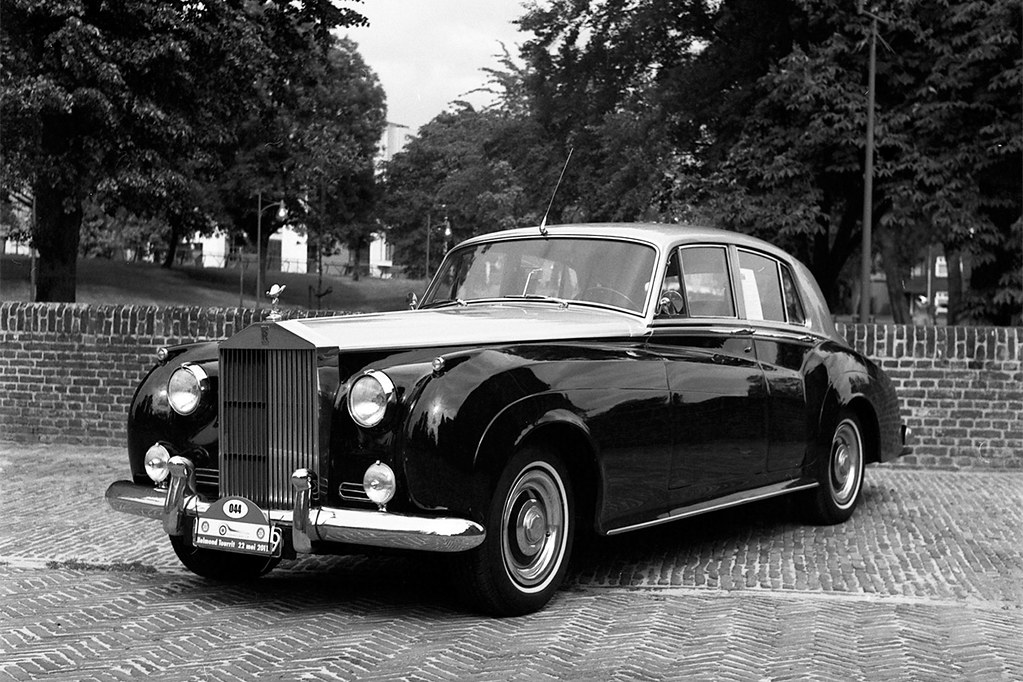
I am currenty working with AGFA APX-100 in 120 that expired in 2002, with a bit of care perfectly usable (see below). As for your Tri-X I would advise using Kodak HC-110 developer and start with a 2 stop push development (develop as if shot @ ISO1600) and work from there. YMMMV but there is something deeply satisfying from getting really good images from expired film. Many people here have done it with film far, far older than yours too.


Rolls Royce, expired APX100 by Ronald_H, on Flickr

Good luck!
 
This is Agfapan 100 (120 roll) dated in -82. Developed in Rodinal 1+25. Funny how the film looks like some dusty canvas and it also felt like canvas when I loaded it.

6803613950_342e15a8c8_c.jpg
 
I have some old Tri-X (TX 5063) from 1996 that I've been testing...I've rated it at 100 asa, develop it in HC-110 (with a Restrainer) and they are very printable...the Restrainer really cleans up the fogging...
 
Thanks for the info Nikon_Sam. My film developing experience is limited, could you tell me what a Restriner is? Also, several people have mentioned HC-110, why would i use this over D-76?
 
Here is where I have bought the Restrainer that I use...Freestyle

HC-110, from what I've read is better at preventing film base fogging...so adding the Restrainer to it makes the most sense to me...
I've done some testing with the Tri-X I have and found that I should rate it at 100 ASA...
You might want to do the same thing...
Set your meter to 100 ASA...read the scene, then bracket your shots +1, +2, +3 then shoot -1, -2 & -3...develop, compare and figure your film speed from there...make sure you take good notes. From this test you can better find the speed that will get the results that best suits your needs.

I have found that this works for me

Water 400ml
HC-110 10ml
Restrainer 3ml
I develop for 14.5 min @ 68*
 
I'd do a clip test, since it was kicking around at room temperature.

I exposed a roll of Tri-X that expired in 1973 that I purchased from ebay where the seller stated it was frozen its whole life.

I shot at 250 ASA and developed in HC-110. I don't recall how I developed it. What I got was a roll of Tri-X that looks like I went back in 1973 and purchased a fresh roll. Amazing. I've got few more rolls left.
 
Back
Top Bottom