Suggestions / advice for new camera

@Sarcophilus Harrisii: thanks for your extensive repsonse!

It has been a while since my last visit here, and I would like to thank you for all your responses!

Meanwhile I got my 2 rolls of 36 shots of slides developed. The shop did a good job: I got a slide projector from my dad and last weekend I displayed them. I was amazed by the quality; they are Agfa precisa 100 rolls, and although all shots are under-exposed, in most shots this is not hindering. Next time, I will add 1 or 2 stops. Shots look 3d, and sharp, and very nice for the eyes. Not sure if this is something subjective or objective, but to me, the slides are incomparable to high resolution printed digital photos. Maybe it is because I like the medium?

There are some drawbacks like putting the slides in the frames which I did myself, I damaged 1 because I used the Hamafix system which I had some difficulties with, so I used gloves and put the slides in the plastic frames by hand rather than the hama tool. Doing it by worked much better for me. I also unintentionally shuffled some slides, so I have to take more care when putting them into frames.

The only drawback of my Minolta camera is it's size: it is fairly big. And it feels cheap and plastic, but it is lightweight which is a plus. I do a lot of bicycle trips and holidays, so a small and compact camera makes sense. So that's why I am wondering if a rangefinder camera is something to consider. Also the idea of having one fast prime lens sounds interesting to me. I like the simplicity of having one focal length although I'm not sure if I will like it, as I always use my zoom lenses.

I'm wondering about your opinions about the idea of buying an analog rangefinder. I feel attracted to a secondhand leica, but maybe I'm just to much into looks and reputation. But I like the idea of a camera which is hand built (?), not far from where I live.

 
@Sarcophilus Harrisii: thanks for your extensive repsonse!

It has been a while since my last visit here, and I would like to thank you for all your responses!

Meanwhile I got my 2 rolls of 36 shots of slides developed. The shop did a good job: I got a slide projector from my dad and last weekend I displayed them. I was amazed by the quality; they are Agfa precisa 100 rolls, and although all shots are under-exposed, in most shots this is not hindering. Next time, I will add 1 or 2 stops. Shots look 3d, and sharp, and very nice for the eyes. Not sure if this is something subjective or objective, but to me, the slides are incomparable to high resolution printed digital photos. Maybe it is because I like the medium?

There are some drawbacks like putting the slides in the frames which I did myself, I damaged 1 because I used the Hamafix system which I had some difficulties with, so I used gloves and put the slides in the plastic frames by hand rather than the hama tool. Doing it by worked much better for me. I also unintentionally shuffled some slides, so I have to take more care when putting them into frames.

The only drawback of my Minolta camera is it's size: it is fairly big. And it feels cheap and plastic, but it is lightweight which is a plus. I do a lot of bicycle trips and holidays, so a small and compact camera makes sense. So that's why I am wondering if a rangefinder camera is something to consider. Also the idea of having one fast prime lens sounds interesting to me. I like the simplicity of having one focal length although I'm not sure if I will like it, as I always use my zoom lenses.

I'm wondering about your opinions about the idea of buying an analog rangefinder. I feel attracted to a secondhand leica, but maybe I'm just to much into looks and reputation. But I like the idea of a camera which is hand built (?), not far from where I live.
Giving advice is not always useful, especially when it comes to gear. I can only tell you what I like about the Leica M system. I can hand hold my M6 at an 1/8th of a second, as the camera is well-balanced and light, and the shutter is gentle. The lenses still have all the numbers on them, so I can estimate focus just by the numbers; this means it is very quick, and I can work in low light. It works when the battery is dead, and the actual glass is superb.

There are other RF cameras out there, too: Contax, Canon, Rollei, Konica, etc. All are great, and all have their own quirks and advantages. I also love the Olympus XA range for a pocket camera. But as you will know, older cameras come with the quirks of age. My advice is not to buy anything online; instead, find a store, get them in your hand, and ask for advice from the assistant, who will undoubtedly be an enthusiast.

Talking of quirks. Mine is always shooting at 400 ASA, as I no longer need to work out exposure—I can guess it—and I love a 35mm lens. Even my digital cameras inevitably are set at 400 ASA and center-weighted, and I leave the 35mm (or equivalent) on more or less all the time. Sad but true.


If you want to shoot slide film, get a Nikon F6. It’s the ultimate technological film camera, in both senses of the word. Everything you shoot will be properly exposed, a major consideration given the cost of E6 film and development in 2026.

But a Nikon is not a Leica, and if a Leica is what you want, just get one. But don’t expect it to make your photography better, in fact, for a while expect it to make it worse while you get used to it.
 
Last edited:
"But a Nikon is not a Leica, and if a Leica is what you want, just get one. But don’t expect it to make your photography better, in fact, for a while expect it to make it eorse while you get used to it." Is so true. But the pain is worth the gain.
 
"But a Nikon is not a Leica, and if a Leica is what you want, just get one. But don’t expect it to make your photography better, in fact, for a while expect it to make it eorse while you get used to it." Is so true. But the pain is worth the gain.
I am honestly not sure if, in 2026, I agree, however much I like using my Leicas.
 
@Sarcophilus Harrisii: thanks for your extensive repsonse!

It has been a while since my last visit here, and I would like to thank you for all your responses!

Meanwhile I got my 2 rolls of 36 shots of slides developed. The shop did a good job: I got a slide projector from my dad and last weekend I displayed them. I was amazed by the quality; they are Agfa precisa 100 rolls, and although all shots are under-exposed, in most shots this is not hindering. Next time, I will add 1 or 2 stops. Shots look 3d, and sharp, and very nice for the eyes. Not sure if this is something subjective or objective, but to me, the slides are incomparable to high resolution printed digital photos. Maybe it is because I like the medium?

There are some drawbacks like putting the slides in the frames which I did myself, I damaged 1 because I used the Hamafix system which I had some difficulties with, so I used gloves and put the slides in the plastic frames by hand rather than the hama tool. Doing it by worked much better for me. I also unintentionally shuffled some slides, so I have to take more care when putting them into frames.

The only drawback of my Minolta camera is it's size: it is fairly big. And it feels cheap and plastic, but it is lightweight which is a plus. I do a lot of bicycle trips and holidays, so a small and compact camera makes sense. So that's why I am wondering if a rangefinder camera is something to consider. Also the idea of having one fast prime lens sounds interesting to me. I like the simplicity of having one focal length although I'm not sure if I will like it, as I always use my zoom lenses.

I'm wondering about your opinions about the idea of buying an analog rangefinder. I feel attracted to a secondhand leica, but maybe I'm just to much into looks and reputation. But I like the idea of a camera which is hand built (?), not far from where I live.
Comparing projected slides to prints, no matter digital or film for the latter, is always fraught with perception issues. Don't worry about it too much. If you like slides, shoot slides, learn how to expose them properly, and enjoy them.

I wouldn't even consider modern Leica cameras to be "hand built" nowadays. But if you want a nice rangefinder camera, it's hard to go wrong with a Leica. I don't know why some folks feel it takes so much effort to learn how to use one ... I had a Nikon F when I bought my first Leica RF camera, a true eon or three ago, and I didn't find the IIc or IIa difficult to use at all even though they were totally different in control arrangement to the Nikon F. The M3 I bought a little later was the same ... Easy to use, lighter and smaller than the Nikon, etc.

My choice in a Leica M film camera would be a recently serviced M4-2 or M4-P, and if I wanted a metered camera any of the M6 models. Hard to go wrong with those. (I personally have M4-2 and M6TTL 0.85x.)

G
 
Comparing projected slides to prints, no matter digital or film for the latter, is always fraught with perception issues. Don't worry about it too much. If you like slides, shoot slides, learn how to expose them properly, and enjoy them.

I wouldn't even consider modern Leica cameras to be "hand built" nowadays. But if you want a nice rangefinder camera, it's hard to go wrong with a Leica. I don't know why some folks feel it takes so much effort to learn how to use one ... I had a Nikon F when I bought my first Leica RF camera, a true eon or three ago, and I didn't find the IIc or IIa difficult to use at all even though they were totally different in control arrangement to the Nikon F. The M3 I bought a little later was the same ... Easy to use, lighter and smaller than the Nikon, etc.

My choice in a Leica M film camera would be a recently serviced M4-2 or M4-P, and if I wanted a metered camera any of the M6 models. Hard to go wrong with those. (I personally have M4-2 and M6TTL 0.85x.)

G
I agree that the film M's are easy, straightforward, and intuitive. It's the digital M's that I have issues with. I find it difficult to use the manual exposure because the red triangles are just not as efficient or as easy. Maybe it's me, which I'd be happy to admit, but I have found that leaving it to auto exposure and setting it to be underexposed works better for me, or just using the screen to expose by eye. Great advice about the M4 as it is a lot of bang for your buck. I think I would couple that with one of those clip on light meters. In fact, now thinking about those clip ons, maybe this is stupid, but using a clip on with the M11 and ignoring the internal manual metering might be easier. (Writing this reply has just given me an idea!)
 
I agree that the film M's are easy, straightforward, and intuitive. It's the digital M's that I have issues with. I find it difficult to use the manual exposure because the red triangles are just not as efficient or as easy. Maybe it's me, which I'd be happy to admit, but I have found that leaving it to auto exposure and setting it to be underexposed works better for me, or just using the screen to expose by eye. Great advice about the M4 as it is a lot of bang for your buck. I think I would couple that with one of those clip on light meters. In fact, now thinking about those clip ons, maybe this is stupid, but using a clip on with the M11 and ignoring the internal manual metering might be easier. (Writing this reply has just given me an idea!)
Uh, no. Not easier. For starters all external meters will be calibrated to the film ISO standard not the digital one. They are not similar enough to use interchangeably.

What problems have you had with your M11 metering? If it’s blown highlights, use highlight weighted metering and adjust. If it’s that your photos don’t look good out of the camera, pary more attention to the histogram and work to getting quality SOOTC results.
 
Last edited:
Uh, no. Not easier. For starters all external meters will be calibrated to the film ISO standard not the digital one. They are not similar enough to use interchangeably.

What problems have you had with your M11 metering? If it’s blon highlights, use highlight weighted metering and adjust. If it’s that your photos don’t look good out of the camera, pary more attention to the histogram and work to getting quality SOOTC results.
No I don't have problems with exposure. I'm good with that. I don't get blown highlights unless I want them. (Light is my thing with 30 years in the film industry.) It's the actual fiddliness of the red arrows as I move up and down the aperture or speed. It's the physical way they interact when I'm trying to get a reading. The M6 is perfect. It's a quirk of the M11, or just me! But thanks for trying to help I appreciate it. That is what this forum is all about.
 

Attachments

  • R0001674.jpg
    R0001674.jpg
    356.1 KB · Views: 5
Uh, no. Not easier. For starters all external meters will be calibrated to the film ISO standard not the digital one. They are not similar enough to use interchangeably.

What problems have you had with your M11 metering? If it’s blon highlights, use highlight weighted metering and adjust. If it’s that your photos don’t look good out of the camera, pary more attention to the histogram and work to getting quality SOOTC results.
Oh and the calibration is an issue, but I could compensate could I not? Or is it just not worth it?
 
The calibration curve is different, so the adjustment is different at each ISO. You could do it, but you might need a reminder table.
I generally only shoot at 400 iso, sometimes 800, very occasionally 1600. At 400 I can guess exposure. When I had a studio and shooting with flash I used lower Iso's of course. But for available or Screenshot 2026-03-24 at 12.33.33.png Screenshot 2026-03-24 at 12.33.12.pngusing continuous light, (my preference) aways at 400. But from what you are pointing out sounds like it will be too much of a hassle, even with the forgiving nature of modern digital.... With your advice rattling around my thinking I'll ponder it.
 
No I don't have problems with exposure. I'm good with that. I don't get blown highlights unless I want them. (Light is my thing with 30 years in the film industry.) It's the actual fiddliness of the red arrows as I move up and down the aperture or speed. It's the physical way they interact when I'm trying to get a reading. The M6 is perfect. It's a quirk of the M11, or just me! But thanks for trying to help I appreciate it. That is what this forum is all about.
Do you mean they are too fiddly to match? I am serious, I’m not sure what you mean. When I use my M11M in manual I only ever look at the histogram. I just meter and adjust exposure until there is a little room to the right and shoot, then sort it out in post process. Maybe you need to learn to just ignore the fiddliness.
 
Do you mean they are too fiddly to match? I am serious, I’m not sure what you mean. When I use my M11M in manual I only ever look at the histogram. I just meter and adjust exposure until there is a little room to the right and shoot, then sort it out in post process. Maybe you need to learn to just ignore the fiddliness.
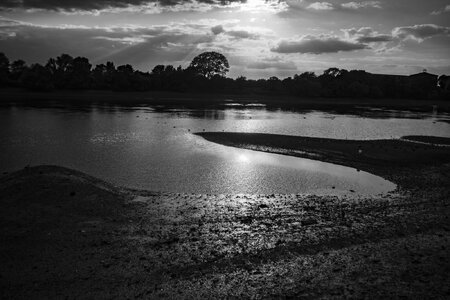
I don't really look at the screen, I turn it off, and prefer to look through the view finder, so I'm talking about the LED's ( > . < ) if that makes sense and not the histogram on the screen. I think I just have to rely on the screen and the histogram, or do my guessing thing and not be so pernickety as you suggest. It's the red LED which is pissing me off. I am a little too old school. Beautifully exposed image by the way.
 
I don't really look at the screen, I turn it off, and prefer to look through the view finder, so I'm talking about the LED's ( > . < ) if that makes sense and not the histogram on the screen. I think I just have to rely on the screen and the histogram, or do my guessing thing and not be so pernickety as you suggest. It's the red LED which is pissing me off. I am a little too old school. Beautifully exposed image by the way.
Also just remember that we are all individual enough that we will not get along with all cameras. I photographed a conference yesterday with a Canon R5. It’s a very nice, extremely capable camera, but I wouldn’t even consider buying one for myself.
 
Well said, everybody! For me, the histogram only complicates my life - or rather, my photo experience.

After much effort and far too many bad shoots, I figured out my way to go was to set my cameras (Nikons) on B&W standard everything.

It was also an effort for me to mentally adjust my thinking to not try to post process every image I made. I now try to select only the best, and do the minimum of PP work on those, mostly working on the mid-tones.

For my own projects I photograph entirely in B&W set on the camera. For images I may want to submit for publication, I take them in the Nikon's Standard color setting - I rarely use Vivid or any other fiddly adjustment for the colors, having learned the hard way that photo editors want only basic images and prefer to do all the fine adjustments to match them for the books or magazines they produce.

This has made my photo-taking much simpler. After all, the end result, the iimage is the thing. Today's cameras are amazing machines in what they can do and the results they give us with a minimaleffort from the photographer. It's up to us to work out what we want and to learn to adjust those machines accordingly. As so many posters here do.

Now and then I 'flub' a shoot. The best way to deal with this, I've learned, is to return to the subject/s if I can, and retake the lot. I do a lot of architectural photography, so my images are mostly 'static', and this works for me - I look at my way as double the experience, two times the fun. Win-win!!
 
Hi again,

thanks for your new responses and suggestions! I think I prefer a metered camera, as I like a compact, small camera, and an external meter will add volume to the camera.

The first question will be what make I want to get: Leica or a different, more affordable make, like Canon. It would make the decision to go for Leica easier if they will hold their value. How about a new M6, which will be a big investment to me, compared to a used Leica, when it comes to holding value?
 
Back
Top Bottom