50's that are sharp @ wider apertures?

My need is a sharp F2.8 or wider lens for gigs I do shooting music performers using 3200 iso film, generally at 1200 to1600 ISO.

May I suggest that the question may, itself, be wrong?

For stage photography, I have always found that the "king" lens is 85mm. My personal favourite is the Nikkor AI/AIS, which I regard as pin sharp wide open. I currently have a Tamron SP 90mm, which I think is even better, but only goes to f2.8.

In any case, sharpness under available light is a complex of trade-offs. Any of the top line 50s will give you excellent results, if you can hold the camera steady; if you can arrange the shot to get what you need in the plane of sharp focus; if you can freeze the performer's movement; if the film/sensor speed will give you enough resolution...

If I were pressed, I'd say that the Nikkor f1.4 AIS or the later Canon FD f1.4 are my favourites and that nothing I have come across beats the 50mm Summicron at full aperture but that is just my view.
 
May I suggest that the question may, itself, be wrong?

For stage photography, I have always found that the "king" lens is 85mm. My personal favourite is the Nikkor AI/AIS, which I regard as pin sharp wide open. I currently have a Tamron SP 90mm, which I think is even better, but only goes to f2.8.

In any case, sharpness under available light is a complex of trade-offs. Any of the top line 50s will give you excellent results, if you can hold the camera steady; if you can arrange the shot to get what you need in the plane of sharp focus; if you can freeze the performer's movement; if the film/sensor speed will give you enough resolution...

If I were pressed, I'd say that the Nikkor f1.4 AIS or the later Canon FD f1.4 are my favourites and that nothing I have come across beats the 50mm Summicron at full aperture but that is just my view.

This in my opinion is the best answer so far. I don't have time for much of any photography any more, other than snapshots of family. But I used to really enjoy available light, and other pushing of the edge. The above is what I found to be true.

As to sharp lenses, I think there are a lot. The Fujinon 50mm f/1.4, the Contax 50mm T* f/1.4 are great. Surprisingly, a Yashinon 50mm f/1.7 was quite sharp. Of course, as someone else mentioned, what do you consider sharp.

For other lenses, see Raid's tests of many different lenses. He did a very good and thorough job of it. He is being modest when he simply states he tested some 50s.
 
Here is a fun reality check: compare the test photos in that blog to Marek's portraits above (post #29). Which are "sharper" ? And why ?

"Sharper" as suggested in someone else's post above is subjective... and subsequently falls victim to a variety of variables; most of which are difficult to control for in a "web" setting. When I was a sailor many years ago we used to laugh that "built to mil-spec" (military specifications) meant "measured with a micrometer, marked with chalk, and cut with an axe."

I conjecture that web display of photos has many of those same issues; you may make the image with the highest resolution equipment and largest file size available (or shoot it on the finest grained, large format negative) but when scanned or sized for web display, there really isn't much difference from image to image because of file compression, sizing, and then there's infinite variation of viewing monitors.

Therefore, the only direct way to make comparisons is to use the same body and medium under the same conditions and then post-process them identically to be shown side by side for comparison purposes... which is what was shown on the blog. While that's probably still not a really true (and certainly not the best) comparison, it's the closest we'll get in practical terms. Comparing one set of images with another under made under completely different circumstances and displayed on different sites doesn't, in my mind at least, show much at all by way of comparison. Frankly, they're all competent images... what matters is whether the photographer is happy with the performance of the equipment he used.

What I was alluding to in my post about the Nokton is that if folks on the blog are having difficulty telling which lens made which image comparing the output of a $4,000 lens and a $700 lens, then that speaks well of the competence of the less expensive lens.

My best counsel is that I'm impressed with the performance of the copy of the Nokton I have so far.
 
Quote:
Originally Posted by seakayaker1

Voigtlander Nokton Aspherical 50mm f1.5 (LTM)

I have use all four of these lenses and they are all sharp wide open.
I second the Nokton 50mm f/1.5. The combination of speed, sharpness, and rendering in a modern aspherical optic is hard to beat, especially when discussed in terms of value for the price.

Here's a practical comparison of the Nokton f/1.5 to the Summilux asph. f/1.4. When you consider that used, you can buy the Nocton for roughly 10-20% of the cost of the Summilux aspherical, it becomes quite the bargain.


Another vote for the Nokton 50/1.5. Very sharp wide open and a good s/h one won't break the bank
 
My 50 Cron (latest version, not ASPH 😉 is my sharpest most resolved lens.
Shot a stop or 1 1/3 stops open


I like my Canon FD 50/1.4, but it definitely renders my images differently albeit slightly softer than the Leica 50
Shot at 2.8ish on Tri-x @1600 in Diafine
[
 
Erwin Puts on high speed 50s, published some time ago (2005?)
http://www.imx.nl/photo/technique/technique/hslenses.html

Erwn's post is nearly definitive, if you know how to read MTF graphs.

I would also agree with Roland's comment that the Pentax SMCP-M 51/1.4 is an outstanding all-around performer — this is also the judgement of Mike Johnston. I have to zero mine for infinity focus on the M6, and I'll be good to go.

In digital, the performance of the Fujinon XF 35/1.4 (50mm equivalent) is stunningly good, claimed by some to rival the Summilux ASPH.
 
Only if it's been optimised for 1.5 and then only in the center though...

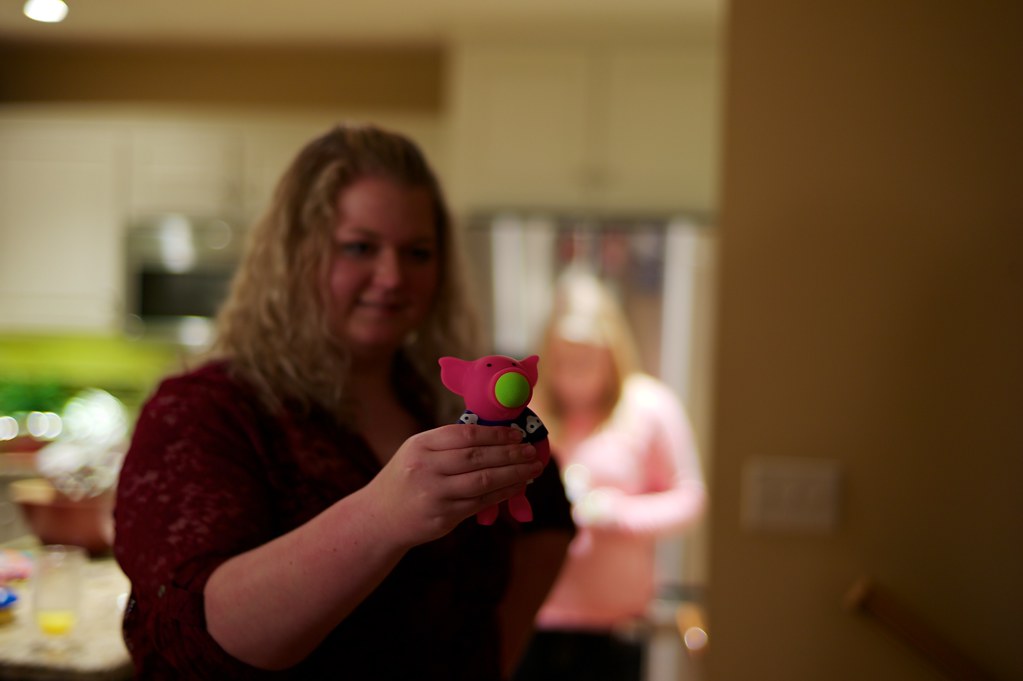
Mine must have come that way from B&H (new lens, no trip to Zeiss) and it's still pretty sharp at point of focus, as long as it's not the extreme corner. For example- slightly off-center, the Pig Popper is still quite sharp at f/1,5:


Pig Popper, December 24, 2012 by Maggie Osterberg, on Flickr

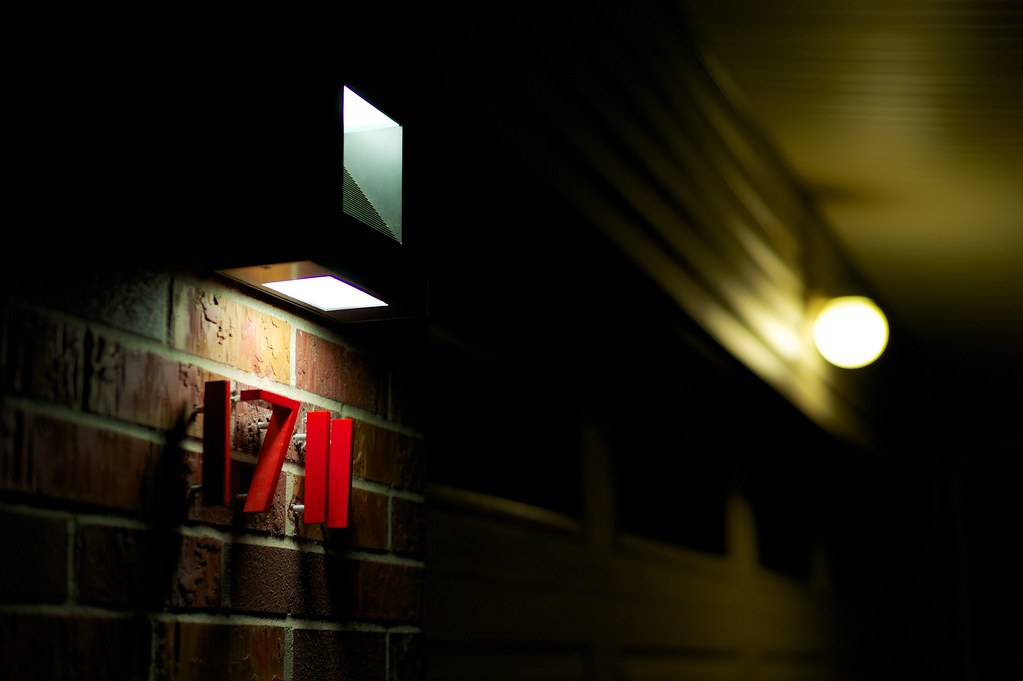
Even more off-center, the house numbers and bricks are sharp at f/1,5:


1711, December 18, 2012 by Maggie Osterberg, on Flickr
 
I like my Canon FD 50/1.4, but it definitely renders my images differently albeit slightly softer than the Leica 50
Shot at 2.8ish on Tri-x @1600 in Diafine
[

Thanks for posting this picture. I've been thinking about going to TriX pushed and this definitely answers my questions about it.
Wayne
 
Wow! A fast 50 discussion! '70s deja vu! (Next up, should you buy a camera that relies on batteries? And, a primer on Shutter Priority.)

If anything ever justified a Leica in those days, this was the shooting situation for a Summicron or Summilux.

.
 
Wow! A fast 50 discussion! '70s deja vu! (Next up, should you buy a camera that relies on batteries? And, a primer on Shutter Priority.)

Bad christmas presents, or why that mood?

I'm interested reading the thread, since I am also thinking about getting another fast 50 (I have the LTM Canon f1.4) and thinking about either the Voigtländer 1.5 asph or a Summilux. Since there are worlds between them regarding the price, I'm interested, what other people have to say.

For the Canon I can say, for it's age, it is pretty good. The same goes for my f2,0 Summitar, coated version but with the higher number of aperture blades. Even at f2 the contrast is impressive for it's age.
 
My platforms are Nikon (AI and AF), Canon FD, Pentax K, Minolta AF, and Leica M (3).

As far as the very best sharpness, the obvious pick will be Summicrons and Summiluxes at f/2 and f/2.8, or the Zeiss selections for cost savings.

When it comes to Nikon, the 50mm ƒ/1.8D is sharp at f/2.8 and reasonably sharp depending on your subject and print size at f/2. I've heard the G version is an improvement but I do not own it.

Also, Nikon's 50mm ƒ/1.2 AIS is not sharp at ƒ/1.2, but it's supposed to be the sharpest of the Nikon bunch at ƒ/2 specifically, when it's compared to the ƒ/1.4 and ƒ/1.8 lenses shot at ƒ/2.
 
For Nikon AF: Nikkor AF-S 50mm 1.8G
Canon MF: FDn 50mm 1.4 or 55mm 1.2 Aspherical
Pentax K: SMC Takumar 55mm 1.8 with M42 adapter
Leica M: Summicron 50mm tabbed

All based on personal experience.
 
When it comes to Nikon, the 50mm ƒ/1.8D is sharp at f/2.8 and reasonably sharp depending on your subject and print size at f/2. I've heard the G version is an improvement but I do not own it.

Also, Nikon's 50mm ƒ/1.2 AIS is not sharp at ƒ/1.2, but it's supposed to be the sharpest of the Nikon bunch at ƒ/2 specifically, when it's compared to the ƒ/1.4 and ƒ/1.8 lenses shot at ƒ/2.

What I'm going to do is wet print 8x10's. This is basically the reason for the thread.
I had the 1.8D. Was not impressed; Maybe I had a bad example. The only Nikon 50 I have now is a F2 non-Ai tht I'm going to re-test with the AF Chart.

Todays test is a Minolta F1.7 AF and a YashicaMat 124G.
 
The Sony/Minolta 50/1.4 is better then the 50/1.7. The 50/1.7 isn't considered sharp before f/2.8.

Supposedly the falloff is the problem at F1.7, but it's suppose to be pretty sharp in the center. I've got a Canon 50 F1.8 RF SM lens and it's the same thing. Not really sharp across the frame till 5.6, but sharp in the center at F1.8. In fact the center is as sharp at F1.8 as it is at F8 and F8 is about the best aperture for the lens. I think that it may be the same for alot of the lenses mentioned, but I have to go by the remarks and hopefully they were confirmed thru testing or reviews of tests.
 
I find that the Sigma 50 f2.8 Macro is quite sharp from wide open on for my Pentax K mount cameras. I am also quite happy with the very simple SMC Pentax 55 f2. Of course the 55 1.8 is the same lens so it should be just as nice with a tad bit wider aperture.

For Minolta I typically find my MC 55 1.7 does a fine job at 1.7 and by f2 is stunning. I absolutely love my 45 f2, but not for its sharpness wide open, but rather the beautiful, painterly-like (not even sure that's a real word) rendering it gives.

For Leica M I use the Zeiss 50mm 1.5 Sonnar and am quite happy with it wide open but my copy is optimized for f1.5. I actually prefer my Heliar 50 3.5 collapsible wide open to any of the others but we are back at your current f4 problem.

I don't shoot Canon FD or Nikon so can't comment on them.
 
Back
Top Bottom