Bill Pierce
Well-known
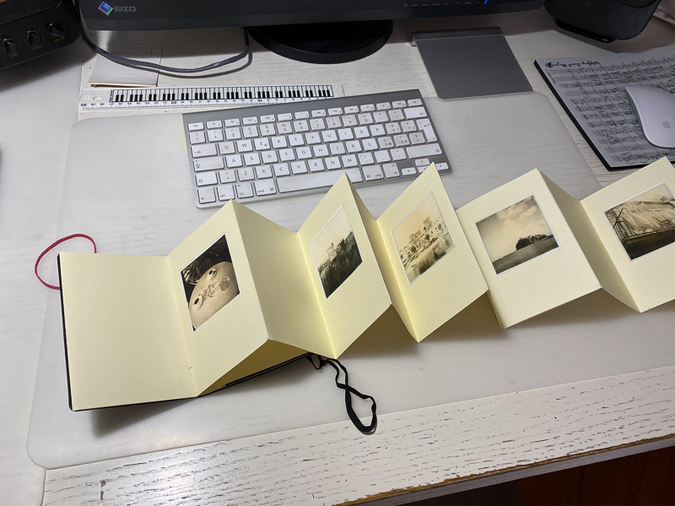
In the previous post I said that with the pandemic lockdown I was doing a lot of printing. Truth is I have always done a lot of printing, maybe not this much, but a lot. In this digital age I know for many of my friends, whose photography ranges from family snapshots to excellent art and professional work, pictures are something that exist on a screen, the screen of a phone, the screen of a computer, even the screen of a giant tv receiver. That’s wonderful. I can see family photos from far away family members. I can see news photos from around the world that were taken of events that just occurred. I can see the art collections of top museums without leaving my office.
What I worry about is the fact that digital images do not store well. There are the obvious problems. Storage media and formats change. Storage devices fail. Storage devices aren’t easily recognizable as collections of prints and are more likely to be trashed or even stolen than a box of prints. But most important, the signals on hard discs and SSD’s dissipate with time.
Certainly, for many images that is not a disadvantage. It may even be a blessing. When somebody emails me a picture of their lunch, I’m not worried that future generations may not be able to view it. But, for those pictures which preserve a more important history or embody a certain beauty, a long life would be a nice thing. A great deal can be done by storing on multiple drives and periodically refreshing the data by transferring the images to another drive. Even as gear changes and information increases, there is still disagreement about the time span we should be worried bout. But, at the best, we are talking about decades and at the worst, less than a decade. Who knows?
But what we do know is the projected permanence of prints. Some of the old color processes were pretty awful. Properly processed silver prints were top of the line. But today we look at inkjet prints. Henry Wilhelm’s site, http://www.wilhelm-research.com, is the best source I know for longevity figures. Just check out one printer - displayed prints under glass - 200 years and in dark storage - 300 years. Those are color prints. - black-and-white framed under glass - 400 years. That’s a somewhat over simplified version of Wilhelm’s tests, but you get the idea.
And, just in case you think I’m a grouch, here’s a piece from 5 years ago by somebody who really knows his stuff.
https://petapixel.com/2015/02/17/pr...-the-digital-dark-age-internet-pioneer-warns/
While this is a bit of a rant, I would love to know what you think because while the reasons we photograph and what we photograph differs from person to person, I think we all do it to preserve something.
What I worry about is the fact that digital images do not store well. There are the obvious problems. Storage media and formats change. Storage devices fail. Storage devices aren’t easily recognizable as collections of prints and are more likely to be trashed or even stolen than a box of prints. But most important, the signals on hard discs and SSD’s dissipate with time.
Certainly, for many images that is not a disadvantage. It may even be a blessing. When somebody emails me a picture of their lunch, I’m not worried that future generations may not be able to view it. But, for those pictures which preserve a more important history or embody a certain beauty, a long life would be a nice thing. A great deal can be done by storing on multiple drives and periodically refreshing the data by transferring the images to another drive. Even as gear changes and information increases, there is still disagreement about the time span we should be worried bout. But, at the best, we are talking about decades and at the worst, less than a decade. Who knows?
But what we do know is the projected permanence of prints. Some of the old color processes were pretty awful. Properly processed silver prints were top of the line. But today we look at inkjet prints. Henry Wilhelm’s site, http://www.wilhelm-research.com, is the best source I know for longevity figures. Just check out one printer - displayed prints under glass - 200 years and in dark storage - 300 years. Those are color prints. - black-and-white framed under glass - 400 years. That’s a somewhat over simplified version of Wilhelm’s tests, but you get the idea.
And, just in case you think I’m a grouch, here’s a piece from 5 years ago by somebody who really knows his stuff.
https://petapixel.com/2015/02/17/pr...-the-digital-dark-age-internet-pioneer-warns/
While this is a bit of a rant, I would love to know what you think because while the reasons we photograph and what we photograph differs from person to person, I think we all do it to preserve something.