C-41 BW ISO Question...

DNG

Film Friendly
Local time
4:39 PM
Joined
Jul 9, 2009
Messages
2,981
Location
Indianapolis, Indiana. USA
I going to try my 1st roll of XP2 that can be rated from 50 - 800 according to the fact sheet.
Since, with C41, there are no adjusted development times (and is recommended NOT to adjust the development, just shoot at the ISO you need)....

So, the Question
Should I mix ISO's on the same roll?
Has anyone done this?
Did you like the results?
Did it make any difference?

Gut says, I should have no problem mixing ISO's on the same roll, since C41 is a set time for all ISO settings.
 
I think XP2 is rated for 400 only when using the standard C41 development.

If you develop with your own b/w chemicals (like D76), you can experiment with speeds and times.
 
If XP2 works like Kodak BWCN, you can shoot different iso ratings on the same roll. I have done that with the BWCN. If you like grain shoot it at 800 and if you like a smoother look shoot it at about 200.

Bob
 
YOu can mix times on the same roll. XP2 has a lot of latitude, meaning if you shoot at 50 you'll still get something from the bright areas. The shadows at 800 will be pretty dead, there's not much reserves in XP2.

You can use exposure for contrast control; when overexposed, say at 50 or 100, you'll get much more contrast than at 800.

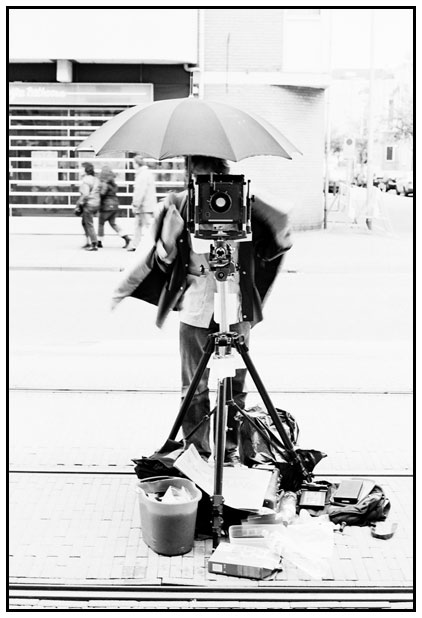
This is XP2 at 50 on a rainy day without any contrast in the street:


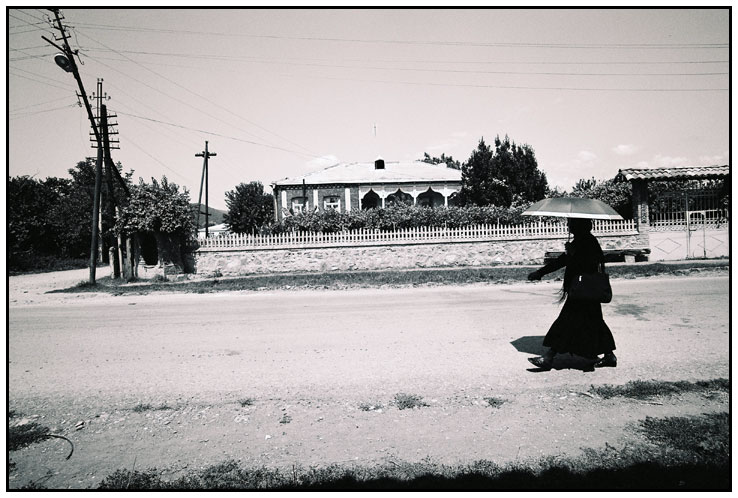
And this is XP2 at 640, slightly overexposed to get the noon sun under control:


Both were done using standard C41 processing at corner minilabs. The scans aren't great, but you get the idea. Normally I expose it at 250.
 
This is simple, you develop everything standard at a lab. In my experience, the true EI of XP2 in a standard contrast scene is EI 200. If you underexpose, the shadows will be blank, if you overexpose, the highlights will not be blown. The more you expose, the finer the grain, and vice versa. Ar EI 100 you start seeing sharpness deteriorate. Shoot a roll with multiple frames of the same subject at EI varying between 100 and 1600 and you will see for yourself.
This scene has been exposed at EI 320, it would have been better to shoot it at EI 100

484285567_c6c4828fc2_b.jpg
 
My experience with XP2 is that I used to set the exposimeter on my bessa at 400 iso and i was satisfied with results. Therefore I was surprised to read other suggesting to expose it at 200/250. Than happened that with the same camera I made some slide filmes and the results were overexposed pictures, about 1 stop. So after a check I realized that on that camera I was using when stting at iso 400 it really was working as if it was 200/250, like many other friends here were suggesting !
I suggest you to make some pictures in the same ligh condition with different setting just to find out which one please you at best. If you like extensive trials you can try also various light condition, as 2-3 exposure in shadows, 2-3 in bright light, 2-3 inside rom, etc.
regards
robert
 
Just do it. Report back. With examples. We want to know before we waste our film. Grinning.

Oh I'm doing it ! 😀
I have few 800 of my wife (she dreads having her image made), plus a few around our apartment.
I'm going for walk around my apartment complex and will vary from 100-640 with similar subject contrast...

Will post results tonight my time (10:04am now at the this post for reference in other time zones)
 
I´m not sure I get this. The film is rated at 400? Setting your camera´s ISO (or light meter) to less than this will overexpose, and vice versa if set higher. So setting the ISO to 50 and then underexposing by two stops is still a one stop overexposure. What´s the point in changing the camera´s ISO, instead of just calculating over and underexposure needs when and where? It´s not like changing the ISO on a digital CMOS/CCD, which in fact changes the sensitivity of the sensor.
 
I´m not sure I get this. The film is rated at 400? Setting your camera´s ISO (or light meter) to less than this will overexpose, and vice versa if set higher. So setting the ISO to 50 and then underexposing by two stops is still a one stop overexposure. What´s the point in changing the camera´s ISO, instead of just calculating over and underexposure needs when and where? It´s not like changing the ISO on a digital CMOS/CCD, which in fact changes the sensitivity of the sensor.

The film is rated at 400, but the info sheet it can be exposed from 50-800 with satisfactory results. Most rate it at 200/250. The lower it is rated, the finer the grain structure. But, apparently, the highlights are blown faster..(I understand this. Over Exposure will cause Highlights being blown). I think this film can be used from 200-640 with good results.

I will post some samples I too today from 100-800 ratings.... But, I am new to scanning, so I have to do some post to see the potential.
 
ISO Test 100-800

ISO Test 100-800

OK, here are some images at different ISO settings..
My negative handling sucks.... had no gloves, no brush. etc..
Pardon any dust, finger prints... 😱

50mm Summarit 100-400 ISO at f/8, until ISO 800...then f/11 for slower speed. mostly used DOF scale for max DOF... except the ash tray image, were I focused on a cigarette.

ISO 100
400lsxp210004tn.jpg


400lsxp210006tn.jpg


-----------------
ISO 200
400lsxp220001tn.jpg


400lsxp220003tn.jpg


400lsxp220006tn.jpg


-------------------
ISO 400
400lsxp240001tn.jpg


400lsxp240004tn.jpg


------------------------------
ISO 800
400lsxp280002tn.jpg


400lsxp280004tn.jpg


400lsxp280005tn.jpg


All scanned at 900dpi, single scan mode, set up for Illford XP2 Film
(I think 1200dpi will be better)

Also, this is the 1st time I used my Plustek 7300 film scanner..Mostly I just adj'd the Histogram if needed before the scan. Than I did the rest of the post in ACDSee Pro 3 to achieve an acceptable result (I hope).. But, I guess after a few more rolls, I'll get better with it. I did not use the dust remover software.

I think 200-400 are the better ISOs for daylight images...
And 400-800 for indoor images with some light
 
Back
Top Bottom