Experiences with POLYPAN F?

I shot a lot of this stuff this summer (100 meters or so).
AFAIK it is original a cine-copy film.
Works relative hard (contrasty) in standard-development.
Because of the barely effective anti-halation-layer (or complete lack of it- not sure) it can produce sometimes glowing highlights.
Grain-wise it is not much finer than a 100ASA film.
For rich shadow detail you should go with a compensating developer.
I use this stuff only for fun or experimental photography, if you expose for the highlights you will get impressive fat blacks instead of detailed shadows.
I use for medium contrast high dilluted A03 (1+2) or diafine.
Otherwise mostly Xtol.

@80ASA in diafine
03_11_088.jpg


@50ASA in Xtol 1+3
08_11_187.jpg


08_11_080.jpg
 
Hi haempe,

thanks for your reply. I saw your pics and they seem to have low contrast. Is this ok in the negatives? One can't judge by the screen. What do you think?
 
One can't judge by the screen.
Thats mostly true.

I have chose these pics to show one can get moderate contrast out of this film.
Contrast increasing is rarely a problem with a more powerful developer or a slight push... but thats a matter of taste.

If you like to experiment, then the film is something for you.
If you put emphasis on reliability, then probably not.
 
I have used this film quite a few times and the comment about the AH layer is true. One roll was so bad I checked the camera (Bessa-R) and the pressure plate is black (yes) and so shiny I could use it as a mirror.
I then applied some black 120 backing paper to the pressure plate and repeated the pix. The flare had gone.
So, if you want to use this film often, pick a camera for it carefully or try the above trick.

I usually develop it in Caffenol at ISO 50. Plenty of folk use Diafine and get up to 200 ISO. Depends on your taste.
 
My first go at PolyPan F seems to confirm all of Haempe's statements. I pushed it one stop and developed it in Caffenol-C-M (for other films I've tried it has a moderate compensating and speed enhancing effect).

Haempe's own vs my limited experience:

High Contrast: It turned out very contrasty indeed. Not having done more tests I can't conclude the film doesn't push well, but given other people's experiences it might well be the case. Next go will be exposed at box speed and less agitation when developing.

Glow/Halos: Oh, yes. Lots of it. Anti halation layer either not there or very thin.

Grain: Pushed one stop no better than ASA 100 films, in fact maybe worse. But I've seen EI 25 and 50 exposed instances which are very fine grained indeed, in Caffenol and other developers.

Shadow detal: Not much of it, but the blacks are indeed very rich, dark chocolate rich.

Examples:
High contrast (even if this scene was meticulously metered, placing the bricks to the left in zone 3)
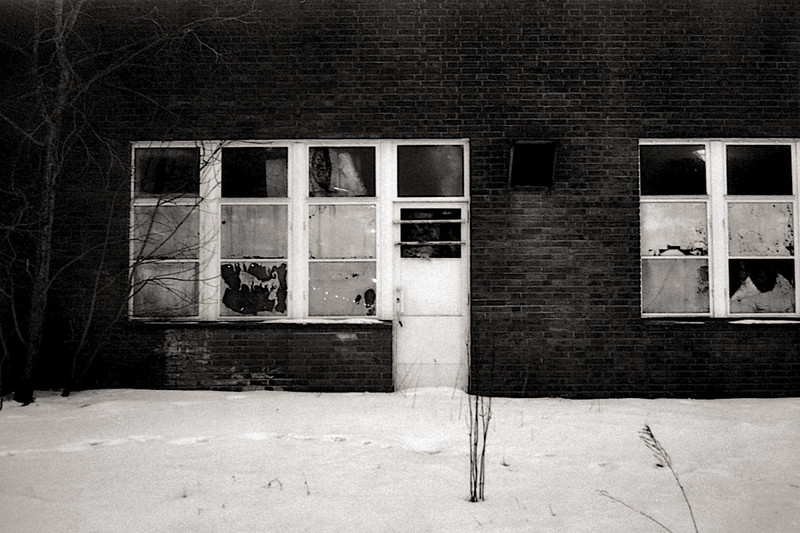
Dereliction: Fornebu by Eirik0304, on Flickr

Halo effect?

Uni by Eirik0304, on Flickr

Fat blacks?
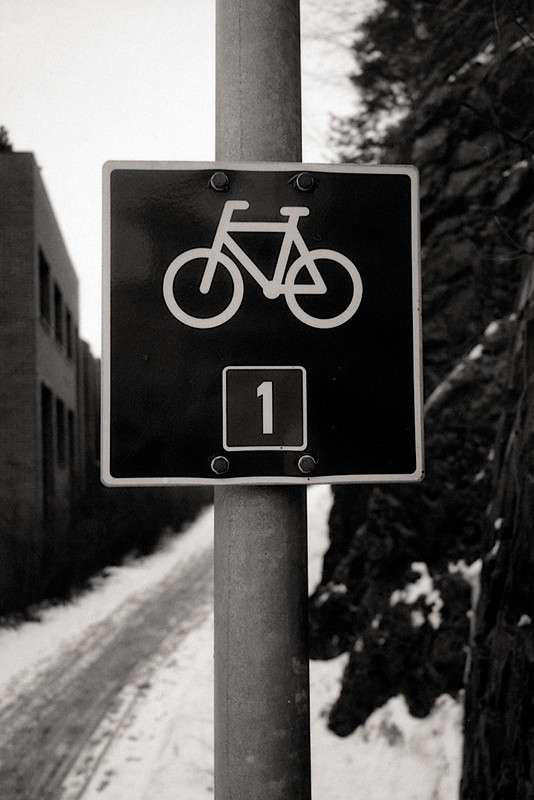
Highway #1 by Eirik0304, on Flickr

Not very fine grained?
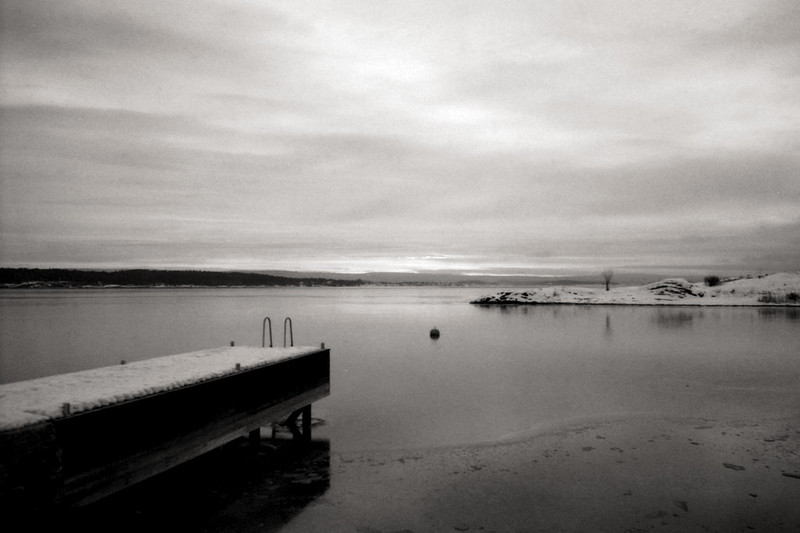
Summer has yet to come #2 by Eirik0304, on Flickr

I feel inclined to try out more of this film. I probably have not given it due justice in this first attempt.
 
I have finished one roll, and have a couple of others in cameras. My first roll was exposed at EI-100, and developed in D23 along with my Tri-X--seven minutes at 75 degrees. I felt I could use a bit more shadow detail, and am currently shooting it at 50. I think I will keep the same developing plan for now. Contrast was not a problem, and not particularly high. I didn't find the grain to be a whole lot finer than Tri-X--a little, but not like a 50 speed normal film. My general experience is that Rodinal is the wrong developer. . . for everything, if you like shadow detail. At least, looking through Flickr, that's what everyone's work seems to confirm.

On both of these shots from that first roll you can see how bright areas near the edge have bled over off into the borders of the frames. That's the lack of anti-halation coating. In general it didn't seem to hurt anything.


Gary Garavaglia by Michael Darnton, on Flickr


Paul Becker by Michael Darnton, on Flickr
 
Back
Top Bottom
