exposing slide film

T

Todd.Hanz

Guest
I am taking a trip to Alaska soon and want to run some slide film through my M6 and rolleiflex, I don't shoot slide film often enough to feel comfortable with my exposure decisions.

I know with slide film I should meter for the highlights, (reflective meter) but does anyone here use an incident (luna pro, etc.) meter for slides, are the chances greater for blowing the exposure?

BTW, I'll be shooting either Velvia 100 or Astia 100.

thanks,
Todd
 
I shoot slides a lot, and it's funny, I seldom have exposure problems with it, even meterless. Of course, maybe my standards are lower! I use an incident meter when I use the Leica, BTW.
 
thanks, I'll probably use both and bracket on those "once-in-a-lifetime shots" 🙂

Todd
 
Todd- My step son and mother in law just had atrip to Alaska at the end of may. I was hoping they would come back with a bunch of decent images. I loaned the step son my Canon G2 which isn't bad, even on auto.

Lets just say that neither has an eye for framing. There was not much in the photos that inspired my wife and I to take a similar trip.

Maybe you will share some of your photos and inspire us.
 
Hi Todd,
Slide has a much narrower lattitude then negative as you know. Within this it is even less tolerent to under exposure than it is to over. Typically the range is -1/2 to +1 stop. If you need shadow detail it is therefore generally better to meter for this. Having said that, I have always found the best results are with incident light metering for most occasions.

Kim
 
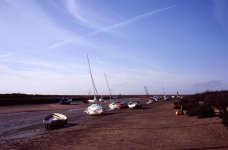
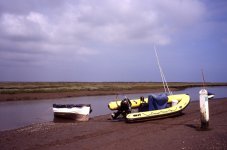
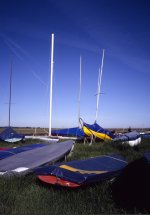
I tried out some astia in both my M6 and Bronica recently (after recommendations in another thread suggested that astia had more latitude than velvia or sensia). With the M6 I favoured the highlights by about a half to one stop (using the M6 meter) and with the Bronica I went with the AE. First two examples attached are from the M6 and the third from the Bronica. Not art, but an example of what you might expect. (I have another 140+ M6 slides to scan and about 60 Bronica :bang: )
 

Attachments

  • M6EPS002.jpg
    M6EPS002.jpg
    187 KB · Views: 0
  • M6EPS008.jpg
    M6EPS008.jpg
    155.1 KB · Views: 0
  • BR0001.jpg
    BR0001.jpg
    168.6 KB · Views: 0
I've always read and practice: expose for the highlights and let the shadows fall where they may with slide film, and expose for the shadows and print for the highlights with neg film. Neg film is most sensitive to under-exposure errors while slide film is most sensitive to over exposure errors.
 
One thing to remember about using an incident meter is that you're getting measurement for the light itself, and not the subject you are shooting. Exposing for shadow and develpoping for shadow for negative film (expose for highlights for positives) really applies only if you're using the zone system, and not so much if you're just getting a general exposure. With that said, also remember that film only has so much range, and so if your subject is on the darker or lighter extremes of the films latitude you may want to modify the exposure to make sure you don't lose detail that you want to keep. If you use an incident meter, something that's middle grey in the scene should always have a middle grey exposure in the scene. Now, if you had dark shadows in the scene with detail that you want to keep you might overexpose in that situation, since that would be one extreme of the range. Same if you had an incident reading and wanted to keep detail in very bright highlights, etc..

Hopefully that makes sense. In short, if it's an "average" scene with no extreme highlights or shadow that you want to have detail in, just use the incident reading as is.
 
Since you're going to Alaska you just might see some snow, especially on Denali. Keep in mind that your meter will make white subjects, e.g. snow, gray. Therefore you have to open up 1 1/2 stops, with slides, to make it appear white. So if you have a preponderance of snow in the viewfinder rememeber to give it more light (1 1/2 stops) and you'll be happy! Take the flight from Talkeetna with K2 aviation that lands on Mt Denali glacier. It is amazing!!!!!!!!
 
Try Some First

Try Some First

I would suggest that, if you have time, try a roll or two before you go. Expirement with your metering on different subjects in different light. Keep notes so you know what worked.
It's always a bad idea to go on a major trip with untried equipment or film. I'm sure you've heard the stories of someone that buys a new camera for a trip and messes everything up because they don't understand how to use it.
Most of what is said above is good. I like reflective metering and then compensate if the subjece is especially light or dark - such as snow or deep shadows.
 
Last edited:
I use slide film most of the time in my Bessa L and one of things I find is that its easy to inadvertantly expose for the highlights or the shadows because I'm using the CV 15 - so much sky, or so much ground!😉

So my (obvious) tip of the day is don't forget the impact of the lens / compostion on your exposure with an in-camera centre weighted meter.
 
All great answers, thanks. I'll post some results when I return

C-Ya,
Todd
 
Todd,
First, have fun. I look forward to seeing your results. Also, I'd strongly recommend the Astia. You'll benefit from the added latititude and I think the color rendition would be better than over-doing it with the Velvia. The chance for Velvia has a tendency to go blue in shadows.

allan
 
Exposing Slide Film

Exposing Slide Film

kaiyen said:
Todd,
First, have fun. I look forward to seeing your results. Also, I'd strongly recommend the Astia. You'll benefit from the added latititude and I think the color rendition would be better than over-doing it with the Velvia. The chance for Velvia has a tendency to go blue in shadows.

allan

I agree with Allan on Astia; it;s a great film for the price, and produces nice skin tones. Not as snappy and rich as Velvia, but very good.

I was always told to expose 100AsA slide film at 125ASA. THis has always worked for me, especially with a camera that has an "average"-style meter. Since the M6 is centerweighted, you can (I think) leave the ASA at 100. For your Rollei, if it does not have a meter, then I suggest the 125ASA guideline. Good luck.

Chris
canonetc
 
Back
Top Bottom