Film suggestions, BW and Color for noob

MacDaddy

Certified Machead
Local time
5:16 AM
Joined
Aug 15, 2005
Messages
214
Location
Dahlonega, GA, USA
The debate continues... I am looking for suggestions for BW and color film to use with my new Bessa R3A and 40mm/1.4 for street/archtectural and portrait shooting daylight and late day. Going to Madison, GA, USA this weekend and want to take photos of the beautiful, historic antibellum homes down there. Lots of white paint, large vistas and fantastic archtecture, not to mention period costumes (pre-Civil War).
Suggestions, folks? Has to be obtainable in the USA for this RF noob! I am using Fuji Superia X-tra 400 color film right now.
Thanks,
Rob "MacDaddy" White
P.S. Shooting tips ALWAYS welcome, as well!

"I never let schooling interfere with my education."
— Mark Twain
 
Rob,
Well as for color, Fuji Superia is nice film in 100, 400, 800, you can't go wrong on that one. As for black and white, well there will be some debate. My favorites are Ilford Delta 100/400, Ilford HP5 and Agfa APX 100 or 400. I am still testing out Fuji Acros Neopan to give the qualified thumbs up. You have one nice camera set up, have fun in Madison Ga.

Bill
 
Keep it simple. Take the fuji for color and grab some Ilford XP2 for b&w if you don't develop yourself. If you do develop your self take Kodak Tri-X or Ilford HP5.

Get ready for a bunch of different opinions🙂

Wayne
 
Try slide film. I like Fuji Sensia 100. With careful exposure it will really show off your sharp lenses. IMO a much finer image than print film. Scans well, too.
 
I'll slip in my suggestion, which will shortly get buried by responses. I now feel like an addict craving Kodak 400UC ("Ultra-Color") print film. There was a thread a few months ago about Target putting it on super-sale, and on recommendations here, and at 2 bucks a roll, I blindly grabbed every roll available here. Now my girlfriend and I have depleted that stock, we're jonesin' for more, and looking at $4.50/roll from Adorama or B&H. It does colors real pretty, though. Should be available from your local shop, or in 12 or 36 exp. from Wal-Mart.
 
What Byuphoto said 😀

Plus I'd add Plus-X in there too (if you'll pardon the expression...) as an utterly great slower speed film. The Superia is good, I just like Reala better.

Good luck and have fun!

William
 
What's the practical difference between superia, reala, velvia and the other Fuji color films? The descriptions in their websites don't really say much.
 
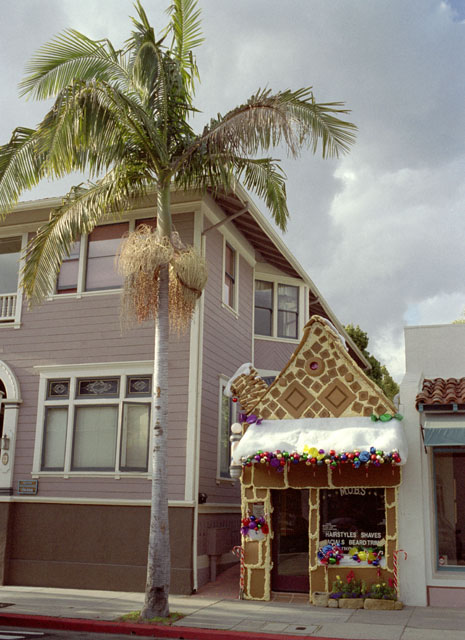
Well, Velvia is a slide film, so it is very different than the others mentioned. Though I am not a fan of color print film, I recommend Fuji NPS. Even though the saturation cannot compete with slide films (most color print films that try to look totally unnatural), it has a very laid back quality to it that is great for portraits. It is considered a wedding film. Here is a sample:

gingerbread.jpg


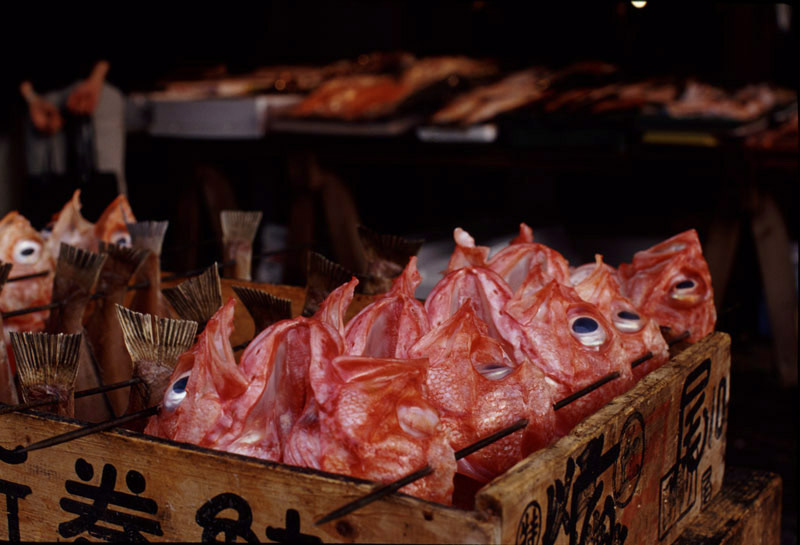
Compare this "look" with that of a saturated slide film (in this case Kodak 100VS)

nijoichiba.jpg


The nice thing about film is that you can choose different stuff depending on your intentions. Personally I don't like to use color print film unless I am specifically out to take portraits or I know that the lighting is going to be very tough. (Negative film is much better at correcting for color casts, also, the higher speed films like NPZ work in light that no slide film can really handle).

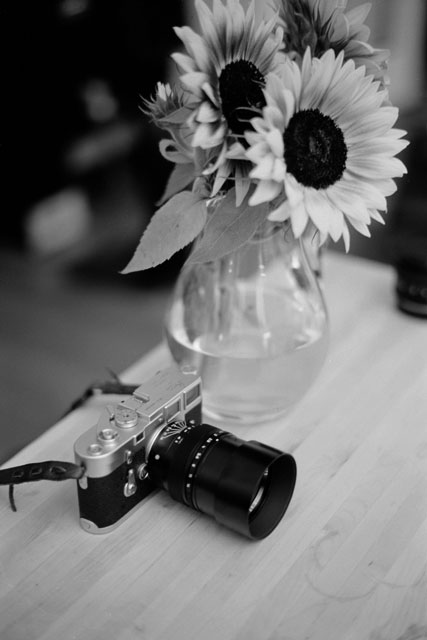
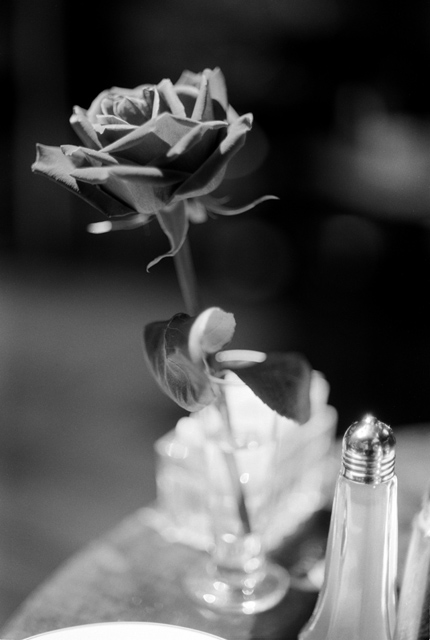
For black and white my favorite film is probably Delta 100 for a clean look. Here are some examples of Delta 100.
m3-sunflowers.jpg


roseandsalt.jpg

Delta 100 has a very long tonal range and superfine grain. It makes for a fantastic black and white film.

If you want a grittier image, or a more traditional looking shot, Tri-x or HP5+ are great in their own way. They are also faster and easier to process, so that can also be a consideration. They do not offer the smoothness of Delta 100 (in 35mm anyway), but they can still look fantastic.

osore-temple.jpg


That was HP5 developed in D76 1:1 (a classic formula)

Overall, the nice thing about film is that you can still choose based on the look you desire. I hope this was helpful.

For the record, my favorite films are Kodak E100G or Fuji Provia 100F for general use (both ISO 100 color slide), and Delta 100, FP4+ and Tri-X for black and white. Fuji Velvia 50 or 100 (not 100F) are my favorites for landscapes and nature.
 
What Byuphoto says, too. Reala is my favorite 100 asa film. I debate between TriX and HP 5, but I am slowly going over to TriX. Slow B&W for old time look Ilford FR4 or their 50 asa film, great grain on that one. All time slow film, Agfapan 25, but alas is not more.
 
Thanks, Stuart. The pictures are great. I do like the saturated rich colors of the slides, but I think I would likely use it only for "special" occasions or subjects. The NPS has interesting colors🙂 I think I will try that next.
 
Last edited:
If you don't develop yourself and your local pro lab charges more than US$5 for developing B&W, do yourself a favour and buy one of those B&W films that can be done at a 1-hour minilab. Though you will have to give up the ability to push/pull and control the contrast.
 
Everybody's certainly got an opinion. I prefer Agfa slide (RSX II series, noteably the iso 50) as I find the colors remarkably accurate. I've never liked the Fujis, though the shot of Paris below was done with Reala and isn't half bad. The shot taken of Waikiki (from the top of Diamond Head) was Agfa RSX II 50, scanned by me and of course massively compressed to upload here. I've used Fuji slide film a lot as well, but find it alters colors way too much for my liking, with the possible exception of Provia. The Kodak professional series is also very good. Someone also asked about processing; if you do use Fuji, you can use their mailers which are very inexpensive - but they only process Fuji. Kodak also sells mailers, but I generally have my Agfa slides done at A&I (www.aandi.com) - B&H (www.bhphotovideo.com) sells those at a discount. If you don't have a scanner or are constantly traveling, B&H will scan a 36 exp. roll for $10 at the time of processing.
 
Last edited:
Getting film recommendations is a little like getting soft drink recommendations. Good stuff but often hard to communicate why.

With B&W, you can sort them into t-grain films (TMax, Delta, Acros)--finer grain; and traditional films (FP4, HP5, Plus-X, Tri-X, APX, Neopan)--more traditional looking grain.

Color films break down OK into their type of color saturation. Here's a usable reference: http://www.photographic.com/buyer'sguides/
 
Back
Top Bottom