Here's to the crazy ones...

Nelson Tan

Established
Local time
3:48 AM
Joined
Apr 9, 2010
Messages
139
Every now and then, we hold our breath in anticipation of the next hot new model from market leaders such as Nikon and Canon. More megapixel, more focusing points, more noise reduction – in other words, more of the same thing. DSLRs have gotten higher in resolution and faster in focusing through the years, with better high-ISO noise control to match, but they are essentially reinventing the wheel over and over again.

Which got me thinking about the truly innovative brands in the photography industry, and prompted me to pen my thoughts down.

http://photographyhappenings.blogspot.com/2012/04/heres-to-crazy-ones.html


Do give it a read, and perhaps suggest other brands which are just as innovative?
 
Interesting read, but it's all about Fuji isn't it? Not so many crazy ones then.

Why not give the others credit?

Mirrorless digital cameras came from Panasonic/Olympus. The compact camera with large sensor came from Sigma with the DP series. The first digital rangefinder came from Epson/Cosina. I'm sure there's more here.
 
Every now and then, we hold our breath in anticipation of the next hot new model from market leaders such as Nikon and Canon. More megapixel, more focusing points, more noise reduction – in other words, more of the same thing. DSLRs have gotten higher in resolution and faster in focusing through the years, with better high-ISO noise control to match, but they are essentially reinventing the wheel over and over again.

Which got me thinking about the truly innovative brands in the photography industry, and prompted me to pen my thoughts down.

http://photographyhappenings.blogspot.com/2012/04/heres-to-crazy-ones.html


Do give it a read, and perhaps suggest other brands which are just as innovative?

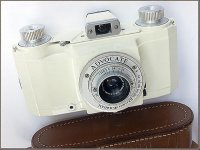
Thanks, Nelson...I posted a thread a few months ago about how Nikon is stuck in a design spiral where DSLRs are packaged in a 30-40 year old black plastic blob. Long ago manufacturers produced truly beautiful works of art that worked fine as picture taking machines.:angel:

Just two of many examples from many manufacturers:

images


attachment.php


IMO, Fuji is just copying others and is not really innovating anything other than using more electronics.

Design has not really moved forward in decades. Leica has at least kept it's design roots (without copying others) in the M bodies while not being in a position to move the design envelope very far.
 

Attachments

  • Advocate Camera.jpg
    Advocate Camera.jpg
    50.5 KB · Views: 0
I'll give you two: Olympus and Ricoh.

Olympus is definitely one of the innovative brands, but I felt that the era has come and gone with the passing of Mr Maitani himself. Since the original OM series, Olympus (IMHO) did not really push the boundaries of innovation as much, give that m4/3 is a consortium effort rather than an Olympus exclusive.

Ricoh is an interesting suggestion. Care to elaborate? I'm familiar with the GR1-series (film) and the GXR digital camera. Is there something else?
 
Olympus is definitely one of the innovative brands, but I felt that the era has come and gone with the passing of Mr Maitani himself. Since the original OM series, Olympus (IMHO) did not really push the boundaries of innovation as much, give that m4/3 is a consortium effort rather than an Olympus exclusive.

Ricoh is an interesting suggestion. Care to elaborate? I'm familiar with the GR1-series (film) and the GXR digital camera. Is there something else?

Hi,

Well, "FourThirds" is innovative in my opinion as it lets lots of different makes of body and lens get together. Try putting a Canon lens on a Nikon and you won't get far. But I can put a Sigma lens on a Leica, Olympus or Panasonic body in FourThirds and more in micro fourthirds or whatever it's called.

Standardising lens mounts seems obvious but in today's strange world being sensible and looking after a wide range of customers requirements is innovative.

Just my 2d worth.

Regards, David
 
Nelson, I feel like Ricoh is successful for being one of the first to target a niche with their GR-D. The GXR follows the same idea, along with Fuji's recent offerings. Most consumers would want zoom lenses, but these companies brought back the idea of fixed-lens compacts.

Sigma was also innovative for their Foveon sensor, but not as successful due to the weak lens.

And Pentax deserves nods for bringing us a consumer-priced digital MF. The K-10D and its successors were very worthy alternatives to Canikon for anyone looking for weatherproofed DSLRs.
 
Ricoh is an interesting suggestion. Care to elaborate? I'm familiar with the GR1-series (film) and the GXR digital camera. Is there something else?

Ricoh and Olympus are similar in that they are old companies who not only withstand the impacts of WWII, but continue to survive (thrive?) until today.

Like Olympus, camera design and manufacturing for Ricoh, is just a smaller part of its global business. Considering that, the number of unique design feats that it managed to pull, competes favorably even against camera-only companies:

- Name a single other camera that can challenge the GR1 series in terms of design, quality, versatility, and just sheer fun to use. IMHO in the digital world, the GRD series manages to continue this tradition.

- The GXR series is the first one with its sensor+lens modular design.

- Unbeknownst to a lot of people Ricoh also produced top quality TLRs. While people went nuts with Autocord and Yashica Mat, many of the skipped right by Ricoh Diacord and the unfortunately named Ricohmatic 225. What's unique about these? look at the focusing mechanism and good luck finding another brand with anything similar. And the lens quality on these are superb.

- Next, have you ever seen an SLR where you can peer down the top plate and see what you're about to take a picture of? well, if no, check out Ricoh TLS 401.

- Also the unique film-advance/shutter winding lever represented in the "35" rangefinder series. The most common ones are the Ricoh 500 (not 500G).

And these are just the ones I remembered on top of my head.
 
Back
Top Bottom