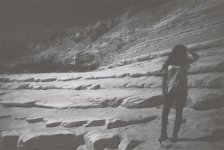
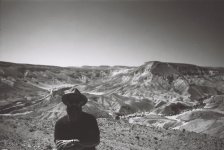
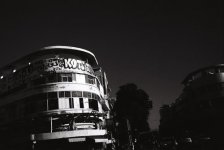
The M7 has a TTL meter, so the filter's light reduction is compensated for automatically. However, you have to realize that the M7 has a "fat spot" type meter. On all of the pictures that you've shown, you have very bright hightlights in the background. I suspect that the meter is trying to give you the correct exposure for the bright background. This is most evident in your 3rd picture, because the brightly lit facade of the building is correctly exposed. Too bad for everything else. In your other pictures also, you put the subject off center (rule of thirds?), so the meter takes a nicely exposed picture of the background in the center of the frame.
Here the well delineated spot meter of the M5 is useful, because the spot reading area of the meter is actually outlined in the viewfinder. Also, the older non-metered M cameras, if they use the Leicameter MR-4, can use the 90mm frame line to define the metering area. The MR-4 has a built in angle of view to match the 90mm lens. Hence, another fat spot meter.
Realize also that in full blazing Middle Eastern sun, you have a huge contrast range from deep shadow to full bright white. No film, even B&W film, can handle the 15+ stops of contrast. You're going to lose something somewhere.
So, how to handle this situation?
1) Move up close and meter your subject. If you can't get close enough, then use an incident light meter in the same lighting as your subject to see how much light is falling upon it.
2) Pick a time of day when the contrast range is not so extreme: dawn, dusk, or whenever you have overcast or heavily cloudy skies.
3) Fill in flash. It seems that you like backlighted subjects. In that case, for your M7 invest in a Metz SCA 3502 adapter and put it on a Metz flash that supports high speed synch flash (HSS), such as the Metz 54MZ-4. This is the setup I use, for less intense Midwestern and Southern US sun. You are limited to shutter speeds of 1/250, 1/500. and 1/1000 for HSS. And, flash exposure is manual, based on guide numbers. Don't fret - you focus on your subject, and find the distance (on your focus ring of your lens). Then you can adjust the flash's power levels until the readout matches the aperture that you are shooting at.
4) Assistant with portable reflectors - the way pros do it. Anything to throw more light onto your subject and reduce the contrast range.