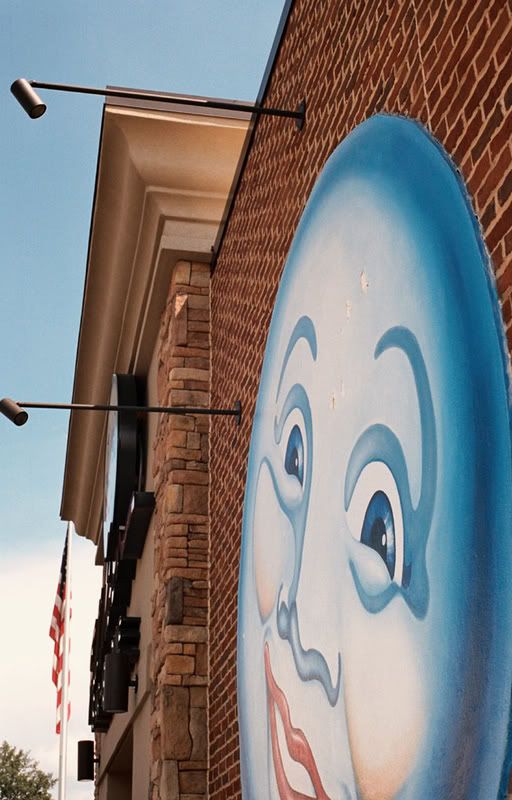
How do you meter Portra 160VC?

When I first purchased it the man at the photo shop told me to meter it at 100. I did so and I loved it. Eventually I forgot and shot it at box speed. I loved how that looked as well!
 
Would you beleive 50?

Would you beleive 50?

I shoot Porta almost exclusively so I rarely fiddle with my meter settings, but one roll I shot at 50 (long story) and the pictures were all very usable, kind of like Kodachrome on acid. The subject was custom cars and hot rods so the color saturation was a benefit. Many folks suggest a half stop over, and i would do that for low light or shadows with detail. Generally I shoot at rated speed and have great success. Porta is the best!
 
Would you believe 50?

Would you believe 50?

I shoot Porta almost exclusively so I rarely fiddle with my meter settings, but one roll I shot at 50 (long story) and the pictures were all very usable, kind of like Kodachrome on acid. The subject was custom cars and hot rods so the color saturation was a benefit. Many folks suggest a half stop over, and i would do that for low light or shadows with detail. Generally I shoot at rated speed and have great success. Porta is the best!
 
I use 160 VC / NC a ton when shooting wedding photos. The slight over exposure really makes skin tones sing, and gives you just a bit more punch in your images. Rate at ASA 100, and use an incident meter.

Example below:

4857863606_fdc8f3d23f.jpg


Leica M7, 50 Pre-ASPH Lux @ f/2.8 on Portra 160 VC
 
Last edited:
I have used it at rated speed and a Gossen Luna Pro SBC in reflective mode. Beautiful.

From other's experiences above, it sounds like almost any speed from 50 to 400 will work. It is a nice film.
 
Most color neg film benefits from 1/3-1/2 stop of overexposure. Not only does it give you an extra buffer against underexposure, but it it puts more of the exposure on the slower fine-grain emulsion in the film.

The take home message - Portra works great at box speed, but a bit of extra exposure can help reduce grain.

It seems to have a lot of latitude though. Two stops under to four stops over:
http://www.flickr.com/photos/tgray1/sets/72157623656615947/
 
Thanks all for the comments!

I'm a bit surprised after seeing that -2 to +4 test... (I guess it was incident...) At least on my screen, the film clearly starts losing saturation by +1! Different to most color negative films I've used, including Ektar 100...

I don't see much latitude here... Nor color saturation from overexposure (at least from that test...) Maybe 160 or 125 for real color, and 100 to start opening skin... Looks like this film's box speed is more accurate than usual...

Cheers,

Juan
 
Box speed or slightly slower.

Box speed or slightly slower.

Juan, I use a lot of Portra 160 both NC and VC in four different cameras, a Contax G1, a Canon A1, a Minolta 600SI, and lastly, a Minolta 700SI. Those that have adjustable metering, I set to heavily centered weighted, not necessarily spot, and get great results for just about all subjects at box speed. With the other cameras I sometimes go to ISO 125 or + 1/3 to get the deep shadows. It is very forgiving, fast enough for dusk/dawn or deep shade without being unmanageable in full sunlight. Actually, I buy it on e-bay whenever I find a bargain. Some of mine is over a year out-dated with no noticeable problems. Then again, someone else might not agree, so let me close with try it at box speed first, I am certain that you will like it. If not then do your own experiments. 😉
 
I'm a bit surprised after seeing that -2 to +4 test... (I guess it was incident...) At least on my screen, the film clearly starts losing saturation by +1! Different to most color negative films I've used, including Ektar 100...

I saw similar behavior with respect to saturation from Portra 160NC, 400VC, 400NC, 800, and Ektar. I did tests of them all.

The caveat to these tests is that I did not adjust the color, contrast, or anything else. I just posted the lab scans as they came in. You can download the original sizes of all the files though and tweak them yourself if you'd like to see what you can get out of it. A couple of curves in Photoshop actually goes a long way to restoring contrast and saturation on the heavily overexposed shots.

Latitude as I know it is not the range you can shoot the film and get ideal results. Instead, its the range you can get *usable* results. I think Kodak gives 160VC a latitude -2 to +3, and I'd have to agree with them - any of this pictures are useable, though I certainly like the ones shot closest to box speed the best.
 
Back
Top Bottom