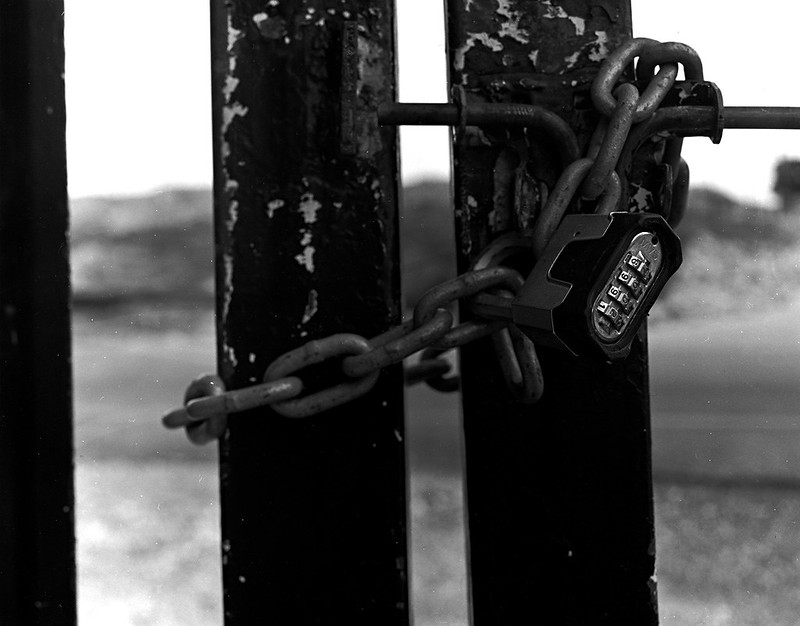
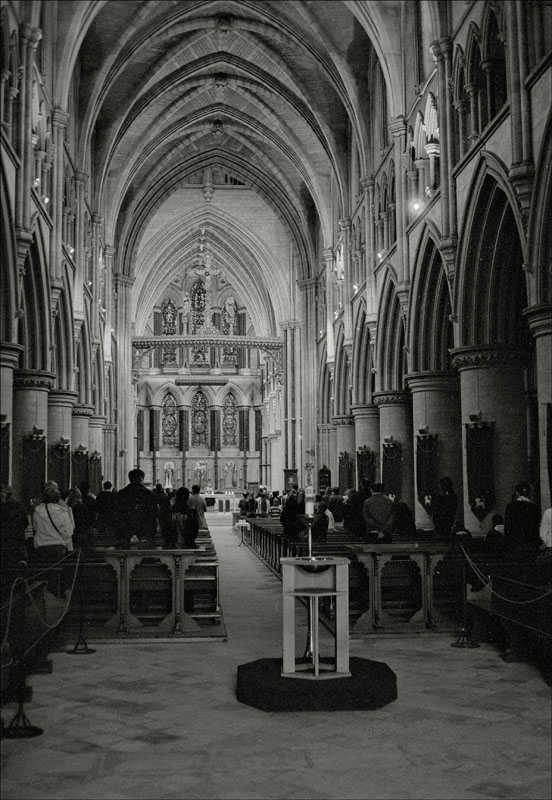
HP5+ Rodinal and grain.

If you need to level to the left in PS, you need to push, Keith (more development time).

I actually get less grain with 1:50 timed than with 1:100 stand.

Also make sure all your fluids have the same temperature.

Roland.
 
If you need to level to the left in PS, you need to push, Keith (more development time).

I actually get less grain with 1:50 timed than with 1:100 stand.

Also make sure all your fluids have the same temperature.

Roland.


Thanks Roland. 🙂
 
OK you win, Rodinal is the best developer ever and any film, were it pulled, pushed, exposed at its speed box, classic emulsion, delta one, everything in Rodinal !

It's not about winning, it's about having a balanced opinion, Rodinal is not a panacea but also it is far from the "massive grain, blocked shadows, and blown highlights" meme you continually suggest in every thread that mentions it.
I certainly never suggested Rodinal was 'the best ever developer' but you certainly continue to 'push' the massive grain etc. at any opportunity.
It's about being balanced, you come across as a four legs good, two legs bad kind of guy.

Developers like cameras, cars and any other product have good and bad characteristics- there is no panacea, especially not D76 which although is a good standard developer is not the best at anything.

I can show you dozens of scans of negatives developed in T-Max Dev. or D76 or Ilfotec which will look the very same as yours on a screen.

I can also show you excellent results I got with Rodinal.
This doesn't prove anything. And I don't have any "method problem".

Which is my point, you'll see very little difference between Rodinal and other developers grain wise at less that 12-16x enlargement, it doesn't give blocked shadows and blown highlights, if you get blocked shadows or blown highlights you certainly have a very bad methodology.


If you like high acutance and very visible grain, if you expose for what you will develop (highlights or shadows), if you shoot landscapes or still life objects (ala Ralph Gibson), if you use a MF camera or larger, Rodinal is perfect.
High acutance and visible grain are not necessarily down to exposure, which governs shadow and highlight detail. Acutance comes from development and is made by separation in fine detail due to promotion of adjacency effects; acutance developers provide the right formula for the promotion of the Kostinsky effect and the resulting Mackie lines.

If you mainly shoot iso 400 films at box speed in 35mm cameras, this is another story.

If you mainly shoot ISO 400 films at 'box' you will see little difference between D76 1:1 and Rodinal. Neither are full speed developers, neither are fine grain D76 is a 'average' developer that is OK at most things but master of none, Rodinal does at lest provide better tonal separation especially in the mid-upper highlights.
Saying that most people under normal conditions and magnifications be able to tell the negatives apart.

What I'm pointing out to you is your continued almost weekly assertion that Rodinal gives poor results with 'huge' grain poor shadow detail and blown highlights is not the truth.
If you get those results then you have serious errors in you workflow, but please don't blame your developer.

 
IMHO temperature with Rodinal is key.

My buddy Derk (who is Penny Lane here on RFF) sent me a link (which I cannot find right now...) to a Flickr image that was HP5+ stand-developed in the fridge with Rodinal, since his house was too warm last summer. Grain was negligible.

He also shoots HP5+ @800 and develops in Rodinal 1:50 and while it is grainy it is not overly so and tonality and contrast are very good: http://www.flickr.com/photos/ikhebbeeld/9028769868/in/photostream/

Again, this is all Derks work, I've yet to try it for myself but often my temperatures are below 20ºC/68ºF too (cold kitchen in winter) and grain from Rodinal is no issue with my stuff.
 
I have found Rodinal to be a fairly inefficient developer, however it is very versatile and easy to use and store, and gives a somewhat dramatic tonality, which works great in certain cases. For 400 ISO speed films, I would definitely prefer D 76, HC 110 or Tmax Dev ( the last has some Rodinal like grain and grit, but you GAIN speed), or DD-X/Xtol, if you like the sleek, grain free look. For slow films, Pyro developers or FX 39 make wonders of acutance with excellent tonality.

However, when it's good, it is seriously good- just like Tri X and D 76 seem to be a perfect marriage, so are APX 100 and Rodinal:


20134820 by mfogiel, on Flickr
 
Johan in my experience the appearance of grain with Rodinal is lessened when developing at 18°C with minimal agitation.
The strange thing is the conventional wisdom is a shorter development time will yield less graininess, that is certainly true with T Max/D76 and other developers diluting those gives the appearance of more granularity.

My tests have shown that this isn't true with Rodinal grain with most films stays constant with dilution, and in some cases decreases slightly at a dilution of 1:50-1:100.

A friend of mine swears the 1:80 is best for shadow density, compensation and tonality he also has shown me sections of 35mm film representing 20x enlargements where grain appears to be less than the 1:25 I was using at the time.

That is part of the fun, the customisation of workflow with the developer is amazing. Technically speaking the biggest plus point is the ability to retain a high p.h (over 11) irrespective of dilution a property very few developers have.

I've always found this 1970's magazine article interesting:
http://forum.mflenses.com/1979-pop-photo-rodinal-article-t37502.html
 
I have found Rodinal to be a fairly inefficient developer, however it is very versatile and easy to use and store, and gives a somewhat dramatic tonality, which works great in certain cases. For 400 ISO speed films, I would definitely prefer D 76, HC 110 or Tmax Dev ( the last has some Rodinal like grain and grit, but you GAIN speed), or DD-X/Xtol, if you like the sleek, grain free look. For slow films, Pyro developers or FX 39 make wonders of acutance with excellent tonality.

Marek, those weekly assertions coming from a four legs good, two legs bad guy are just unbearable ! 😀

😉

High acutance and visible grain are not necessarily down to exposure, which governs shadow and highlight detail. Acutance comes from development and is made by separation in fine detail due to promotion of adjacency effects; acutance developers provide the right formula for the promotion of the Kostinsky effect and the resulting Mackie lines.

I never wrote anything telling the contrary of all of this.

If you mainly shoot ISO 400 films at 'box' you will see little difference between D76 1:1 and Rodinal.

Almost true if you use Rodinal at 1+100 with stand dev. With Rodinal used at 1+25 or 1+50 the difference is very visible and in my opinion and in tons of other people's one, under those conditions, Rodinal gives to 35mm Tri-X and HP5+ negs quite an unpleasant look.

This was the point of Keith's answers when he launched this thread.

Now you will probably post many scans of many other films including pushed T-grain and MF negs to prove than Rodinal is the perfect choice for 35mm Tri-X and HP5+ negs exposed at 400.
 
In older literature Agfa advised Rodinal users to use it at 18°C as 20°C would result in higher graininess. In the past 16 to 18 °C was not unusual. The 20°C is a thing of post WWII film development Rodinal was invented in the plate era. And despite it's "shortcomings" it's still one of the best and most vesatile film and paper developers.
 
Almost true if you use Rodinal at 1+100 with stand dev. With Rodinal used at 1+25 or 1+50 the difference is very visible and in my opinion and in tons of other people's one, under those conditions, Rodinal gives to 35mm Tri-X and HP5+ negs quite an unpleasant look.

This was the point of Keith's answers when he launched this thread.

Now you will probably post many scans of many other films including pushed T-grain and MF negs to prove than Rodinal is the perfect choice for 35mm Tri-X and HP5+ negs exposed at 400.

I am not advocating the use of Rodinal over any other developer, what I am doing is stating that it DOES NOT give huge grain and blocked shadows and blown highlights unless you have poor exposure and subsequent development.
Hence my posted images to prove that point graphically as some of them were 135 fast films in Rodinal, people are posting 35mm 400ISO and above examples with less apparent graininess than Keith is experiencing you seem ignore those I notice!

Here, for your delectation is a conventional cubic grain film of 400 speed in Rodinal 1:50 taken on a Leica M4-P

62526081.jpg


So you can see is perfectly possible to get good results from HP5, Tri-x or any fast film with Rodinal, it may indeed be the perfect choice for those films depending on the effect you wish to get.

One thing is for sure you won't get blown highlights and blocked shadows they are not a feature of the developer as you keep insisting.

Rodinal is not perfect, I'm not arguing that just that it is much better than your repeated hyperbole.

This is not a four legs good two legs bad-your dislike of Rodinal (almost religious) has been well noted here over the years.
 
(...)your dislike of Rodinal (almost religious) has been well noted here over the years.
You're right, this is probably why searching this forum with "Rodinal" as keyword and "Highway 61" as posts author gives a huge amount of 10 posts from 2011 until now.

You may read them all and see what are my words when it does not deal with Tri-X or HP5+.
 
You're right, this is probably why searching this forum with "Rodinal" as keyword and "Highway 61" as posts author gives a huge amount of 10 posts from 2011 until now.

You may read them all and see what are my words when it does not deal with Tri-X or HP5+.

I didn't do a search, I have them in memory, three this year and two current threads where you repeated this.

So can you deny you have repeatedly suggested not only in this thread but in another thread currently running that Rodinal gives huge grain, blocked shadows and burnt highlights ?
Like in the current thread and the one entitled 'I learned my lesson' where you shared this jewel:

"Whatever dilution, Tri-X will never look good if processed in Rodinal even with the correct time.
Huge grain, high contrast, blown highlights. So"


Or do I have to post more links and quotes?
(I'm sure you'll get the point and we can just drop this) 🙂
 
I didn't do a search
Oh, really ? Too bad then.

MF :

FP4+ @ iso 100 in Rodinal 1+50 :

pharma1.jpg


APX100 @ iso 100 in Rodinal 1+50 :

pines.jpg


sofitel1.jpg


35mm :


Fomapan 100 @ iso 100 in Rodinal 1+50 :

hair.jpg


APX 100 @ iso 100 in Rodinal 1+25 :

fabre2.jpg


APX 100 @ iso 50 in Rodinal 1+50 :

tram1.jpg


h5.jpg


As everyone can now confirm it, I religiously dislike this developer and never used it properly. 😉

Have a nice week-end ! Rainy on my end, wishing you a better weather. 🙂
 
As everyone can now confirm it, I religiously dislike this developer and never used it properly. 😉

Have a nice week-end ! Rainy on my end, wishing you a better weather. 🙂

I'm going by your posts, and your often repeated 'huge' grain, blown highlights etc, your nice photo's prove you're wrong it is possible to get good results.
As for not being able to get those results from 400 films at box I can and so can you.

The weather here is sunny for now at least rain from the west later.
 
I don't like HP5+ in 35mm and have never bothered with it. I like Delta 400 quite a bit though, as I do Neopan. My relationship with Kodak is troubled as I've only ever been able to get good results using Xtol.

FWIW Rodinal is my default developer and that's the reason I'm so into Acros/Delta 100 shot at box speed. Rodinal keeps the highlights way in check and at 1:50 with normal development methods these two 100 speed films give me about what I'm personally looking for.

But, in larger formats where the size of the film can take care of things a bit, I like HP5+ in Rodinal:

rescan by redisburning, on Flickr

p.s. good light ameliorates all problems and as much as I prefer to not use Xtol that with TMax 100 in good light makes without question the most mind blowing negatives I've ever seen. but then, I like me some blocked shadows.
 
IMHO temperature with Rodinal is key.

My buddy Derk (who is Penny Lane here on RFF) sent me a link (which I cannot find right now...) to a Flickr image that was HP5+ stand-developed in the fridge with Rodinal, since his house was too warm last summer. Grain was negligible.

A complete fumble with HP5+ in Rodinal (this is said fridge-devved image):


CX Athena by bimmer1502, on Flickr

Rodinal likes it cool, is what this shot taught me. Semi-stand dev in the fridge for an hour, 1:100 (3+297) in a Paterson Model II, single reel tank (yes, that's about 55ml over-filled; works well & easier on the math). Started with room temp (around 24C) water, giving it time to cool to around 13C by absolutely no scientific standard at all. In fact, I really need to work out what temperature curve I get. 5 initial inversions (first minute), two more at halfway through.

The car was a very dark blue metallic colour, the weather was heavy overcast. Solid gunmetal grey skies. The camera was a Pentax SL/SMC-Tak 50/1.4, exposure a total guesstimate from sunny-16, aiming for 800 asa. Black point chosen to be in the seam for the door handle button. No sharpening at all. Almost everything went rather wrong here, but the HP5+ and cooled Rodinal saved the day 😎

After this, and the Kentmere 100 that came out beautifully from the same process, I looked back at what notes I had been taking on development. For all the best results, the common factor was cool temperature. In autumn and winter, I can work at a constant 16 - 18C (winter ambient temp in my kitchen) which for me yields better results than 20-22C any day. Anywhere over that and I'll agree with what others say: don't go there. Devved HP5+ in Rodinal at 24C once and it was, well, not good.

I really like Rodinal, and I've found that it can work rather well with HP5+ at or above box speed. I've also seen that that combo can work out to coarse, sandpaper-like grain and pretty nasty tonality though...

Cheers,
Derk
 
Derk
I now process all my Rodinal shots at 18°C the only times I've seen really course unpleasant sandpaper is when people shoot predominantly mid toned subjects and don't nail exposure, I'm sure warmer developer and to some extent aggressive agitation don't help either.
The tonal rendition and acutance of Rodinal can work against you if you don't practice good exposure, especially in the tones between that some term IV to VI zones, over or under then print on grade 4-5 and you'll get grain.
Meter for emerging detail, stop down two stops and even 400ISO films pushed to 800 or more can look great.
Here is Rodinal 1:50 with a cubic 400 film pushed one stop to EI800 wide open ƒ3,5 on a Rollei 35T.

86946726.jpg


For sure it's not the best developer for pushing, isn't the finest grain with fast film film but with care and correct exposure some would be shocked at what is possible.

Two things Rodinal does have is a stable p.h at high dilutions, a low induction period and a slow build of contrast. It's a tough developer to master, on the whole it's worth it.
 
@Photo_Smith: the worst I've ever seen from my own developing in Rodinal was indeed with non-perfect exposure and shots with tones closely grouped around zone V, so I can perfectly live with that as an explanation for silly grain. Still though, I'm going to keep on keeping my processing temperature low enough 🙂

I love your work with Rodinal, by the way! Your blog posts on using Rodinal have been an inspiration to try to get the hang of it!

Derk
 
Back
Top Bottom