I'm wondering how the Pen and m4/3 system is working for you now Chris? Are you still pleased with the stills quality?
I have always shot Panasonic for video as they have spent a few generations refining the interface and software to the point that I personally find them extraordinary cameras for run and gun/doc style video.
I have always maintained a separate stills kit though... until recently. In an effort to streamline my work bag (different batteries, chargers, filters, flash etc) I recently picked up a Panasonic G9. An extraordinary camera, if you ask me, and tough as nails. There seems to be little to no compromise between the video portion of the camera and the stills (running most recent firmware).
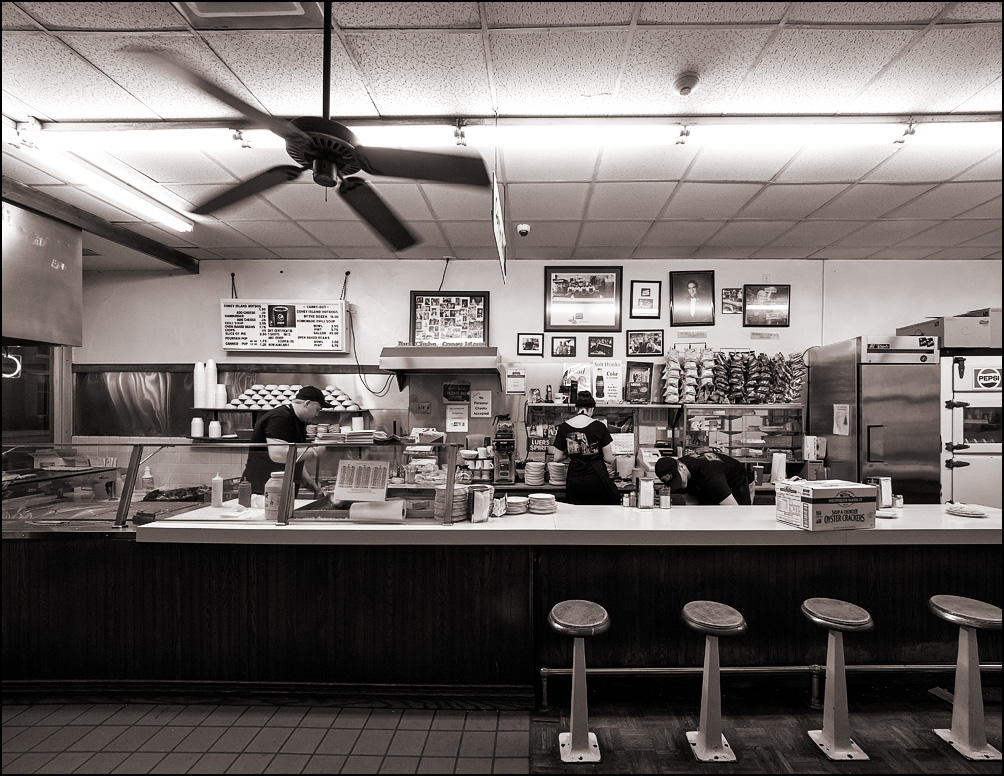
My question would be do you have any stills workflow tips/hints? In am a big fan of the monochrome D jpeg setting but would prefer to shoot RAW and achieve same look.
John,
It's working out well enough that a year ago I went down to Indianapolis and bought an Olympus OM-D E-M1 mark II with the vertical grip. I still have the Pen-F, which I use when I don't want to carry the heavier E-M1-II; but 95% of my color work is being done with the big pro body now.
The E-M1-II is big for Micro 4/3 but tiny compared to fullframe pro bodies, and it has full weathersealing and a much nicer, more ergonomic control layout than the Pen-F. The vertical grip makes handholding vertical shots a lot easier for me. I have trouble holding the Pen-F level when shooting vertical. The IBIS is better in the E-M1-II also, though the Pen-F's image stabilization is very good.
Right now, for lenses, I am shooting with the 7-14mm f2.8 Olympus Pro, the 12-40mm f2.8 Olympus Pro, the 45mm f1.8 Olympus, the 60mm f2.8 Olympus Macro, and the 45-150mm f4-5.6 Panasonic zoom. The only one of the lenses I don't like is the 45-150 Panasonic. It is very sharp, and tiny, and inexpensive. BUT, it vignettes badly unless stopped down to f11. Someday when I have the money, I will buy the Olympus Pro 40-150mm f2.8.
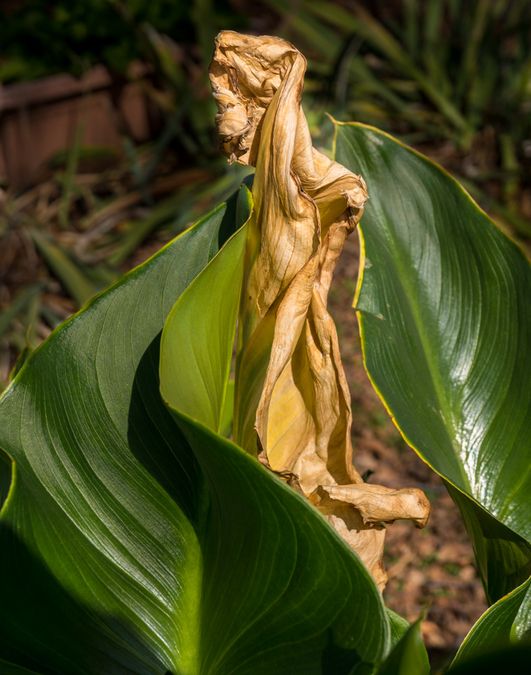
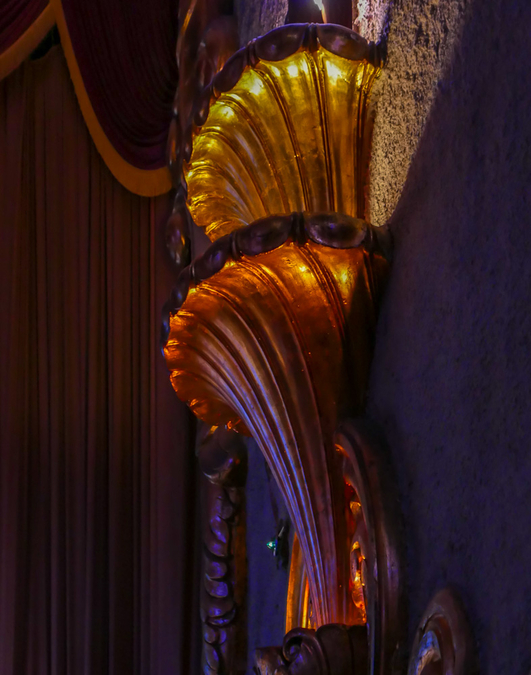
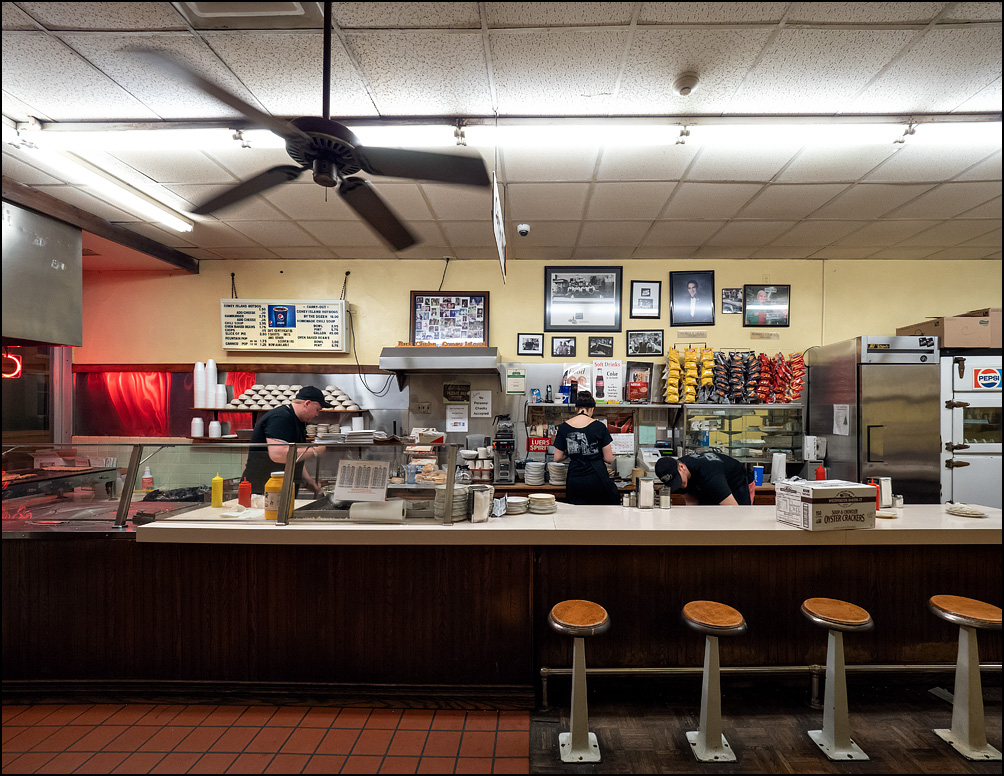
I use the two Olympus cameras for all of my color work now. Basically everything you've seen in color that I've posted in my "New Photos From Ft. Wayne" thread in the last two years has come from either the Pen-F or the OM-D E-M1 mark II, except the occasional old photo I get edited from my huge backlog of old stuff I need to finish.
My workflow is like this:
Shooting
Proper exposure is important on these small sensor cameras. They don't have quite the latitude that I had with the fullframe system I used before (Canon 5DmkII). I use a Sekonic L-758DR meter that I have calibrated for the cameras using Sekonic's profiling target and software. This has made the files easier to work with.
I always shoot raw. I have never been happy with JPEGs from any digital camera I have ever owned from any manufacturer. They just plain don't have the fine detail resolution or the tonality and color that I get shooting raw.
Processing
I process my files in Adobe Lightroom CC Classic. I have tried a lot of other RAW processors, and NONE gave me the fine detail resolution and noise reduction that Adobe provides from my RAW files. This is especially true from high-ISO files.
For color settings, the default "Adobe Color" profile gives the best results for most of my work with the E-M1 mark II. The Pen-F often gives better color for me with the "Camera Default" profile in Lightroom, but for some reason the "Camera Default" profile for the E-M1 mark II is not as good. It gives me a yellow cast to the highlights that is hard to remove by setting white balance without messing up the color of the rest of the image and it makes the highlights too flat.
After setting the color profile, I adjust the exposure, highlight, and shadow sliders as needed. I rarely need to use the exposure slider, as I am careful about exposure when I shoot. If I were a photojournalist shooting fast paced action, war zones, etc. like you I would probably not be able to be so careful and would use the exposure slider a lot more. I do often use the highlight and shadow sliders in high contrast situations and they work well with the Olympus raw files.
One thing I love about Lightroom is the controls for adjusting perspective for architectural shots. You'll notice most of my photos of buildings do not have converging vertical lines. I've had people email asking if I shot them with a 4x5 camera; quite a compliment for shots done with the tiny Micro 4/3 sensors!