Will said:
😉
JLW,
At ISO 1600, what kind of shutter speed are you using?
Cheers
Will
The shutter speeds are in the original post, albeit somewhat buried in my overall verbosity.
Also, here's another fun thing about EXIF metadata: If you download one of these images to your desktop, the metadata comes along with it, so if you've got software that displays EXIF info, you can see all kinds of detail about the photo. (Note that many photo viewers display shutter speeds in decimal format rather than the fractions we're used to; for example, you might see a shutter speed of "0.008" rather than "1/125." Just divide the decimal number into 1 to convert.)
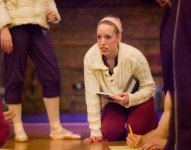
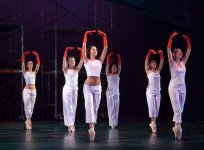
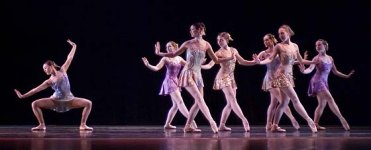
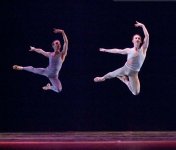
Another potentially interesting bit of info about the stage shots is that I did just about all of them this time in manual exposure mode (except the work-lights shot of the choreographer giving notes, which was shot in auto.) While the R-D 1's meter usually handles weird lighting conditions pretty well, these particular productions had such dark backgrounds that they'd fool the meter and give overexposed main subjects.
Rather than trying to deal with this by dialing in exposure compensation (which would require constant tweaking as the action moved around the stage) I found it easier to just choose a shutter speed based on the overall light level and leave it there. Whenever the light would change, I'd take a guess at the appropriate shutter speed, shoot a quick test frame and view it on the LCD, then adjust as necessary. This isn't as hard as it might sound -- the amount of stage lighting usually is determined by how many individual lights ("instruments") are plugged into each channel (or circuit) of the control board, so usually there will be only two or three overall light levels ("presets") you have to deal with.
For example, in this production I learned quickly that the lighting design had basically a bright preset which took 1/500, an average preset that took 1/250, and a dark preset that needed 1/125. Within the preset, the figures would get a little brighter as the performers moved closer to the lights at the side of the stage, but I handled that by stopping down the lens a little rather than by switching shutter speeds.
I'm not sure this quick-and-dirty technique would have worked if I had been shooting JPEG format (the digital equivalent of slide film) but since I was shooting in raw, I had enough latitude to fix minor exposure goofs afterward without compromising the quality of the final image.