Low Contrast Film Developers?

rover

Moderator
Staff member
Local time
2:56 AM
Joined
Jul 30, 2003
Messages
13,899
Location
Connecticut
What film developers produce lower contrast results. I shoot TriX most of the time.

Maybe I should ask what film and developer combos produce lower contrast negatives?
 
I live in South Ausgtralia and the light is very contrasty so I use Tri-X in Rodinal 1:50, 8 mins 20 degrees Centigrade gentle agititation first minute then 2 inversions every minute thereafter. I have a condenser enlarger which is contrasty. Hope this helps.
 
Probably any developer/film/EI properly combination-ed will give you low contrast. But my formula is HC-110 (4ml to make 500ml H2O and HC-110) for about 28 minutes, only agitate every 5 minutes, and shoot at 250 EI.

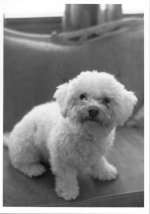
Here is one:

3875259496_f36f270dfc.jpg
 
+1 for D-23 -- it is cheap, to make too. You should know generally that lower concentrations of developer, regardless of type, and less agitation will lower the contrast of your images. My advice would be to shoot a roll of film with black, white and middle gray objects under the light conditions that you are concerned with and run some tests. It is the only way to really tell how your variables are going to work together.

Ben Marks
 
How do you normally shoot and develop?

I tend to like Rodinal in general for most of the films I use, usually at 1+100 and shot at half the box speed. Gets me nice negatives on the less contrasty side. Diafine for a select few films, it varies because on other films it gives me very harsh contrast.
 
Usually a 20% shorter developing time will soften your negatives about one grade, but obviously there is an end to this.
When your highest contrast negatives can be printed easy with a grade 0 filter you can consider your negatives OK.

Erik.
 
Reduced developer concentration, reduced temperature, reduced time, reduced agitation: all will reduce contrast. 'Trick' low-contrast developers such as POTA (Google it) should never be needed with any normal film, though they make it a lot easier to develop microfilms and the like (very short toe, very small exposure latitude) if you want a contnuous-tone negative.

Cheers,

Roger
 
Lowering contrast while keeping shadow detail is sort of a compensation development
Diluted Developers are quite good for this
Rodinal 1+50, HC110 dil H, D76 1+3, etc.
Also a change in the agitation routine helps, since times will be in the 20min range agitate once every other minute.

What film developers produce lower contrast results. I shoot TriX most of the time.

Maybe I should ask what film and developer combos produce lower contrast negatives?
 
all will with more exposure and less development! I would suggest D23 as this introduces a shoulder, or dilute Xtol with gentle agitation on the minute and healthy exposure.
 
Thanks for all of the education. I am trying to break my Diafine habit so I have been shooting TriX at 320 with intent of doing something different with it. I have DDX, Rodinal, HC110 and some D76 hanging out. I like DDX for ease of use, but have never used Rodinal before.

My question though is actually related to future shooting plans. I scratched an itch and bought an M4. I am going to screw a 35 Skopar II onto it, which I have always considered a very high contrast lens. So, I want to be able to compensate for that characteristic of this nice lens. For now, this is less expensive than buying another lens. Of course, I can always use my Canon 35/2.8, but I want to use the Skopar.

Thanks again.

 
Thanks for all of the education. I am trying to break my Diafine habit so I have been shooting TriX at 320 with intent of doing something different with it. I have DDX, Rodinal, HC110 and some D76 hanging out. I like DDX for ease of use, but have never used Rodinal before.

My question though is actually related to future shooting plans. I scratched an itch and bought an M4. I am going to screw a 35 Skopar II onto it, which I have always considered a very high contrast lens. So, I want to be able to compensate for that characteristic of this nice lens. For now, this is less expensive than buying another lens. Of course, I can always use my Canon 35/2.8, but I want to use the Skopar.

Thanks again.

Rover,

I promise, its no problem! I shoot in Afghanistan and also use the pancake II and it is not as high in contrast as some of the ZMs I also use. I also shoot the Mamiya 7 here and its lenses are high contrast.

ANY normal developer is fine and I would steer well clear of specialist brews likely to mess with the tonality of the neg. Just give enough exposure and don't develop too long. Some tests doen in an afternoon will tell you all you need to know.

I mainly use Xtol (1+2), but also use DDX (at 1+7 for economy) and believe DDX is excellent as a std dev. I also rate my TriX here at between 200 and 320 depending on lighting and get negs that print beautifully on a diffuser at G3-4.

Summer is not an issue as the light is harsh but can be flat, Autumn and spring are usually when I downrate the speed due to low cutting sunshine and deep shadow.
 
I should add that film choice is worth considering. Neopan 400 has a slight shoulder in Xtol 1+X and DDX. I have never found it too hot. If you want very creamy greys without hard blacks or scintillating whites, try pulling HP5+ to about 200 in DDX/Xtol.

I would perhaps stay clear of films with a very linear response, like D400 and other modern films. A well exposed and gently developed traditional grain film will be easier to handle.
 
Xtol seems to me to be a more gentle developer than D76, so if that's what you're used to I'd suggest trying Xtol. I've just shot bunch of Tri-X under quite harsh conditions and with Xtol 1+1 had no problems at all.
 
I have DDX, Rodinal, HC110 and some D76 hanging out. I like DDX for ease of use, but have never used Rodinal before.

Personally I think Rodinal is quite a tricky developer. You do seem to lose some speed with it and although the highlights sparkle the mid-tones can be flat. Well that's my experience anyway. Oh and if you like to shoot Tri-X you may find it rather grainy...
 
Personally I think Rodinal is quite a tricky developer. You do seem to lose some speed with it and although the highlights sparkle the mid-tones can be flat. Well that's my experience anyway. Oh and if you like to shoot Tri-X you may find it rather grainy...

Thats bec is tends to give a straight line with many films, so the highlights keep on coming but mid tone contrast is not as high as with S type curves and if you are forces to reduce print contrast to reel in highlights (i.e. you dont pre-flash or cannot burn in easily) then the mids are affected.

I have never understood why so many people have regarded a straight line as 'ideal' because pictorially it is not very nice to look at. Technically, mathematically, it should be ideal, but its what the human eye likes to look at that is best for me and that tends to be more of a subtle S with stronger mid tone contrast in most cases.

Dilute Xtol with modest agitation is indeed quite gentle. I cant really compare it to D76/ID11 as I have not used the latter in a while, but my recollection is indeed reduced highlight density and more controlled negs all round (with more speed)
 
Personally I think Rodinal is quite a tricky developer. You do seem to lose some speed with it and although the highlights sparkle the mid-tones can be flat. Well that's my experience anyway. Oh and if you like to shoot Tri-X you may find it rather grainy...


I have an old Pop Photo article from someone here, that strangely said they don't recommend Rodinal with TriX. This article was written way before everyone was pushing and Stand-ing. At the time I read it I said, what did they know, but I use Rodinal regularly but I do not like it with old or new TriX. That is my opinion, and of course scanning, printing, post processing, etc make a difference, but still I like it with some films but not with others. Example, TMY-2 at 200 (EI) with Rodinal 1+50 for 10 minutes (agitate, 30 seconds to start and then one inversion every minute) and then 3 minutes in Twenty Mule Team Borax for 3 minutes (stand) is a great combination for me. Puerto Vallarta, 2009:

3287762741_d61528c8cd.jpg
 
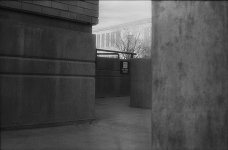
I use straight caffeinol to get a very smooth, low contrast negative. It's excellent for scanning, but a bit difficult to print on variable contrast paper, such as Multigrade. I dissolve 8 grams of Na2CO3 in a vente Pike Place coffee from Starbucks (about 420 mg of caffeine), then cool the mixture to room temperature. Pour it into the tank and agitate for a couple minutes. Then let it stand for an hour, or agitate it a couple times more if you need to - I kinda like the streaking. Rinse, fix, wash and dry the way you normally do. The negatives will have a clear, brown stain.

An example of a caffeinol negative is attached.
 

Attachments

  • donotenter.jpg
    donotenter.jpg
    169.3 KB · Views: 0
Back
Top Bottom