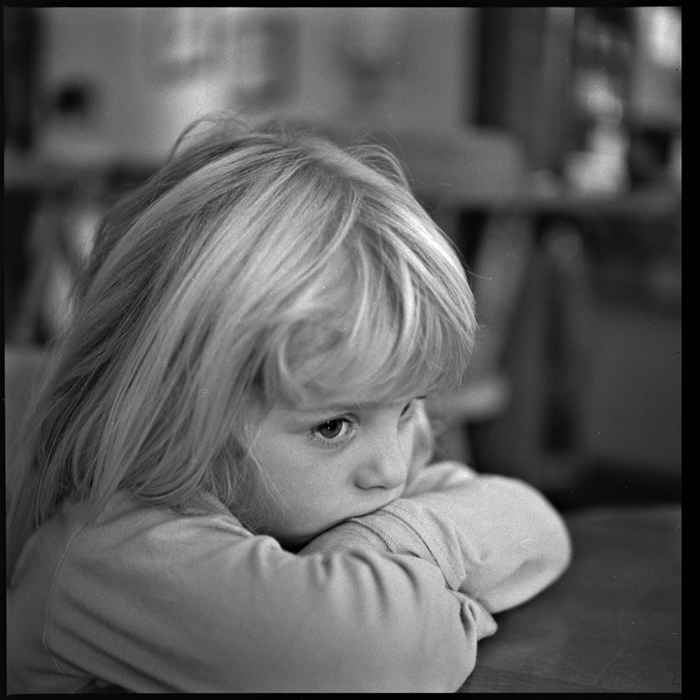
Neopan 400- developer for best tonality?

GarageBoy

Well-known
Local time
12:00 AM
Joined
May 29, 2013
Messages
838
Just got some neopan 400 to play with before it's gone and was wondering what developer to use for best tonality. I'm using tmax for everything right now

 
Im quite fond of rodinal 1:50 with Fuji's films, Neopan 400 included. It's a bit grainy, but Rodinal depresses midtones and those two together make it a great overcast day film for me. I run it at 400.


Untitled by redisburning, on Flickr

I use Acros more these days because I live in Texas but Neopan 400 and Portra 160 were overwhelmingly what I used for two years living in Boston.
 
Tonality is a combination of exposure wrt scene brightness and subsequent development.
Most of the developers mentioned will work well.
My favourite is Rodinal which expands the mid tones and compresses the highlights especially at higher dilution's say 1:50 couple that with correct shadow exposure and you'll get nice tonal rendering even with low key subjects.

62526081.jpg


103681701.jpg


The obvious strength of Rodinal is the expansion of mid tones at the expense of a little more grain than say HC110
 
Looking and your very nice pictures I decided to try Rodinal with the remaining rolls 400PR myself. Thanks for sharing !

Tonality is a combination of exposure wrt scene brightness and subsequent development.
Most of the developers mentioned will work well.
My favourite is Rodinal which expands the mid tones and compresses the highlights especially at higher dilution's say 1:50 couple that with correct shadow exposure and you'll get nice tonal rendering even with low key subjects.

62526081.jpg


103681701.jpg


The obvious strength of Rodinal is the expansion of mid tones at the expense of a little more grain than say HC110
 
Yes x 100

Every time I have decided to use the massive dev times I have ended up with under exposed negs... mind you, I now know!

I would second xtol, I find it brilliant for most things. Just be careful to test it if you haven't used it for a while... it can die suddenly.

XTOL is my usual developer, do you have some times ? Around ISO800 and 20C (68F) ?

I find the massive dev figures always too short, the few times I trusted them I ended up with underdevelopped negs :bang:
 
I use Rodinal with Neopan 400. It brings out the mid-tones and thus I shoot it on sunny days. Anyone who says that rodinal depresses midtones in general is developing it too aggressively (however this is exactly what you DO want to do in overcast light).

I like to bring out midtones on my negatives to allow for many different print interpretations. Rodinal does this for me. If I want nice smooth tonality, it can be achieved. If I want high contrast, it can also be achieved with proper filtration. And everything in between is thus also doable.

Agreed. If you're compressing the mid tones with any developer you're either exposing incorrectly or developing for too long or possibly both.
The two biggest issues I've helped people with over the years is a exposure that has shadows on the linear part of the curve pushing highlights to the shoulder–the 'Rodinal loses speed' mantra means people give too much exposure and harsh tonal transition, blown highlights and quite a bit more 'graininess' is apparent in these types of images.
The other is the opposite where lack of exposure causes people to use longer developer times also pushing up the CI.

The secret with this (and any developer) is to meter for emerging shadow and stop down two stops. The toe is the crucial area of the film curve put the shadows there and all will be well, better contrast, tonal range and reduced look of graininess are all benefits of this method.

It's the one single part of the method I wish I could share with everyone.

When Neopan 400 was first introduced I was working with Fuji as a first flush tester, we developed it in many different developers including the Fuji Super Prodol, and Rodinal–so this is a combo I've used for 25 years and trust.
 
I use Rodinal with Neopan 400. It brings out the mid-tones and thus I shoot it on sunny days.

depressing means it lowers their values, that is separate from compressing them which is how I think you've interpreted what I've said.

I have personally found xtol to give brighter midpoint when the white and black point for a similar scene are set the same.
 
By "emerging shadows" do you mean shadow parts, which you want to have details or have I misunderstood something ?
Until now I just measured the light with an incident meter and then just took the picture. Pictures were fine but I guess it is not an optimal solution.
 
Emerging shadows is the lowest value you want recorded on the B&W negative, that is the part that is visually just above the clear base. It is important that it is around filmbase plus fog plus 0.3 density (1 stop)

To achieve this follow the simple instruction.

When using the camera's exposure meter, first make an exposure reading lowest shadow area within the scene you want to record (AKA zone 2-3). To do this, make a light reading from the shadow detail, read the values on the meter and adjust the exposure settings by -2 , by simply stopping the lens down by 2 stops from the indicted light reading. For example, if the shadow reading indicates an aperture of f4 then close the lens (by -2) to f8, to give the correct exposure. This will ensure that shadow detail is recorded onto your film in the TOE of the curve rather than the linear straight part driving up graininess in the image.
In the following image the earring is the part I metered from (this is also Neopan 400 in Rodinal)

Fiona by Photo Utopia, on Flickr
 
Beautiful work. Happily still have an adequate stash of 120 Neopan 400 in the film freezer and viable reserve of echt Rodinal (last Agfa batch).
 
There is a world of difference between 120 and 35mm.
Rodinal DOES increase grain, so you won't end up with a clean image with nice tones in 35mm, but a much more gritty shot. (as one can see in the first example, which is 35mm)
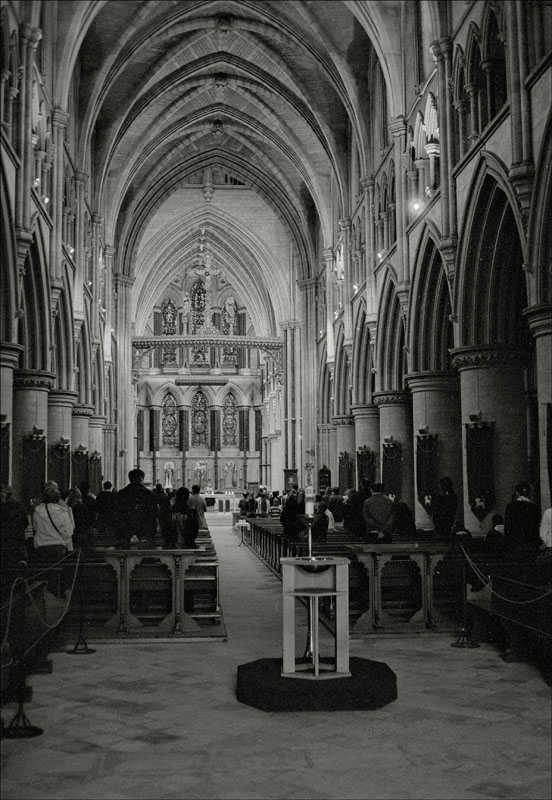
Fair enough; The OP didn't specify what format he was to shoot in, but it's more likely that he would get his hands on 35mm than 120, so blatantly recommending Rodinal, mostly without mentioning that the examples are from 120, gives false hopes and pretenses IMO.
 
http://www.flickr.com/photos/72235979@N02/tags/neopan400/

I used Neopan with Rodinal (lovely), XTOL (very well too) and Diafine (way to thin, can't recommend that).
It pushes great in Rodinal 1+50 too

at 400 in XTOL - I had to use a very soft filter for prints but the scans look great:


Untitled by Kay__K, on Flickr

Untitled by Kay__K, on Flickr

Untitled by Kay__K, on Flickr

In Rodinal 1+50 (I've better exsamples but only few are uploaded)

Untitled by Kay__K, on Flickr


Untitled by Kay__K, on Flickr

pushed to 1600 in Rodinal 1+50 (works also nicely with 35mm but this is 120)

Untitled by Kay__K, on Flickr
 
XTOL is my usual developer, do you have some times ? Around ISO800 and 20C (68F) ?

I find the massive dev figures always too short, the few times I trusted them I ended up with underdevelopped negs :bang:

never tried pushing in XTOL cos it works so good with Rodinal

If you find the times too short in the MDC you might have a problem with your temperature or this is just personal preference.
I find the MDC times quite good actually, I use the iPhone app
 
There is a world of difference between 120 and 35mm.
Rodinal DOES increase grain, so you won't end up with a clean image with nice tones in 35mm, but a much more gritty shot. (as one can see in the first example, which is 35mm)

I'm not 'blatently recommending Rodinal' I have also posted some shots in this thread showing Neopan 400 35mm developed in Rodinal; possibly you missed that one so here it is again.
62526081.jpg


So it IS possible to get a clean image and nice tones with Rodinal and faster films IF you know how to expose and develop so while there is a world of difference between 120 and 35mm is is possible to make smooth tones with Rodinal if you know what you are doing.

The Following Neopan 400 rated at 1600 developed in Rodinal

86946726.jpg

Rollei 35T

So it is possible, I don't own magic equipment, just follow the rules.
 

This is - as already told to you - one of the most beautiful portraits I ever saw.

Too bad there is something looking like a scratch on the negative (might be scanner banding as well).

Not too sure if the "emerging shadow" metering technique (which sounds a bit complicated to use in the field when your subject has no patience or is prone to get away so that you have to meter in a PDQ manner) is mandatory there. Metering on the area between the nose and the mouth would have provided the same results IMO.

Or incident metering by placing the meter in front of the eye which is in focus ?

Yet - again, what a lovely photograph. Congrats.
 
Back
Top Bottom