Olympus XZ-1 review - Mixed Emotions

Nelson Tan

Established
Local time
11:47 PM
Joined
Apr 9, 2010
Messages
139
I've been using the Olympus XZ-1 and I'd like to share my comments on this newcomer who is a potential threat to traditional favourites such as the Panasonic LX-5 or Canon S95.

The Olympus XZ-1 is quite a joy to use, with fast shooting speed and short shutter lag. The focusing is pretty quick and snappy for a compact camera, and the zoom controls are smooth and precise. In low light conditions, focusing slows down but hunting is not prevalent with this camera.

5422502743_5b69ab32f9_z.jpg


The iZuiko lens has a strong tendency to flare though, bleeding magenta cast in the overblown areas. Such situations do not occur frequently, but when they do it is difficult to shield the lens totally from flare. The video performance is pretty impressive though with very smooth stabilization. Autofocus works in video mode, but don’t expect the focus to be fast enough to capture fast moving subjects or quick change in subject distances.

5422284343_2220352edc_z.jpg


Image quality is a mixed bag. The Olympus XZ-1 performs exceptionally well in certain conditions, but absolutely falters in others. In terms of JPEG quality, the Olympus TruePic V image processor does a nasty job of smearing details with heavy-handed noise reduction for any images shot above ISO 400. Forget about shooting above ISO 800 unless you are a huge fan of watercolour rendition of your images, or simply love Kodak TMAX 3200’s grain or noise. In good lighting and at low ISO settings however, the Olympus XZ-1 is an absolute peach with its iZuiko lens. The images are extremely crisp and sharp, showing off the impressive lens to perfection.

5422893138_352590d575_z.jpg


As Darth Vader will say, “The Force is with you, young Skywalker. But you’re not a Jedi yet!” In this case, I’d say that the Olympus XZ-1 carries an impressive lens, but the size and capabilities of the sensor means that it carries no threat to the bigger boys such as the Micro Four-Thirds or DSLR.

If you are looking for pure quality in a compact, you’d be better served by something with a larger sensor in a compact chassis such as the Leica X1, Fuji X100 or the Panasonic GF-2/Olympus E-P2 with pancake lens. I know they cost much more than the XZ-1, but you will be sorely disappointed if quality is your main criteria.

I'll be adding more comments and updates as I use the camera more. Please feel free to check out the full review and additional images at my blog

http://photographyhappenings.blogspot.com/2011/02/olympus-xz-1-review.html
 
With the number of options in APS/u43 growing every day, it's interesting to see where the luxury small sensor compact digital concept is going, especially considering how insanely small a NEX with a pancake is..
 
Great review! Thanks for sharing 🙂

On a personal note, I'm pretty sure that if this Olympus XZ-1 camera came before the Micro 4/3 cameras etc... Most of us would have thought that the output image quality would have been more than good enough, but nowadays since we are spoilt with the various mirrorless cameras, our expectations of image quality is much much more higher these days...
 
Thanks for the review. I'm hoping to buy a P&S in the next few weeks and I'm torn between the LX5 and the Oly. I'm leaning towards the LX5 mostly because I think the oly is too pricey for what it is and the lx5 is a known quantity.
 
Hi guys,

No worries... no offence taken. DPreview has always been the defacto comparison for digital camera reviews, and they have a comprehensive methodology to test the cameras which makes it easy to compare against other cameras (which is good when you are deciding between cameras).

However, DPReview is very much lab-test based, and I wanted to provide a real-user perspective to balance up the reviews in case anyone is considering the camera. I had the opportunity to use the camera more, and learn the quirks and strengths of the Olympus XZ-1.

Strangely, the camera give hints of when the image is going to turn out slightly fuzzy with the noise reduction, even at ISO 100. When the light level falls, you can see some tiny "buzzing" rendition on the LCD screen when composing the image, which lets me know that noise-reduction is kicking in. It's weird, but so far it holds true for me - the images that I reviewed on the computer in post processing did look softer for the images with the "buzzing previews".

Anyway, I agree that this is a compact camera which means I get to carry it everywhere, and noisy image is better than no image. My review never meant to compare it to a larger sensor camera, but rather to provide some actual images from the camera to counter expectations stemming from the enthusiastic marketing from Olympus pitching the XZ-1 as a low-light camera.

I'll be posting up more images soon, so keep a look out for them!
 
Hi Nelson, thanks for the nice review. I'd be interested in how the images are wide open, and how the camera works when you are wide open at full zoom (in A mode), and then go back wide, does it stay at 2.5 or go back to 1.8? That's one thing that bugged me about some other p&s with variable aperture zooms.
 
Thanks for taking the time to write this review. I was particularly interested in what you had to say about its high ISO performance, because one of the things I found interesting in the specs is the wide aperture at tele lengths. I shoot bands in clubs with a GRD3, but from time to time ponder getting a compact zoom. One thing that holds me back on getting an S95 is that the F2 is not there when you move away from wide angle shots. For that reason, the XZ-1 looked like a good alternative. I guess I'll keep sitting on the fence.
 
One thing that holds me back on getting an S95 is that the F2 is not there when you move away from wide angle shots.

Well, 1.8 is not available when you move away from wide-angle on the XZ-1 either right? However, f/2.5 at the max telephoto length IS pretty damn good for a P&S. That combined with decent high ISO could make this a winner.
 
Well, 1.8 is not available when you move away from wide-angle on the XZ-1 either right? However, f/2.5 at the max telephoto length IS pretty damn good for a P&S. That combined with decent high ISO could make this a winner.
It's the decent high ISO that the review calls into question. I believe the f2.5 is still wider than the Canon provides in the telephoto range, but I could be wrong.
 
Hi ampguy,

The images wide open are quite good, generally befitting the Zuiko designation of the lens. When shooting wide-open, there is a very slight glow in the highlights of the image (not the glow of the old Leica lenses!), which is discernable when you pixel peep on the computer. I've been shooting wide-open quite a lot, and the results are pretty impressive.

The lens has a variable aperture design, so if you set it to f/1.8 at 28mm, it automatically shows f/2.5 as you zoom in to the tele range. Technically it's the loss of light, rather than a physical aperture stop-down.


Hi Nelson, thanks for the nice review. I'd be interested in how the images are wide open, and how the camera works when you are wide open at full zoom (in A mode), and then go back wide, does it stay at 2.5 or go back to 1.8? That's one thing that bugged me about some other p&s with variable aperture zooms.
 
Hi Babylone,

I am more interested in squeezing the maximum sharpness out of the camera, so all my testing and shooting so far have been focused on how good the images can go in the best conditions or settings. From what I've seen, the XZ-1 is already exhibiting some smudging of details at ISO 100 when the light level is low. So I'll be keeping my fingers crossed at higher speed ratings!

I'll do some shooting at higher ISOs sometime this week and post the images up when I'm done. 🙂


Thanks for taking the time to write this review. I was particularly interested in what you had to say about its high ISO performance, because one of the things I found interesting in the specs is the wide aperture at tele lengths. I shoot bands in clubs with a GRD3, but from time to time ponder getting a compact zoom. One thing that holds me back on getting an S95 is that the F2 is not there when you move away from wide angle shots. For that reason, the XZ-1 looked like a good alternative. I guess I'll keep sitting on the fence.
 
Nelson-
I (and probably others) would like to know your opinion on the XZ-1's ability at ISO's between 200-1600 relative to the other "premium" compact zooms (Samsung EX-1, Pany LX5, Canon S95). You mention that relative to an APS-C it is no match but what about others in its sensor size class?
 
Thanks Nelson

Thanks Nelson

Do you mean a slight purple fringing or sensor bloom when high contrast scenes are magnified?

So when you zoom wide open, then zoom back to wide, it automatically stays wide open when fully wide (1.8)? This is nice. My Fuji's often have to be reset to be fully open.

Hi ampguy,

The images wide open are quite good, generally befitting the Zuiko designation of the lens. When shooting wide-open, there is a very slight glow in the highlights of the image (not the glow of the old Leica lenses!), which is discernable when you pixel peep on the computer. I've been shooting wide-open quite a lot, and the results are pretty impressive.

The lens has a variable aperture design, so if you set it to f/1.8 at 28mm, it automatically shows f/2.5 as you zoom in to the tele range. Technically it's the loss of light, rather than a physical aperture stop-down.
 
Nelson-
I (and probably others) would like to know your opinion on the XZ-1's ability at ISO's between 200-1600 relative to the other "premium" compact zooms (Samsung EX-1, Pany LX5, Canon S95). You mention that relative to an APS-C it is no match but what about others in its sensor size class?

Hiya! I'd love to give you a definitive answer, but I don't have access to the S95 or LX5 right now, so I'm afraid I'll have to disappoint you. It's pretty difficult to do a shoot-out test in terms of logistics, but I think the DPReview tests allow you to see side-by-side comparison with all of the cameras you've mentioned (it's a nifty software they're running). You can change the cameras, ISO and even choose between RAW/JPG, and scroll around the image to see the difference in the close-ups.

But a word of caution from my personal experience with the Olympus... it excels in the test that DPreview puts it through! It is very strong in macro performance, and especially so when the lighting is good (as in the case of DPReview's studio set-up). Real world performance tends to dip... so that is why I'm posting these photos. 🙂
 
The Olympus XZ-1 is not known for being the sharpest digital compact in town, and there are several instances where the image has smudgy details to compensate for the sensor noise.

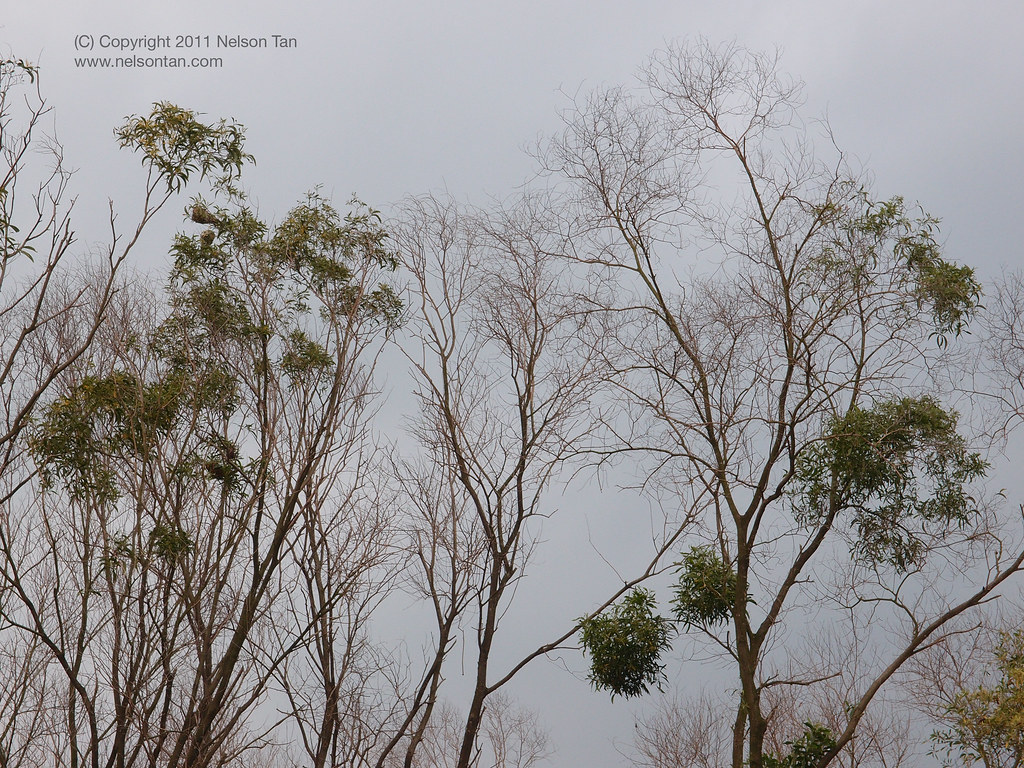
Worse case scenario (or even average performance) aside, what is the best that the Olympus XZ-1 can deliver when it comes to landscape details? Well... surprisingly acceptable if you are willing to coax out the image with the right settings. Here's an image I took of some branches and foliage, which is something that will trip most cameras over.

I shot the image at ISO 100 in RAW mode, in Aperture priority at f/5.6 and 1/60th sec. The RAW file was converted in the Olympus software with a +0.5 EV compensation to brighten up the details. Noise reduction was set to zero, and I dialed in +1 for sharpness in the Olympus software.
The resulting image is not something that will get the larger sensor cameras worried, but it shows that the Olympus XZ-1 can deliver reasonably good imagery with proper care and technique. Not quite the mushy leaves and branches I was dreading... phew!


Here is the full image...


5428653508_d000bd9131_b.jpg


And a 100% cropped section from the full image... not too shoddy for a compact!


5428653818_77607b7b9c_b.jpg
 
Back
Top Bottom