Opening spanner screw heads cleanly

JPiettro

Member
Local time
10:22 AM
Joined
Nov 19, 2017
Messages
35
The only type of the camera screw heads I still have some trouble with unscrewing them cleanly are the two-hole spanner heads just like the one found on the top of an Agfa Colorflex (I hope the Rangefinder police doesn't block me 😉) :
AgfaColorflex05.jpg


The keyword here is "cleanly".
What tools do you use for those smallish spanner heads? Note that in the above picture that's rather a big one. These can be sometimes as small as 3 mm in diameter.

You can't use a lens spanner for them: it's too rough for such a small screw head. Are there any special tools out there for this kind of job?
 
I usually make a dedicated tool with some hardened wood pieces or with something made of hard plastic like a Tupperware flat spoon.
A lockable compass fitted with two pieces of hardened wood the size and shape of some dental picks or two very solid plastic picks would do.
If it doesn't, you can use a pharmacy metal splinter removing clamp after having rounded and smoothened its ends so that you have minimized the risks of scratching the finish of the screw you have to remove.
Sometimes your finger covered with a rubber pad or a small round rubber eraser will be simply successful. Such screws are never tightened with much torque but quite often the threads have got stuck with grime or corrosion. Carefully heating the screw head before trying to remove it will help.
 
Sorry for a possible misunderstanding - what is 'hardened wood'? Are you talking about some exotic hardwood such as ebony or rosewood?
Do you mean you would shape the tool out of a piece of hardwood down to such a small size as to work on those 0.3 mm holes in a 3 mm diameter spanner screw? Please explain it in some more detail.

Regarding the other option, a 'pharmacy metal splinter removing clamp'. Are you talking about these? :
bestope.w710.h473.2x.jpg


I usually make a dedicated tool with some hardened wood pieces or with something made of hard plastic like a Tupperware flat spoon.
A lockable compass fitted with two pieces of hardened wood the size and shape of some dental picks or two very solid plastic picks would do.
If it doesn't, you can use a pharmacy metal splinter removing clamp after having rounded and smoothened its ends so that you have minimized the risks of scratching the finish of the screw you have to remove.
Sometimes your finger covered with a rubber pad or a small round rubber eraser will be simply successful. Such screws are never tightened with much torque but quite often the threads have got stuck with grime or corrosion. Carefully heating the screw head before trying to remove it will help.
 
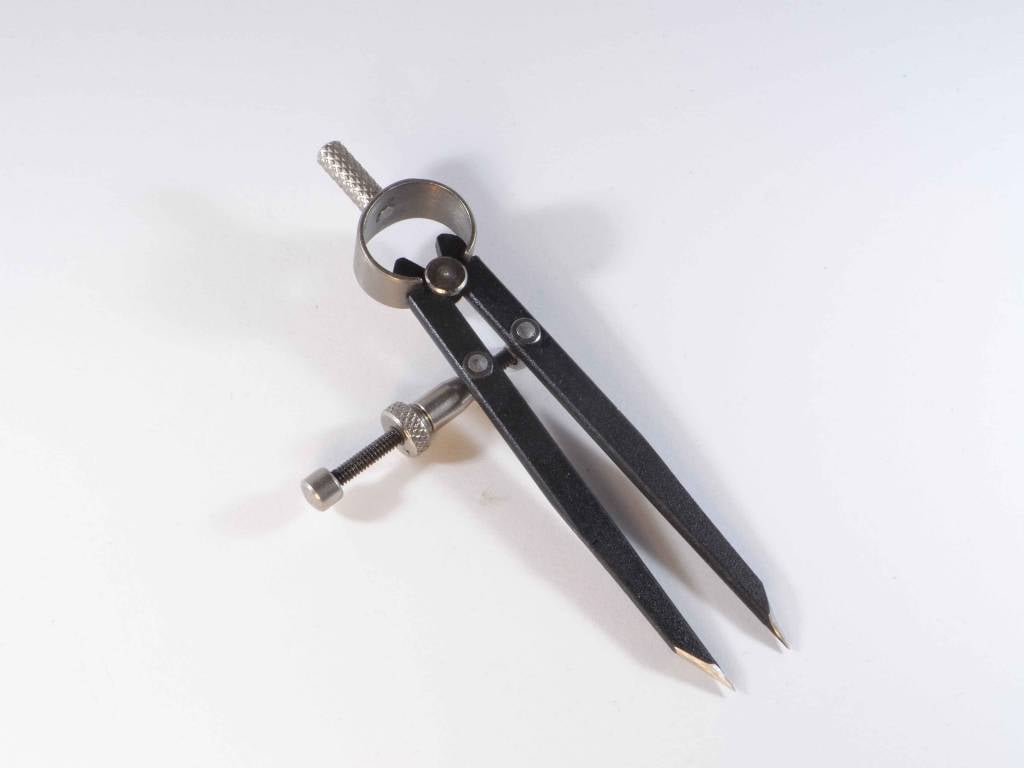
Among other things, I've gotten a couple of pairs of small machinist dividers. I grind the tips to the size I need. One set is ground for slotted openings- very common on Rolleiflex, for example. Another pair is ground for round openings like your example. A third pair is slowly disappearing as it is custom ground for new needs. Oh, one problem with this tool is that it was never designed to handle twisting motions. So sometimes I need to use pliers to hold the two legs in proper orientation while twisting if I need lots of pressure.

spring-divider-small.jpg


Basic pushpins are the right diameter for certain items. I need to take the retaining screw off of Minolta Autocord wind levers and made a wrench using push pins. Grind the tips down to where the metal is the right diameter. Then sand flats on the plastic handle part of the push pins so that two of them mate up at the right distance. Glue them together.
 
Dan: that's a good one, thanks.

Regarding the 'hardwood' example above. If I correctly understood is it something like the following? Sorry for the rough drawing.
 
Among other things, I've gotten a couple of pairs of small machinist dividers. I grind the tips to the size I need. One set is ground for slotted openings- very common on Rolleiflex, for example. Another pair is ground for round openings like your example. A third pair is slowly disappearing as it is custom ground for new needs. Oh, one problem with this tool is that it was never designed to handle twisting motions. So sometimes I need to use pliers to hold the two legs in proper orientation while twisting if I need lots of pressure.

spring-divider-small.jpg


Basic pushpins are the right diameter for certain items. I need to take the retaining screw off of Minolta Autocord wind levers and made a wrench using push pins. Grind the tips down to where the metal is the right diameter. Then sand flats on the plastic handle part of the push pins so that two of them mate up at the right distance. Glue them together.

Good idea with the dividers. The pushpin tool intrigues me. Can you show a photo of that also please?
 
Do you mean you would shape the tool out of a piece of hardwood down to such a small size as to work on those 0.3 mm holes in a 3 mm diameter spanner screw? Please explain it in some more detail.

No I don't, this would require special tools to make it. I was meaning small stock wood picks (likely from some very good quality toothpicks - the toothpicks you can buy out there are all from different qualities, some will resist, some will break immediatly) which you harden yourself with a lighter (try-error process) before you put them in a kind of homemade spanner. In case of medium sized holes, the hard plastic option is sometimes more valid than the wood option. Anyway the wood or plastic ends of the homemade tool will likely break during the operation, but if, as a result, the screw head had budged, then you're done. To lock the screw back when you reassemble, using a small round rubber eraser will be enough.

Regarding the other option, a 'pharmacy metal splinter removing clamp'. Are you talking about these? : <see photo above>
Yes I am exactly (the straight one). You then have to adjust (for parallelism) and file down and smoothen the ends of the clamp (or plier, whatever you call them) so that it perfectly fits.

Another trick is to cover the screw head with some cloth adhesive tape, then punching holes in it when you fit the homemade tool into the screw head holes. This will improve the grip of the tool ends and will lower the risk of scratching the screw head surface if the tool skates off by accident.

The depth of the holes of the part to unscrew is quite often the key. If the holes aren't deep enough, this may require lots of care and patience. Definitely marring the screw head can occur quite quickly, especially if made of chromed soft brass.

Back in the old days, those fragile parts, even on some high-end cameras, were designed to be replaced on each service requiring they were removed. Now for instance the number of screws of the selftimers and frames selectors of old Leica M film cameras which exhibit some ugly tool marks seems to increase.

 
... Anyway the wood or plastic ends of the homemade tool will likely break during the operation, but if, as a result, the screw head had budged, then you're done. To lock the screw back when you reassemble, using a small round rubber eraser will be enough.

Good - I hear you! Yes, I agree: the task is simply to get the screw moving (hopefully in the right direction; see my recent LH thread post 😉)

Yes I am exactly (the straight one). You then have to adjust (for parallelism) and file down and smoothen the ends of the clamp (or plier, whatever you call them) so that it perfectly fits.

Another trick is to cover the screw head with some cloth adhesive tape, then punching holes in it when you fit the homemade tool into the screw head holes. This will improve the grip of the tool ends and will lower the risk of scratching the screw head surface if the tool skates off by accident.

I was thinking about the above - very good advice indeed. Thanks!
 
Could you also help me with the forum behaviour?
I get constantly disconnected and before I finish typing next post I have to re-enter my login on posting. How can I fix that?
 
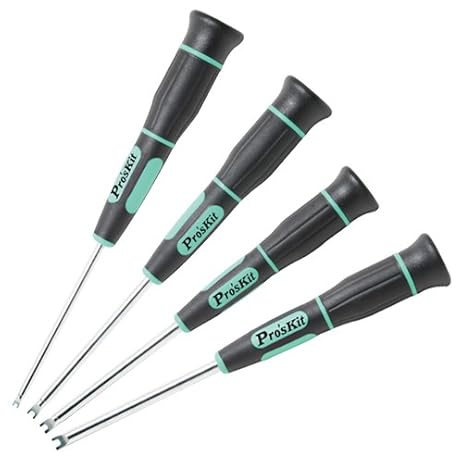
How about these? I think they should be available from some hardware stores: <see image above>

They rather look like they will fit screws with half slotted heads which you often find in toasters or hairdryers ! One of them (if very small enough) should fit the screws located on the rear side of the Rollei 35 top cover...

I get constantly disconnected and before I finish typing next post I have to re-enter my login on posting. How can I fix that?
Always tick the box "Remember Me" when you get connected.
 
Hi,

I made a tool from a paper clip. Get the right thickness, trim to a "U" shape and bend the ends up at a right angle.

Hope that makes sense.

Regards, David

PS But the dividers are neat...
 
Could you also help me with the forum behaviour?
I get constantly disconnected and before I finish typing next post I have to re-enter my login on posting. How can I fix that?

Same for me. Type your message in, for example, in a separate email program window (such as Microsoft Outlook, for example.) Then highlight the entire text, and copy it. (Cntrl C keys)

Now sign in to RFF, and paste the copy into the RFF response window. (Cntrl V keys)

Easy-Peasy. Oh and you may have to make some slight formatting adjustments to your text due to email formatting causing a few "glitches." But it should not be much.

Your copy and paste functions may differ from what I have listed above; I am not familiar with various email or WORD-type programs.
 
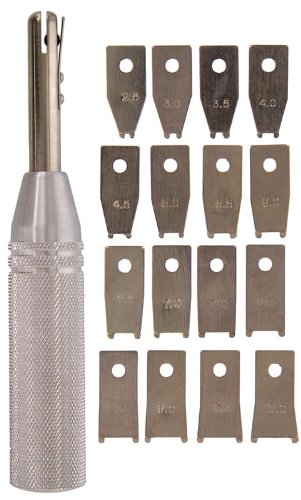
the right tool is a minispan wrench, but they're out of production.

410s9HD4GxL.jpg


the closest substitutes are spanner bits, aka "snake eye," "pig nose," or "twin hole." they solve the twisting problem of adjustable spanner wrenches or dividers, but you have to file the tips into shape because they aren't round. it takes a bit of work to get set up.

ironrepair-03-spannerbits.jpg
 
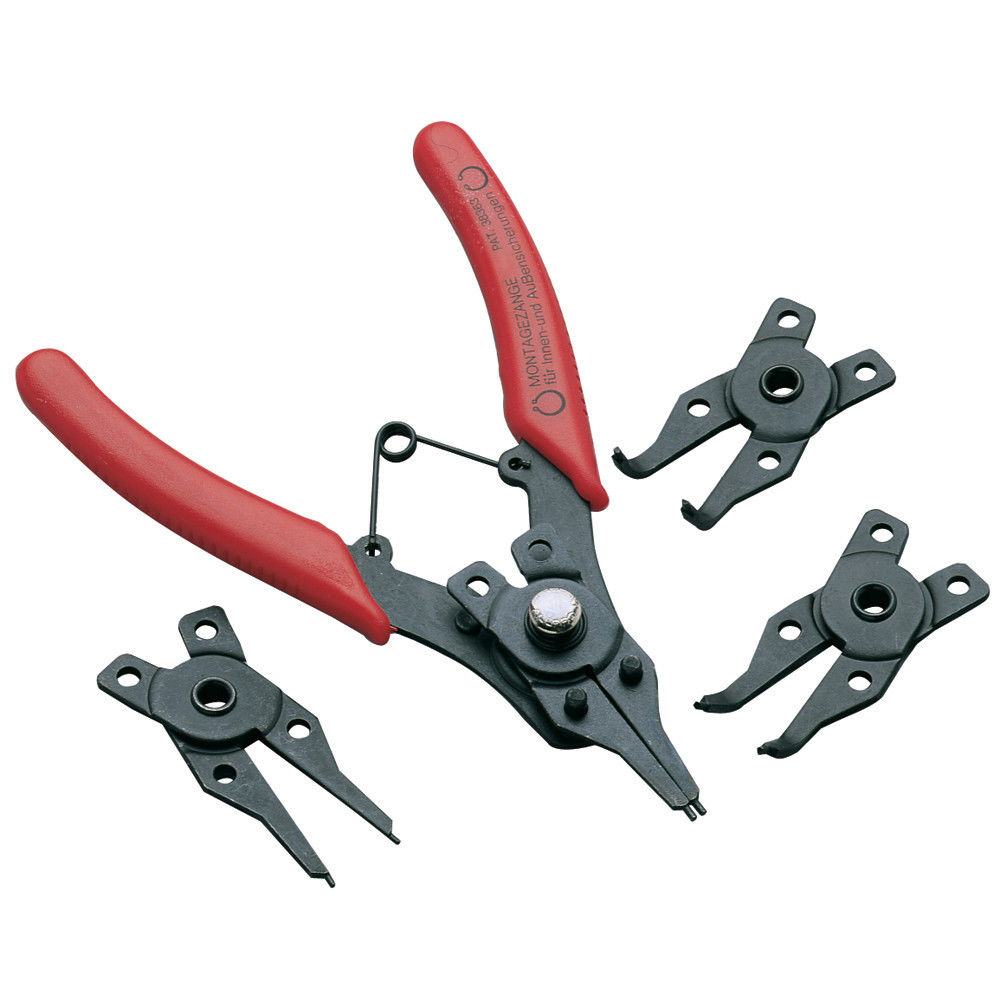
While I too have used lockable dividers for the purpose, these "widgets" (technically known as circlip pliers) can be used in extremis - with appropriate modifications to the tips where needed. The ones with a bent nose work better as its easier to press down on the tips using the thumb of the operating hand or even of the spare hand if the camera can be locked in some suitable arrangement so as not to move.

F94B20CA-0F93-4948-B828-B48C043E0894-huge.jpg


84.272.jpg
 
the right tool is a minispan wrench, but they're out of production.

410s9HD4GxL.jpg

I'm sure it's possible to fabricate similar inserts at home with a minimal set of metal-working tools (and skills) but it should be the right kind of steel: neither too hard nor too soft. Experience is invaluable in judging it.

the closest substitutes are spanner bits, aka "snake eye," "pig nose," or "twin hole." they solve the twisting problem of adjustable spanner wrenches or dividers, but you have to file the tips into shape because they aren't round. it takes a bit of work to get set up.

ironrepair-03-spannerbits.jpg

How are these bits sized - in what steps? What is the spacing of the smallest "fork" available?
 
Back
Top Bottom