


You are using an out of date browser. It may not display this or other websites correctly.
You should upgrade or use an alternative browser.
You should upgrade or use an alternative browser.
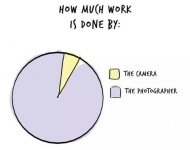
Photographer/Camera Proportions
- Thread starter Bill Clark
- Start date
- Latest activity Latest activity:
- Replies 16
- Views 2K

jsrockit
Moderator
The still camera does not walk on its own, it does not frame on its own, it does not choose content on its own...
gns
Well-known
A well known photographer remarked that as photographer, you have just 2 variables to deal with...
Where you point the camera and when you press the shutter. The camera does everything else.
Where you point the camera and when you press the shutter. The camera does everything else.
Bill Clark
Veteran
Hi gns!
Does the camera decide on how to pose, light and compose someone?
What are the various ways to position the body to the camera?
Does camera height affect the photograph?
What about the rapport the photographer establishes with the subject?
Just a few ingredients to consider when making photographs of people.
What do you think?
Does the camera decide on how to pose, light and compose someone?
What are the various ways to position the body to the camera?
Does camera height affect the photograph?
What about the rapport the photographer establishes with the subject?
Just a few ingredients to consider when making photographs of people.
What do you think?

NY_Dan
Well-known
I give both camera and photographer 100 percent -- to me it's a what comes first chicken or egg scenario.
Bill Clark
Veteran
Hi Dan,
For me, I can move from camera to camera and the photos I make stay pretty much the same. It can be Canon digital to Hasselblad to Leica, they only function what I do with them. I can put a 150 lens on a Hasselblad or an 85 lens on a Canon, both of them made by Zeiss and it doesn't make much difference to me!
Just my thoughts.
What do you think of dat?
Smiles!
A side note:
My wife & I made a trip to Europe with a small group from the Minnesota Arboretum. We all visited the sames places at the same time. Some of us had the same equipment. We got together after the trip and guess what? Everyones photographs were different! Was it the camera or the photographer?
For me, I can move from camera to camera and the photos I make stay pretty much the same. It can be Canon digital to Hasselblad to Leica, they only function what I do with them. I can put a 150 lens on a Hasselblad or an 85 lens on a Canon, both of them made by Zeiss and it doesn't make much difference to me!
Just my thoughts.
What do you think of dat?
Smiles!
A side note:
My wife & I made a trip to Europe with a small group from the Minnesota Arboretum. We all visited the sames places at the same time. Some of us had the same equipment. We got together after the trip and guess what? Everyones photographs were different! Was it the camera or the photographer?

Godfrey
somewhat colored
What Do you think?
It's amusing but a misrepresentation as it crosses skew conceptual boundaries.
A camera is a sophisticated device to record light, the work it does is anything connected with the mechanics of doing that recording, to the limits of its implemented capabilities, but always and only at the behest of a photographer.
A photographer is a person who uses a camera. The work a photographer does is to operate a camera in the context of recording light for some purpose.
A camera alone cannot make photographs at all, and likewise a photographer without some kind of light recording device like a camera cannot either. The efforts of the photographer influence what the camera records, and the capabilities and qualities of the camera influence what the photographer can produce.
So the camera does 100% of its work and photographers do 100% of theirs too. The sum equals 100% of making photographs.
Another great example of why 1+1 can equal 1... 🙂
G

greyelm
Malcolm
I remember when I got my first HD TV people asked what HD was like. I told them that HD didn't make a bad programme good but it made a good program better.
It's the same with photography, a good camera in the hands of a bad photographer can be mediocre and a mediocre camera in the hands of a good photographer can be great.
It's the same with photography, a good camera in the hands of a bad photographer can be mediocre and a mediocre camera in the hands of a good photographer can be great.
Bill Clark
Veteran
Hi greyelm,
Well said!
Especially your last statement.
Thanks!
Have a wonderful weekend.
Well said!
Especially your last statement.
Thanks!
Have a wonderful weekend.
Bill Clark
Veteran
Hi Godfrey,
You did it!
You figured out a way of getting 1+1 to = 1.
I agree with your thoughts.
How much can the stuff I posted about posing, lighting & composition affect the photograph?
Thanks for your thoughts.
You did it!
You figured out a way of getting 1+1 to = 1.
I agree with your thoughts.
How much can the stuff I posted about posing, lighting & composition affect the photograph?
Thanks for your thoughts.

hepcat
Former PH, USN
Bill, According to Canon it must 100% the camera because their products allow you to "Shoot like a Pro."
And there you have it. 😉
And there you have it. 😉
NY_Dan
Well-known
Hi Dan,
For me, I can move from camera to camera and the photos I make stay pretty much the same. It can be Canon digital to Hasselblad to Leica, they only function what I do with them. I can put a 150 lens on a Hasselblad or an 85 lens on a Canon, both of them made by Zeiss and it doesn't make much difference to me!
Just my thoughts.
What do you think of dat?
Smiles!
A side note:
My wife & I made a trip to Europe with a small group from the Minnesota Arboretum. We all visited the sames places at the same time. Some of us had the same equipment. We got together after the trip and guess what? Everyones photographs were different! Was it the camera or the photographer?
What do I think of dat? 🙂
Well if you're a talented photographer and you don't have a camera... And if you have a decent camera but you're not a talented photographer... In answer to your side note -- you answered the question yourself -- same equip, same locations, some photos were different -- so at the arboretum what you're saying is a rose is not a rose is not a rose.
Bill Clark
Veteran
hepcat,
I thought the "P" mode on a digital camera means professional!
Ha!
I thought the "P" mode on a digital camera means professional!
Ha!
Bill Clark
Veteran
NY Dan,
Each of us can see a rose in a different way!
Thanks for your thoughts.
Each of us can see a rose in a different way!
Thanks for your thoughts.
noisycheese
Normal(ish) Human
Hmmm... And how does Canon define the term "Professional Photographer?"Bill, According to Canon it must 100% the camera because their products allow you to "Shoot like a Pro."
And there you have it. 😉
If I had an extra $5 million USD, I could buy an Indy Car (http://motorsportstalk.nbcsports.co...compete-in-formula-one-an-indycar-comparison/ ).
That doesn't mean I could do anything with it other than crash it. 😉

farlymac
PF McFarland
I look at it this way. I load the camera with film (or a charged battery if it's the digicam), select a lens to mount on it, make sure everything is clean, then haul it to wherever I plan to take a photo. I may have to wait some time for the weather or light to cooperate with the shoot. I may have to hike a ways to the spot I want to take the photo from. If indoors, I'm the one who sets up the scene and lighting. I then have to compose the scene, figure out the exposure if it's one of my fully manual cameras, change the settings on the camera, focus, and then press the shutter release. In a fraction of time, the camera does it's work by opening and closing the shutter to expose the film according to the parameters I have programmed into it. I then wind the film to the next frame, and start the process all over again.
Of course, with an auto-everything camera, some of the responsibilities are transferred to the camera. But it still ain't gonna walk itself to the scene, or take the photo itself. I go with the photographer does most of the work, the camera being his/her sometimes willing junior partner.
PF
Of course, with an auto-everything camera, some of the responsibilities are transferred to the camera. But it still ain't gonna walk itself to the scene, or take the photo itself. I go with the photographer does most of the work, the camera being his/her sometimes willing junior partner.
PF

Scrambler
Well-known
Both necessary, neither sufficient.
And the exact proportions if you totaled up the combined work would vary quite a bit depending on the photographer and the camera. And indeed the total amount of work will vary depending on camera and photographer: a fixed-focus, fixed shutter speed camera doesn't do much "work" but the photographer's work is also reduced.
Modern cameras have certainly made getting correctly exposed photographs much easier. And they make getting correctly focused photos easier in most circumstances. One of mine will crop to correct framing if you allow it. In the right (wrong?) hands, it could be almost autonomous for portraits, chosing when to take the photo (when it detects a smile 🙂 ) and cropping for "better" framing, choosing aperture, shutter speed and ISO. All the "photographer" has to do is turn it on and walk it around.
And the exact proportions if you totaled up the combined work would vary quite a bit depending on the photographer and the camera. And indeed the total amount of work will vary depending on camera and photographer: a fixed-focus, fixed shutter speed camera doesn't do much "work" but the photographer's work is also reduced.
Modern cameras have certainly made getting correctly exposed photographs much easier. And they make getting correctly focused photos easier in most circumstances. One of mine will crop to correct framing if you allow it. In the right (wrong?) hands, it could be almost autonomous for portraits, chosing when to take the photo (when it detects a smile 🙂 ) and cropping for "better" framing, choosing aperture, shutter speed and ISO. All the "photographer" has to do is turn it on and walk it around.
Similar threads


- Replies
- 16
- Views
- 4K


- Replies
- 5
- Views
- 2K

- Replies
- 0
- Views
- 357
