Quick question: "cleaning marks" should I be worried?

JackForster

Established
Local time
11:11 PM
Joined
Oct 29, 2011
Messages
89
Hi all,

Thanks to everyone here for all the great replies and help so far!

I have a quick query (hope this is the right forum.) I am looking at a lovely 50mm Summicron DR and it has what I understand is a not unusual number of minute scratches (euphemistically referred to as "cleaning marks" apparently this is dealer-speak for "scratches that have built up over the years" 😉 ) and was wondering --how worried should I be, if at all? There's no fungus or haze in any of the elements but the first element does have some definite wear and tear on it.

Many thanks in advance,

Jack
 
You will find when buying from a dealer these odd bits of dust and cleaning-marks have no effect at all ... however when selling they will shine a torch through it and suck their teeth, personally I'd hang on for a good copy
 
You will find when buying from a dealer these odd bits of dust and cleaning-marks have no effect at all ... however when selling they will shine a torch through it and suck their teeth, personally I'd hang on for a good copy

Yup.Depends on what side of the counter you're on.

From an objective perspective, they won't hurt image quality. They WILL hurt resale value, especially, heaven forbid, if they are Leitz optics, so add that into the equation when buying.
 
Jack
If these marks are only on the front and quite light they should have little or rather seldom effect on performance. If you can get a great deal on a lens you will be using a lot go for it. Shine a torch inside to check for haze. Haze is a bigger culprit than a few front scratches most of the time. These lenses do not always clean up well from haze or fungus.
Re-sale is another story but, if the price is right for a user lens, you will always get your money back. So long as by "user" it is very usable.
 
If possible, check out photos taken with the lens - ideally at different apertures. Look for a low contrast, hazy look to them.

If you have no issues with the photo and the price takes the condition into account, go for it. If you see issues with the images, tread lightly.

Light cleaning marks/scratches are fine. Significant ones can definitely impact the images you get out of the lens. Its all a matter of degree which is hard to summarize without looking at a lens in person or viewing images taken with it. 🙂
 
If possible, check out photos taken with the lens - ideally at different apertures. Look for a low contrast, hazy look to them.

If you have no issues with the photo and the price takes the condition into account, go for it. If you see issues with the images, tread lightly.

Light cleaning marks/scratches are fine. Significant ones can definitely impact the images you get out of the lens. Its all a matter of degree which is hard to summarize without looking at a lens in person or viewing images taken with it. 🙂

Thanks everyone --really appreciate your advice and input. I took a couple of pictures with the lens and I'll see how they come out --it's a gorgeous piece of equipment but I'd have to let go a perfect Summicron M 50/2 to get it, and while the DL is a sentimental favorite, an optically perfect lens seems like a dumb thing to trade in.

Jack
 
If it's a bargain go for it, if not, pass my uv filter has many 'cleaning marks' never noticed a drop in quality?
 
'Cleaning marks' are very shallow scratches and rarely matter if you use a lens hood and light isn't slanting across the front glass. They can however make a difference if you don't use a lens hood and light is slanting across the front glass.

The truth is that with a good lens hood, lenses that look really awful will often work astonishingly well.

Cheers,

R.
 
Take some shots with the sun just out of the frame. Chances are they will be a mess. The DR Summicron has harder coatings than the collapsible v1 Summicron (of which there are barely any usable examples in circulation) but it's not indestructible.
 
I had a Nokton 40mm 1.4 that was scratched to hell like someone to a Brillo pad took it. It looked ugly but it took wonderful photos. In fact I just got paid a residual for a photo from it being reused in print.

I wouldn't worry too much about small scratches on the front. It's the rear element that needs to be almost impeccable.
 
I think people would be amazed at how much abuse a lens can take without having it affect photos.

However, such abuse definitely affects the price...
 
Color, backlit leaves.

at F2:


100% crop, F2


At F4:


100% crop,


I used a Polishing Sheet designed for fiber optic connectors and an eye-glass repair kit on this collapsible Summicron.

Made from the left-over parts of a parts lens bought to fix another.

attachment.php


Yours is probably better than this one.
 
I had a DR for a few years, and loved it. Bought from KEH.com in bgn condition. That lens made me some sparkling pics. You can buy them from KEH for about $1100, with a great returns policy.
 
On the rear element being more critical than the front element: the light is "almost collimated" as it passes through the last surface. The image is "almost formed". So scratches in the rear element are going to affect the final image. The front optic is collecting the uncollimated light.

And the damaged Summicron- I was amazed to get anything out of it. It has all the bad parts of two lenses collected into one. Damage to the front element and to the front group. "Makes a great portrait lens"... Ebay-speak for "the optics are opaque".
 
I'd have to let go a perfect Summicron M 50/2 to get it, and while the DL is a sentimental favorite, an optically perfect lens seems like a dumb thing to trade in.

If it's a current-generation Summicron, you'd be crazy indeed to part with it. They are next to impossible to buy new nowadays because of the popularity of the M9 and the delayed effect of Leica's 2004 layoffs of qualified technicians.

I understand "cleaning marks" as partially rubbed off coatings on the lens. Passing off scratches as "cleaning marks" is deceptive in my book, and I would not want to deal with a shady seller.

As for the real-world impact of dust or scratches, you may find these articles interesting:
http://www.lensrentals.com/blog/2011/08/the-apocalypse-of-lens-dust
http://www.lensrentals.com/blog/2008/10/front-element-scratches
 
I've always seen and understood cleaning marks to be fine scratches. People advertising lenses with coating issues usually say something about coating explicitly like 'coating loss' or 'coating marks'.
 
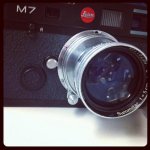
I found it quite amazing which level of damage is possible to a lens and still getting usable results. My first Summitar lens and three photos that I took with it after it got damaged.

6297212500_91f462df78_z.jpg


6291333903_15fd105bda_z.jpg


5185686745_813171ec1b_z.jpg
 

Attachments

  • M7-Summitar-small.jpg
    M7-Summitar-small.jpg
    37.8 KB · Views: 1
If it's a current-generation Summicron, you'd be crazy indeed to part with it. They are next to impossible to buy new nowadays because of the popularity of the M9 and the delayed effect of Leica's 2004 layoffs of qualified technicians.

I understand "cleaning marks" as partially rubbed off coatings on the lens. Passing off scratches as "cleaning marks" is deceptive in my book, and I would not want to deal with a shady seller.

As for the real-world impact of dust or scratches, you may find these articles interesting:
http://www.lensrentals.com/blog/2011/08/the-apocalypse-of-lens-dust
http://www.lensrentals.com/blog/2008/10/front-element-scratches

And what is that if not a very fine scratch? It's what they look like; it's what they behave like; and that's because, that's what they are.

Cheers,

R.
 
Back
Top Bottom