Ricoh GRIV Announcement

I'm surprised, taken aback, by such lively discussion over a camera brand I've never even seen nor held in my hands. The manager at our local pro camera store, says he's never seen one either. I read through the posts, over a couple of prior pages, about the relative amount of tax or tariff for
Japan, vs. Korea, etc.; how much it is in Australian dollars--none of which really determines if it is a nice camera, or not--then settled down to try to read what makes a Ricoh a good choice, and why anyone would want one. I had always assumed they were just a sort of budget model. Until I saw the numbers you guys are quoting: $3500, $2999; not budget numbers after all. I read through some comments, e.g. someone likes the RAW files, or the B&W conversions, but not the color (etc.)

So I look over all that, and wondered, "really, they would rather have that than a Leica X something, or a Fuji X100v? (or something-whatever). (without the opportunity to shoot with a Ricoh to see if I liked it.) So what's my point? I don't know, just surprised, an eye-opener, because they don't seem to be often talked about here. I wonder if I will ever buy one.

It's surprising that you're never really heard much about the Ricoh GR series. The current digital line had its roots in a fantastic series of film compacts from the 90s which were famously used by Daido Moriyama for many of his iconic black and white street images. The GR line has a sterling reputation as a street photography camera, a high quality compact which slides into a pocket and serves as what a photographer would use when the big guns are at home. People speak of the GRiv in the same breath as the Contax T3, Minolta TC1, etc.

The GR series was brought into the digital age in the 2000s with the GR Digital line, using a small sensor like every other compact of the time. They moved to aps-c in the early 2010s, and are the only remaining/continuing line of pocket size cameras with an aps-c sensor.

If you look through the parent subforum, the top pinned post is a gallery of GR photos.


I own a GRD III (small sensor) and an aps-c GR from the first generation, bought in the early 2010s. Hype for the first aps-c GR was off the charts when it was released. I used both of mine until they died, taking tens of thousands of images. They were the cameras I literally dreamed of when asleep, the camera I would reach for reflexively in a dream if I saw something interesting. That is how engaging they can be.
 
A friend introduced my to the film GR some years ago. I was quick to buy a new one and used if for some time. I do remember some shops advising against them.

My memory may be rose tinted but the camera was simply excellent. I guess it matched the parameters of what I wanted to do at the time.

Then I started to read about them breaking and being unrepairable. Suitably frightened I sold it quickly before anything happened. Shame.

I do wonder about the digital GR. If I was very happy with the film version would I get on with it? I don't know.
 
The GR iv monochrome is what grabbed my attention. Excellent image quality in a monochrome alternative to the larger Pentax monochrome and the more expensive and larger Leica Q3 monochrome. Both of those are excellent. The creative possibilities with really high iso options plus other jpeg styles, while still having raw images to work with in the GR iv monochrome will be fun. I view it as a different tool with more flexibility (despite no color!) that I can take everywhere in a pocket. It's something new for me to explore, to shake things up a bit.
 
I'm surprised, taken aback, by such lively discussion over a camera brand I've never even seen nor held in my hands. The manager at our local pro camera store, says he's never seen one either. I read through the posts, over a couple of prior pages, about the relative amount of tax or tariff for
Japan, vs. Korea, etc.; how much it is in Australian dollars--none of which really determines if it is a nice camera, or not--then settled down to try to read what makes a Ricoh a good choice, and why anyone would want one. I had always assumed they were just a sort of budget model. Until I saw the numbers you guys are quoting: $3500, $2999; not budget numbers after all. I read through some comments, e.g. someone likes the RAW files, or the B&W conversions, but not the color (etc.)

So I look over all that, and wondered, "really, they would rather have that than a Leica X something, or a Fuji X100v? (or something-whatever). (without the opportunity to shoot with a Ricoh to see if I liked it.) So what's my point? I don't know, just surprised, an eye-opener, because they don't seem to be often talked about here. I wonder if I will ever buy one.

Ricoh has been around a long time ... since 1936 (see Company History | About Ricoh | Global | Ricoh). They've made a lot of cameras of all different types over the years. I remember them first from about 1969 when they sold a 35mm SLR very similar to a Pentax Spotmatic and using the same M42 lens mount, at half the price. We bought them for the Photo Staff at my high school. They were reliable and rugged enough to stand a few years of high school boys' treatment... 😉

I believe that Ricoh is the current owner of Pentax brand cameras. When I was a Pentaxian Photographer (a program they ran for a few years in the middle-'00s) using Pentax DSLRs, I dealt with both Pentax USA and Ricoh management. I think that's right when the deal to transfer Pentax camera assets to Ricoh was being made.

The Ricoh GR1 was a very high quality, fixed 28mm lens, 35mm camera popular in the 1990s. The Ricoh GXR was a unique, modular system (body + three-four camera units, EVF and OVF, etc etc) which included a camera unit module with a Leica M-mount. It made superb photographs ... here are some of mine:
Flickr Search — “GXR”

In some ways, the Ricoh GXR with M-mount camera unit did better than the Leica M9 on lens compatibility and overall image quality. At far less money.

G
 
I think this video illustrates the biggest advantage of a monochrome sensor. At high iso values there is just organic noise and not a blurry/blobby mess common with Bayer/X-Trans color sensors.


View attachment 4887940


That's absolutely incredible!

The funny thing is that I'd use this sparingly as a specialized BW shooter in low light, and get a much longer lifespan from it than previous GR models that I used every day until they died. Might it be worth the $3000 AUD? 😆
 
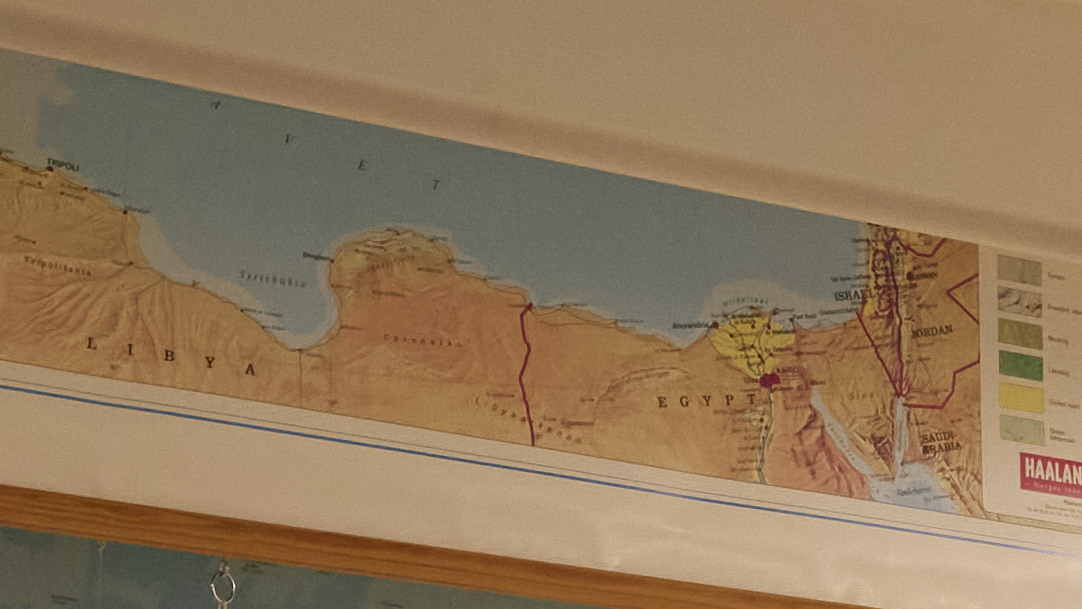
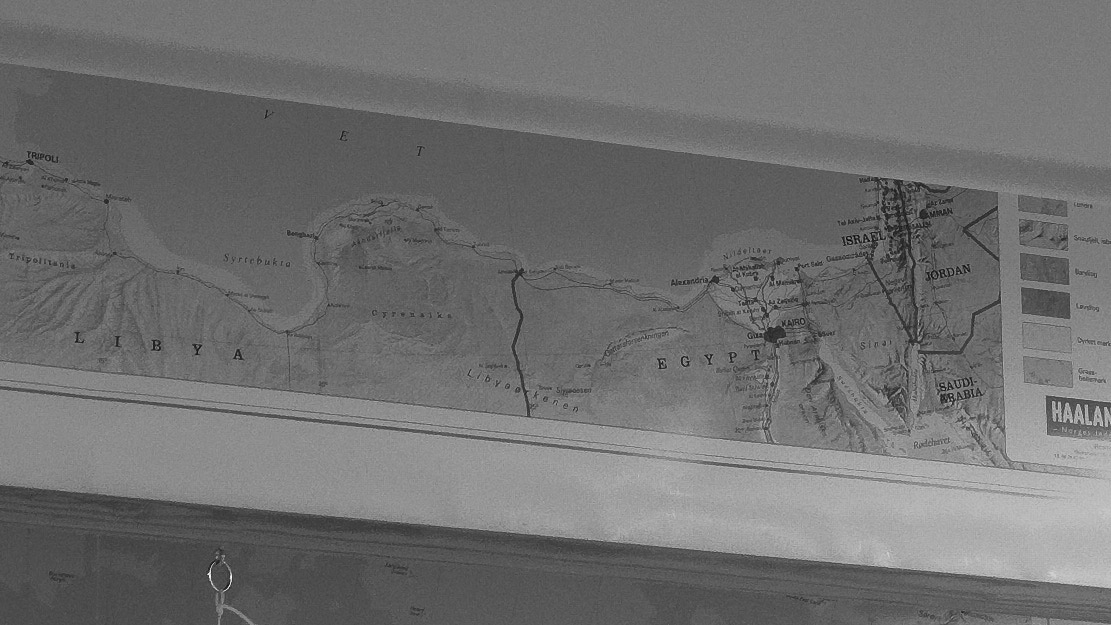
OK, I did a quick "test" when at work this morning.

1) GRiii vs GRiiix monochrom (converted) with AliExpress WA adapter (30mm); I did not bother with the Ricoh WA adapter, as it does not perform better.
Poorly lit scene, ISO 1250, f/5, 1/100, handheld. 200%ish crops of a map on the wall. No noise-reduction applied.


GRiii, C1.
_R023801-1.jpg


GRiii, Iridient HiFi Mono
_R023801.jpg


GRiiix monochrome, Monochrome2DNG, C1.
_M000360mm.jpg


Iridient does a good job. So does the WA adapter.
---------------------
 
Last edited:
2) no adapter, GRiiix monochrom (converted). No noise-reduction applied.

Capture One
_M000361.jpg


Iridient
_M000361-1.jpg


Monochrom2DNG
_M000361mm-1.jpg


"Alexandria" is fully legible on the M2DNG version, but not quite on the Iridient. Otherwise, Iridient does a remarkable job with both the GRiii and GRiiix files.
 
Last edited:
2) no adapter, GRiiix monochrom (converted)

Capture One
_M000361.jpg


Iridient
_M000361-1.jpg


Monochrom2DNG
_M000361mm-1.jpg


"Alexandria" is fully legible on the M2DNG version, but not quite on the Iridient. Otherwise, Iridient does a remarkable job with both the GRiii and GRiiix files.
Who/where did your conversion?

B2 (;->
 
Nice examples, @Peter_S. Thanks. In real world shooting I expect the difference would be insignificant.

As a long-time GR user, I considered the Monochrome. But after looking extensively at images, I'm just not seeing an appreciable edge over the GR III and IIIx. The tonal differences are apparent in the two M Monochroms I've owned, but not with this new GR. 6400 is about my max ISO, so that's not a factor for me. GR BW conversions have always been excellent and remain good enough for me.
 
Nice examples, @Peter_S. Thanks. In real world shooting I expect the difference would be insignificant.

As a long-time GR user, I considered the Monochrome. But after looking extensively at images, I'm just not seeing an appreciable edge over the GR III and IIIx. The tonal differences are apparent in the two M Monochroms I've owned, but not with this new GR. 6400 is about my max ISO, so that's not a factor for me. GR BW conversions have always been excellent and remain good enough for me.
I’ll be interested to see if the native monochrome GR is more like the converted GR. If it’s like the Pentax, I’ll be very happy to get one.

With converted cameras although I do see improvements in tonality and sharpness there is always a textural element that makes me prefer native monochrome cameras. I assume that this is associated with removing the microlenses.
 
The GR iv monochrome is what grabbed my attention. Excellent image quality in a monochrome alternative to the larger Pentax monochrome and the more expensive and larger Leica Q3 monochrome. Both of those are excellent. The creative possibilities with really high iso options plus other jpeg styles, while still having raw images to work with in the GR iv monochrome will be fun. I view it as a different tool with more flexibility (despite no color!) that I can take everywhere in a pocket. It's something new for me to explore, to shake things up a bit.
The GRIV Mono is very compelling to be sure, and I'd love to own one, but as I considered it compared to the Pentax K-3 Monochrome, which I already own, I must say I prefer the Pentax. It offers so many more options than the laser-focused GR, at the expense of size. I couldn't afford both, so, for now, it's the Pentax for me.

Another consideration is longevity. The GR cameras are well made, but they're delicate by necessity as a result of the miniaturization. The Pentax feels like it could outlast me.
 
The GRIV Mono is very compelling to be sure, and I'd love to own one, but as I considered it compared to the Pentax K-3 Monochrome, which I already own, I must say I prefer the Pentax. It offers so many more options than the laser-focused GR, at the expense of size. I couldn't afford both, so, for now, it's the Pentax for me.

Another consideration is longevity. The GR cameras are well made, but they're delicate by necessity as a result of the miniaturization. The Pentax feels like it could outlast me.
I’m still hoping for a K1M. I was always drawn to the K1 but never dove in. A monochrome version might do it.
Since we’re dreaming, I wish every camera maker would offer a monochrome line.
 
I’m still hoping for a K1M. I was always drawn to the K1 but never dove in. A monochrome version might do it.
Since we’re dreaming, I wish every camera maker would offer a monochrome line.
I just took only the K-1 for a two week trip to Northern Greece; debated it or the K-3 Mono (I felt compelled to bring something for color, not because I shoot a ton of color these days, just felt concerned about missing something truly wonderful in the color department). At the last minute, I chose the K-1. I had just acquired a good collection of late-80s, early-90s Pentax autofocus glass, and I decided that I wanted to play with a good amount of that glass in its native, uncropped perspective.

I won't say I didn't miss the Mono at times (color turns out to have been somewhat unnecessary for this trip, which was mostly muted and overcast, being February and all), but the K-1 functioned admirably, and, despite being a larger, denser camera, it disappeared in the hand due to its fantastic grip, which is something I've noted before. The large viewfinder and flawless weather sealing really came in handy too. If there were only a K-1 with all the refinements of the K-3 III... and in monochrome... that could be a "forever camera" as the other recent thread has it.
 
Back
Top Bottom