Mark, I don't think any of your examples prove your claim that by proper exposure you can get a better result sooc because the lighting in all of your photos is vastly different from mine. I'll address them individually.
Your first photo is not even backlit. It seems to have been taken shortly before or after noon because, according to the shadows, the sun was high in the sky. As a result, everything is broadly lit by the sun, including the sky, and the dynamic range of the scene is very limited. This is easily handled by almost any modern camera with no special metering requirements.
I won't even address the kite photo as it has such little to do with a drastically backlit scene particularly one with a person prominent in the frame whose face is in strong backlight.
Your third photo is backlit but it's hard to tell where the sun is except we know it appears not to be directly in the frame and it must be quite high in the sky because it is directly illuminating the nearest part of the foreground, which is so brightly lit it appears to be blowing out pretty severely. Even though the sun is not present in your sky, the sky is also almost blown out. I suggest that if the sun had been included in the sky, values would have likely been lost, possibly irreparably.
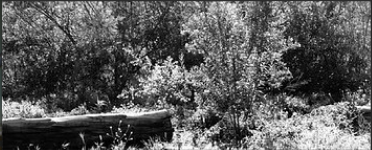
In my example the sun was about to set and thus it was extremely low in the sky and in the frame. The low angle means that almost all off the vegetation and the main subject in my photo are in hard shadow and blocked from direct light by the sun. The vast majority of objects in your photo are not in shadow but instead are translucent leaves that have the light either directly on them or transmitted through them. The only areas of real shadow somewhat comparable to my photo are illustrated in the crop of your photo I did below for illustration purposes. And as you can see the remaining shadow values are not unlike what is found in my sooc shot. If you had a person prominent in your frame he or she would have been rendered in a similar fashion to these shadows.
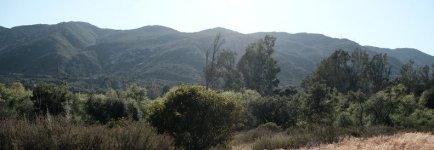
Finally your fourth and last shot is the most similar but there are very important differences which I'll address:
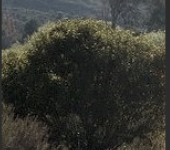
1) The sun appears to be pretty high in the sky. The reason that is so important is because it is directly illuminating the entire scene and in particular all of the foreground. I've addressed it above, but this is drastically different lighting than my photo where the sun is super low on the horizon and much less of the scene is in direct sunlight. I've taken the liberty of cropping out the bright foreground so your scene will more closely match the illumination of mine (2nd photo below).
2) Even though your dynamic range is significantly less, due in large part to not having the sun actually present in your sky, the sky over the mountains is almost blown out. If the sun had been included in the sky, like in my photo, it would just have added to the problem of blown out values in your sky.
3) the atmospheric haze (which is not present to any significant extent in my photo) is having the effect of diffusing the sunlight and filling in the shadows. It's most apparent in the mountain area. So in the mountains you have direct sunlight lighting much of the area plus diffused fill light from the haze. I don't have any of that in my photo with the exception of some direct sunlight possibly illuminating the very tops of the vegetation. But most of what you see in my photo is shaded from any direct sunlight unlike this image of yours.
4) If you look at the hard shadow areas of any of your photos -- as illustrated by the cropped images below, your shadow values are not much different from the shadow areas in my sooc image, except your shadows may be a bit darker. I suggest that if you had a person prominent in your frame, he or she would have looked very similar -- very dark verging on loss of major details. So, contrary to your claim, your choice of exposure has NOT had much of an effect on the hard shadows that are most similar to the shadows in my photo.
I suggest that the main reason your sooc photos look different than mine is because they are lit so differently, not because of any exposure wizardry on the photographers part.
If you'd like to prove your point, I suggest you provide a photo with much more dynamic lighting and include a person or object prominently displayed in the frame and completely backlit, for whom you want to maintain good tonal values appropriate to a main subject in a portrait photo.



4529 by Brusby, on Flickr
4529 1 by Brusby, on Flickr