
Spot meter - how to

As Airfrogusmc said above and Ansel Adams said many times, it's about placing the shadow and developing for the highlight. Once the important shadow is placed ( generally -2 stops for a Zone III) you try to place the highlights - development acts like the right histogram slider in Photoshop to either expand the histogram or contract it - in order to fit it all into the range of the film. This is why the spotmeter has been so important for monochrome photography and no so common with color, as the development controls are not as commonly employed in color processing.
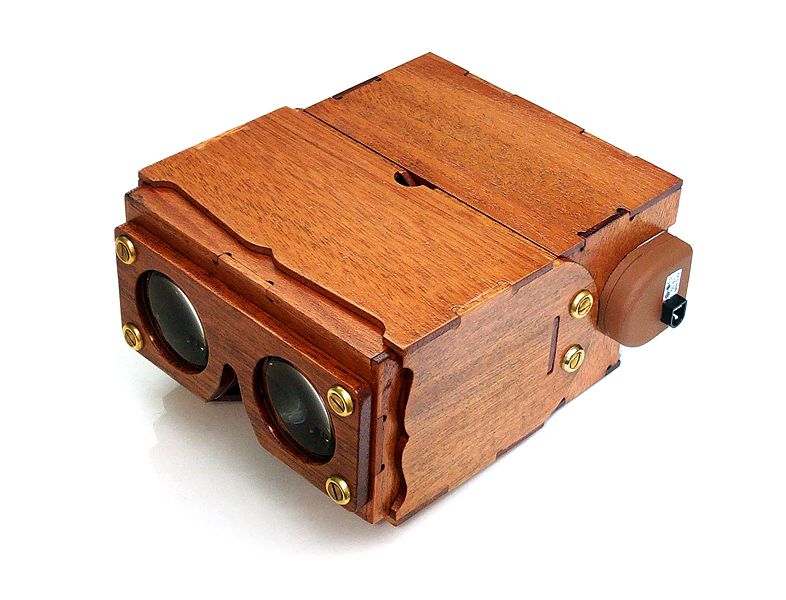
 
Well, I've learned something new today. Could you give some more details on the viewer? I've been happy cropping my 6x7 chromed to fit into 6x6 mounts and project, but this sounds even more time intensive and arcane, so has immediate appeal to my unbalanced mind.

Haha! Then, I must be unbalanced, too!

Please feel free to send me a PM for more info rather than our going off topic any further here.

Here's the viewer (no longer in production, but it comes up on ebay rarely - there were only about 125 of them made between 1999 and 2008.)

viewer2.jpg

The SaturnSlide Medium Format Stereo Viewer

And here's (part of) what I use to shoot MF 3D:

d40303ea_TwinRig_800x633.jpeg


Mike
 
. . . I think I need Rogers' book! Roger - is it still in print, or only available second-hand?
Second hand, I fear. But you may be able to get all you need from the web-site: http://www.rogerandfrances.com/subscription/ps expo neg.html where you will find the following statement:

Anything other than a spot meter reading is a compromise. This is because the most important criterion for negative exposure, other than tonality, is adequate shadow detail. The easiest way to ensure adequate shadow detail is to measure the brightness of the darkest area in the subject in which you want detail and texture, and base your exposure on that. Hence, logically, a spot meter is the very best way to meter negatives. And what you need to read is the darkest area in which you want detail and texture.

There's more about actually using a spot meter later in the same module.

Oh: and forget, completely, about 18% grey. NO film speed system is based on it, which gives you a pretty good idea of its usefulness. It's a visual mid-tone, and it's not even the average reflectivity of a "normal" scene, which is 13-14%. It is worshipped only by those who know very little about sensitometry. The only way they get decent exposures is by relying on the (considerable) latitude of negative films, usually with a healthy dollop of overexposure: hence the widespread and totally erroneous belief that films aren't "really" as fast as their ISO speeds.See also

http://www.rogerandfrances.com/subscription/ps iso speeds.html (ISO speeds)

http://www.rogerandfrances.com/subscription/ps neg density.html (H&D curve, the basis of all sensitometry)

Cheers,

R.
 
Thanks Roger! More bookmarked reading....

Are there 'fixed' rules for when reflective metering should be used compared to incident? I think I remember reading that the former is more for B&W whereas the latter is for colour: is that correct?
 
Incident readings used to be known as the "artificial highlight" system, which is why as a general rule incident is ideal for transparencies where exposure is keyed to the highlight.

For negatives, mono or colour, limited area (ideally spot) reflected readings of the darkest shadows where you want detail will always guarantee adequate shadow detail. DO NOT however use the "mid-tone" index on the meter: use "Shadow" or I.R.E. 1 or an index that is 2-3 stops below the mid-tone. The exact value of the last (2-3 stops down) will depend on your meter, technique and chosen film speed.

Do not worry about blowing highlights in negatives. For this to happen you normally need to overexpose very badly indeed (as Zonies sometimes do), with the wrong film, overdeveloped, with a subject having a long subject brightness range. In B+W, different paper grades will solve your problems; in colour, dodging and burning.

Cheers,

R.
 
Hi Roger,

In references to incident readings as "artificial highlights" do you know how the reading was taken, specifically for shooting transparencies? I'm just guessing, but I suspect an incident meter would have to be aimed at the primary light source, rather than at the camera, if you wanted to use it as an "artificial highlight" reading.

I've always avoided this, thinking it best to aim the incident meter at the front of the camera, allowing the incident dome to mimic a round object that could (hopefully) give an accurate representation of the light that's falling on real objects in the subject space.

Reading your comment, I'm thinking I could be missing out on some advantage to be had by aiming the dome directly at the primary source, instead - with the understanding that I'm taking an "artificial highlight" reading.

That was a lot of words to simply ask: 1) In what direction would people aim their incident meters when their mindset was to take "artifical highlight" readings and 2) does aiming an incident meter directly at the primary light source tell us something useful?

This business of where to aim an incident meter is similar to the question of how to orient an 18% grey card when using a reflective meter. I agree with you completely that this approach is next to worthless. I routinely discourage the use of "grey" cards. The mere fact that they are available in finishes ranging from shiny to satin to matte to fine velvet should set off alarm bells. But take readings from any of them and you'll see that how you hold it relative to the primary light source is super-critical.

Thanks,

Mike
 
. . . In references to incident readings as "artificial highlights" do you know how the reading was taken, specifically for shooting transparencies? I'm just guessing, but I suspect an incident meter would have to be aimed at the primary light source, rather than at the camera, if you wanted to use it as an "artificial highlight" reading. . . .
Dear Mike,

Most old books are predictably evasive about this, but insofar as I can find a consensus, it is that the meter is pointed on an axis between the camera-subject axis and the main light-subject axis. Some recommended two readings, subject-camera axis and subject-main light axis, followed by an educated guess on which to favour.

Of course a vast amount depends on the shape of the "artificial highlight", whether flat, domed or an Invercone. My strong suspicion is that just about any approach can be made to work, provided (a) it's consistent and (b) you don't follow it blindly, but think about what you're doing.

Cheers,

R.
 
When I was taught crime scene photography in Jul-Aug 1967, we were taught the use of the grey card primarily for color, as a way for the printer to give us a print with the correct colors. It probably was, but I don't remember it being mentioned for exposure. I think for exposure we were mainly told to use the film's data sheet, or the flash bulb's guide number exposure data.

FWIW, I decided to check the three instruction sheets for the exposure meters I use, from the Butkus site. I probably use the Luna Pro SBC more than the Luna Pro or the Sekonic L-28c2, but I still like to use the Sekonic for a lot of my photography, whether slide, or color or b/w negatives. It just seems to work. You can see links to the results below. Note with the Gossen SBC and Sekonic, the manufacturer states an 18% grey reflectance measurement.


http://www.cameramanuals.org/flashes_meters/gossen_luna-pro.pdf - pages 3, 5, and 6, point from subject to camera

http://www.butkus.org/chinon/flashes_meters/luna-pro_sbc/luna-pro_scb.pdf - page 16, point from subject to camera (18% reflection)

http://www.cameramanuals.org/flashes_meters/sekonic_l-28c2.pdf - page 8 (18% reflection), Pages 11, 12, and 13, point from subject to camera
 
18% or 12% or whatever %, the spot meter still tells you what the EV of a spot is and corresponding shutter/aperture combination to make that spot be that level of grey on the negative.

Assuming you have a personal EI that gives you the proper exposure level keyed to that meter reading, the spot meter does exactly what it advertises. If you don't have an EI, bracket a couple of shots based on the film's ISO from the manufacturer, mostly a little more exposure / lower ISO, and you'll find out pretty quick.

I love my spot meter and I make much better exposures with it than any other meter - my negatives are easy to print in the darkroom. Gross overexposure as often recommended, especially with LF as I most commonly shoot, gives me workable negatives sure, but they are a pain to print in the darkroom. I prefer actual proper exposure with enough shadow detail but not pushed all the way up into the midtones for the sake of "open shadows."
 
With an incident meter, I point the integrating dome of the meter at the camera from the subject position for my "overall" exposure reading.

Turning the dome to point at the main light source and then comparing that reading against the reading obtained by turning it 180° away from the main light source is a good, approximate way to gauge the dynamic range of the light in the scene, and compare to the overall reading.

Using a flat integrating disk on the meter nets the equivalent of a spot reading.

G
 
Dear Mike,

Most old books are predictably evasive about this, but insofar as I can find a consensus, it is that the meter is pointed on an axis between the camera-subject axis and the main light-subject axis. Some recommended two readings, subject-camera axis and subject-main light axis, followed by an educated guess on which to favour.

Of course a vast amount depends on the shape of the "artificial highlight", whether flat, domed or an Invercone. My strong suspicion is that just about any approach can be made to work, provided (a) it's consistent and (b) you don't follow it blindly, but think about what you're doing.

Cheers,

R.

Thanks Roger!

Regarding your first paragraph, above, this makes sense to me, as aiming the incident meter along the subject-main light axis would likely give you a reading that underexposes that area of the subject space we would consider a good candidate for Zone 7 placement with a transparency film - precisely because we would be metering the light source itself. So, an incident reading half-way between the subject-main light axis and the camera-subject axis might give you a reading similar to a reflective spotmetering of that Zone 7 candidate - but it's not guaranteed to do so.

So... I think any attempt to use an incident meter as a means for measuring an "artificial highlight" runs a high risk of failure, no matter how consistent you are in aiming either at the main light or half-way to the main light from the camera-subject axis. These would offer too much variability, in my opinion, making consistent results, impossible.

This wasn't clear to me when I asked the question - I truly was open to the possibility that aiming an incident meter at the main light could be of some value, but your comments have helped me to run eagerly back to my trustworthy habit of aiming the incident meter at the front of the camera, along the camera-subject axis (to use your more descriptive terminology).

Again, I'm only talking about shooting transparencies, so whenever I have high confidence in selecting a candidate within the subject space for Zone 7 placement, I'll use a spotmeter instead, setting the spotmeter's ISO to one fourth of the film's normal ISO rating (to ensure Zone 7 placement).

Thanks again!

Mike
 
18% or 12% or whatever %, the spot meter still tells you what the EV of a spot is and corresponding shutter/aperture combination to make that spot be that level of grey on the negative.

Assuming you have a personal EI that gives you the proper exposure level keyed to that meter reading, the spot meter does exactly what it advertises. If you don't have an EI, bracket a couple of shots based on the film's ISO from the manufacturer, mostly a little more exposure / lower ISO, and you'll find out pretty quick.

I love my spot meter and I make much better exposures with it than any other meter - my negatives are easy to print in the darkroom. Gross overexposure as often recommended, especially with LF as I most commonly shoot, gives me workable negatives sure, but they are a pain to print in the darkroom. I prefer actual proper exposure with enough shadow detail but not pushed all the way up into the midtones for the sake of "open shadows."

I think correct exposure is in the mind of the photographer (or was it the mind of Minolta?). We may all have different tastes in prints or transparencies. But there are accepted norms, and a light meter is one good tool to get there. I for one would like then to know what it is telling me. But as you said, getting there is the goal, not necessarily how we get there.

And by the way, I was remiss above in not thanking Mr. Hicks.

Mr. Hicks, I always read your posts when I see them, because you often bring out things I wasn't aware of. Who knew IRE morphed into IEEE along with a couple of other organizations? And I am still looing for references to "artificial highlighting" beyond your always well written posts on yours and your wife's great tutorials. Thanks for that too.

Anyway, I hope you find it as the high compliment I mean it to be, when I say your comments here are always thought provoking for me. And I learn much from your comments and from any tangents to which they take me.
 
I think correct exposure is in the mind of the photographer (or was it the mind of Minolta?). We may all have different tastes in prints or transparencies. But there are accepted norms, and a light meter is one good tool to get there. I for one would like then to know what it is telling me. But as you said, getting there is the goal, not necessarily how we get there.

And by the way, I was remiss above in not thanking Mr. Hicks.

Mr. Hicks, I always read your posts when I see them, because you often bring out things I wasn't aware of. Who knew IRE morphed into IEEE along with a couple of other organizations? And I am still looing for references to "artificial highlighting" beyond your always well written posts on yours and your wife's great tutorials. Thanks for that too.

Anyway, I hope you find it as the high compliment I mean it to be, when I say your comments here are always thought provoking for me. And I learn much from your comments and from any tangents to which they take me.
Thank'ee for the kind words. If you possibly can, get hold of a copy of J.F. Dunne's Exposure Meters and Practical Exposure Control, The Fountain Press, 1952. It was the inspiration for Perfect Exposure (David & Charles) just as Lipinski's Precision and Miniature Cameras was the inspiration for A History of the 35mm Still Camera, The Focal Press 1984.

As you well know, I fully agree that "correct exposure is in the mind of the photographer (or was it the mind of Minolta?)". As I have often said, there is no such thing as "correct" exposure, but there is such a thing as "perfect" exposure, defined as "the exposure that gives you exactly the result you want".

A story that may amuse you comes from Garry Coward-Williams, former editor of Amateur Photographer magazine and now group editor of the whole division in the same company. He said, "We all know that you can give the same meter to three different photographers, and get three different readings. That's before you start considering the variations between different meters. So how do so many photographers all get acceptable exposures?"

Since he first said that, a good few years ago now, it has been my watchword whenever I see people (especially Zone aficionados) looking for more precision than can actually exist in photography.

Cheers,

R.
 
My hard bound edition of Perfect Exposure is in the shelf by my left elbow, while I read this thread, along with its mate The Black and White Handbook. Along with a translation of Jean Follain's prose poems A World Rich in Anniversaries--Follain is probably the closest thing to a documentary photographer in French prose--, John Berger's ways of Seeing, and Eugene Richards's The Knife and Gun Club.

Good books are a blessing. It's nice to be able to acknowledge one of those authors (a writer of good prose himself) right in this thread.
 
A trick I have learned is to put the spot meter in EV mode. Meter various points in the scene and note the range of EVs. Think about the items you measured and pick the ones you think would be best preserved as mid tones or light tones or dark tones. Then adjust your fstop/time accordingly.

I also do a incident meter reading sometimes just to make sure I am in the ball park.

Walk around with your spot meter in different scenes and you will soon begin to notice the range and the brightness differences. Remember you can choose to make a low contrast scene low key or high key rather than flat middle greys.
 
My hard bound edition of Perfect Exposure is in the shelf by my left elbow, while I read this thread, along with its mate The Black and White Handbook. Along with a translation of Jean Follain's prose poems A World Rich in Anniversaries--Follain is probably the closest thing to a documentary photographer in French prose--, John Berger's ways of Seeing, and Eugene Richards's The Knife and Gun Club.

Good books are a blessing. It's nice to be able to acknowledge one of those authors (a writer of good prose himself) right in this thread.
Thank'ee kindly, Robert.

Cheers,

R.
 
I have never used a grey card as such but I have taught myself to find suitably toned objects within the environment that work as well as one. This could be a concrete or even bitumen path or road or even a area of grass lawn (which although green often has a tonal value not dis-simliar to a grey card). The key thing is that they are in the same ambient light as the subject. As I almost always shot print film not slide film there was enough latitude to cope with errors in metering most times.
 
I have never used a grey card as such but I have taught myself to find suitably toned objects within the environment that work as well as one. This could be a concrete or even bitumen path or road or even a area of grass lawn (which although green often has a tonal value not dis-simliar to a grey card). The key thing is that they are in the same ambient light as the subject. As I almost always shot print film not slide film there was enough latitude to cope with errors in metering most times.
Dear Peter,

Yes, but why meter them?

Cheers,

R.
 
Back
Top Bottom