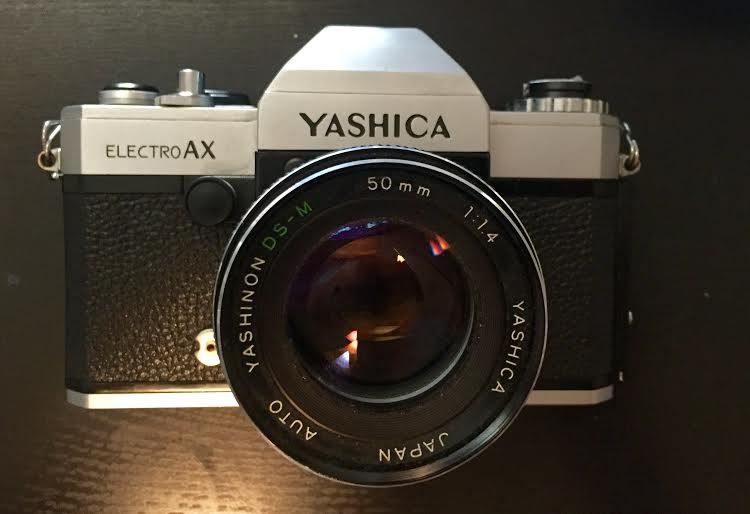
Still new to photography - what can you tell me about these two cameras?

ozreth

Member
Local time
7:50 AM
Joined
Oct 9, 2015
Messages
31
Hi all. Started taking photos recently and have just been using a little mju-ii. My girlfriend saw these two cameras at a Goodwill for $10 each and picked up them. What should I know about the bodies and lenses? Are they worth working with and getting to know? Pros and cons? I know enough to know that the lens on the canon probably isn't the best. I can't find much about either camera written online. Thanks!

95f35bbe-6305-4844-9076-84c9a3748192_zps4abrwbws.jpg


f54e1560-e9f4-43e6-9988-71a6b6ffe1d8_zps6jo2kaac.jpg
 
My wife and I used first camera, lens for five or so years. Only this kit and only in auto. Camera always have it in focus and correctly exposed.
I sold this lens, but all of my current lenses I'm using for digital FF EOS are working on this film Rebel. And modern flashes as well. It is nice, easy to use camera. Batteries are expensive, but it is still possible to get external battery adapter for AA.
 
The Yashica is the better camera to learn on. You can easily adjust three variables: aperture, shutter speed, and film speed. Check to see if it works, many times people new to cameras think they are broken when all they need is a new battery. Also check the meter, read up on 'sunny 16' to help you check the meter. Both cameras will be fun, but the basics of photography will present themselves with the Yashica.
 
Don't know much about that Yashica - apparently it was released in 1972, so, it probably will be a reliable and reasonably well thought out camera and by that time most makes knew how to make a decent 50mm lens. It is a M42 camera, meaning a lot of lenses will fit it.

The other one, the Canon Rebel 2000 is called the Canon EOS 300 in most of the world (don't confuse it with the digital 300D). It is a well regarded consumer camera, good AF, good function set, all around a good camera - even if it is a bit plastic. The great thing about those Canons it that all lenses fit all cameras as long as it is made after 1987. If you prefer zooms, find a 28-70/3.5-4.5 - they're good and cheap. If you like primes, any of the 50/1.8 lenses or the 40/2.8 would be great.

I don't think you can go wrong with either camera. I would prefer the Canon, but I own several Canon cameras and a boatload of matching lenses 😎
 
The Yashica is the better camera to learn on. You can easily adjust three variables: aperture, shutter speed, and film speed.
Not a surprising answer around here, but those things also can be done easy with the Canon, with the added bonus that the DX coding prevents you from shooting a 100iso film at 3200iso. Also, composition is key in learning photography IMO, the automatic settings allow you to focus on your compositions and let the camera do all the work. Hmmm, come to think of it, for somebody who is starting, the Canon probably is better.
 
Yep, this Rebel has manual ISO selection, AV, TV and M mode.
AF and MF. It has all what Yashica has plus more.
Yashica is only better for MF, due to maybe better focusing screen.
 
Hi,

The Canon and lens are OK and do most things well. And very well once you've mastered it. I've not owned or used the Yashica and so can't comment.

In your shoes I'd start searching for the manuals for the cameras, lens hoods and also check prices of film and batteries before buying, being polite I'll say that they vary a bit from shop to shop.

Regards, David

PS And both SLR's a bargain at the price you paid.
 
Not a surprising answer around here, but those things also can be done easy with the Canon, with the added bonus that the DX coding prevents you from shooting a 100iso film at 3200iso. Also, composition is key in learning photography IMO, the automatic settings allow you to focus on your compositions and let the camera do all the work. Hmmm, come to think of it, for somebody who is starting, the Canon probably is better.

I guess I assumed wrongly that he wanted to learn something about photography as he has been using basically the same Canon camera features with the MJU-2.
 
Use them both!
The Yashica lens should be sharper than the canon, but that's because it's a prime, versus a zoom. If you have to choose one, pick the one with the better viewfinder, assuming both meters are working and accurate. Compare the readings - if they differ, I'd trust the canon.....

AX manual:
http://www.butkus.org/chinon/yashica/yashica_electro_ax/yashica_electro_ax.htm
Rebel:
http://www.butkus.org/chinon/canon/canon_eos_rebel_2000_300/canon_eos_rebel_2000_300.htm

If I wanted to could i put the Yashica lens on the canon? Or do lenses usually have to be from the same company as the camera? Told you I'm new!

And thanks to the rest of you for the advice, I look forward to getting into those manuals and trying both of these out. I've definitely been wanting to learn more about the mechanics of photography and actually having control over how I shoot things. The mju-ii is really fun and has given me some good photos but as expected I'm wanting to take a next step. For $10 I guess these definitely were worth it.
 
It is possible you could use the Yashica lens on the Canon with an M42-to-EF adapter. M42 refers to the thread size on the Yashica, which is 42mm (a universal mount at one time), while EF refers to the Canon AF mount, which is proprietary. This would also require you to manually stop-down meter the scene, instead of relying on the camera to do it automatically. But you'll never get the Canon to fit the Yashica because the mount is too big, and is a bayonet instead of a screw mount. It's much easier to just get a lens with the proper mount, as they will work better with the camera anyway.

The front of the Canon lens shows it takes 58mm filters, and it's a good idea to get a Skylight 1A for color film, and a UV haze for black and white. A Polarizer will also help with color saturation, and knocking down unwanted reflections like in windows and peoples eyeglasses in both films. I believe the Yashica takes 55mm filters. Hoods for both lenses would be good to have. You can get a generic brand one for the Yashica, but the Canon once again takes a proprietary bayonet type, for which there are several Chinese knock-off sellers making very cheap copies.

Is your head swimming yet ?

PF
 
The Canon lens is threaded for filters just like the Yashica. Therefore, you can use a generic screw in lens hood on the Canon just like on the Yashica, a proprietary hood is not required.
 
Canon EOS (I picked up one of these at a charity store for the same price)

Pros
- lightweight, easy to carry
- kit zoom lens takes you from moderate wide angle to telephoto and is decent (but not stellar) quality
- takes huge range of Canon EOS lenses, and accessories like speedlights
- you could in future buy a full frame Canon digital like the 6D and be able to use the same lenses on both film and digital bodies, with no "crop factor" of smaller-sensor digital bodies
- it's quite fast to use, autofocus is acceptably quick, it has autoexposure, so you can easily use it for social and street photography
- built-in flash for fill light when taking backlit portraits in sunlight and for indoor social photography
- easy to find cheap replacement bodies if this one is damaged/lost

Cons
- cheap plastic construction, feels tacky. The lens mount is also plastic, with careful use that's not a problem, but it's more susceptible to damage
- zoom lens has maximum aperture of f3.5 at 28mm and f5.6 at 80mm telephoto end, which limits low light shooting; I suggest you get the cheap 50mm f1.8 lens as well. Also, these widest apertures limit the shallow depth of field effect provided by a wide aperture (e.g. f1.8) lens at closer focus distances
- camera needs batteries to work

Yashica AX

Pros
- solid, metal construction; it probably feels better in the hand
- check manual - will work without batteries (see earlier comment about sunny 16)
- good lens with fast f1.4 aperture allows shooting in low light and better depth of field separation @ f1.4 and closer focus distances
- basic cameras are good to learn on, as all controls are simple and tactile
- fixed focal length 50mm lens teaches you to move your body to change the viewpoint, rather than turn a zoom ring. This is an important lesson.
- lenses for this system are also quite easy to find
- with practice, a manual camera can be just as fast to operate as an automatic camera, and you will learn good technique to do that

Cons
- heavier to carry around all day, particularly if you have other lenses for the system (which will also be more solid, metal-construction)
- no built in flash
- no path to migrate to digital with same lenses

With both cameras the replacement cost is probably much lower than the repair cost.

 
Hi,

There's an interesting guide to the Canon under one of its aliases here:-

http://photonotes.org/manuals/eos-rebel-2000/

and it explains all its different names.

There's a manual to download here:-

http://www.canon-europe.com/support...ilm_slr/eos_300.aspx?type=manuals&language=EN

The lens hood for the Canon zoom lens is the EW-60C and the cheap Chinese ones seem identical to the Japanese made Canon ones.

As for lens mounts, they all vary and several firms have had several mounts over the years. Some are the same and some are very horribly similar.

Some examples, the East Gemans standardised the metric 42mm screw in mount years and years ago and it used to be called the Praktica mount in honour of the makers but people don't like giving credit to what was a communist country so they call it the M42 mount or the Pentax mount. There's also a 39mm screw thread that was too small for SLR's (and so the 42mm was designed) but there's several version of it and you should be extra careful. And Pentax later used a bayonet called the Pentax K mount that is an open standard for anyone to use, I think. Most bayonet mounts look the same at first glance, the differences are subtle.

Those are just examples. Mounts also vary by having or not having electrical contacts on them and by the number of contacts. It's all very confusing at first, and for years after...

Don't worry too much about being new here and come back with queries and we'll usually answer and confuse you more.

Regards, David

PS The acid test for cameras is a film, best to get a 24 exposure one at first.
 
Both are great bargains for $10.

If you're new to photography then I'd say the Canon will suit you best. It's dead easy to use, works like a DSLR so useful if you want to move to digital later on. Put it on P and it's basically a point and shoot. You won't learn much about the basics of exposure, as you likely will quickly come to rely on its auto-everything. But if you just want to make pictures and want to focus on things like composition instead, it's a great tool.

The Yashica is more manual and as someone else said, it's a prefect tool if you want to learn the basics of photography. Not everyone wants to, though -- I once sold my Pentax MX with 3 lenses to a friend's daughter who said she wanted to learn photography, but she returned them after a few weeks and asked her mother to buy her a digital SLR.
 
Back
Top Bottom