Stoeckler Development Questions

click

Established
Local time
1:39 PM
Joined
Jan 14, 2010
Messages
127
Hello,

I would like to try the Stoeckler/Thornton method as it has great potential for excellent contrast, acutance and economy. I would like to know exactly what tools (type of scale, etcetera...) I will need to create my own Stoeckler from powder and what caveats exist with using this technique. I have researched it extensively and found conflicting results; Specifically in regards to agitation, I have read that no agitation is required, one should continuously agitate and agitate only once per minute. Obviously, this is confusing. I plan to try Tmax 400 at 200, 400, and 1600 with this method and later try Adox 20 with it as well. Any firsthand knowledge of this process with these films is greatly appreciated.

Thank you,

Click
 
I use a cheap digital scale I got off ebay for about $10. Works great.
Chemicals I get from freestylephoto.biz.

As far as agitation is concerned...I agitate every minute or so, more out of superstition than any experience that tells me it's necessary.

I only ran 1 roll of tmax through barry's and didn't like the grain. I do like tri-x in barry's, so I did not continue the experiment.
One example at 320 iso.


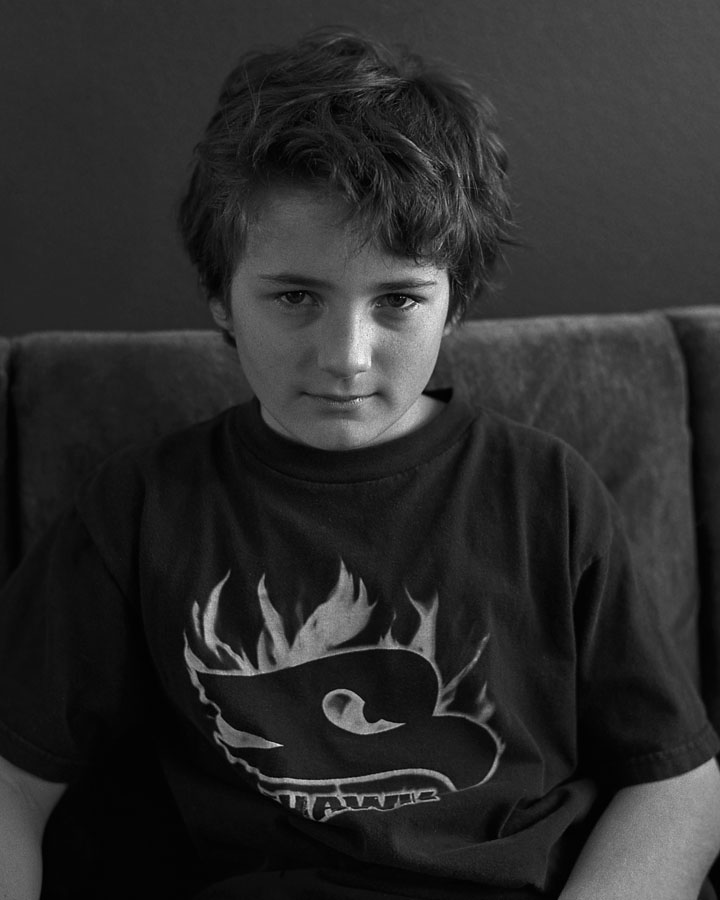
Kevin by SteveMPhoto, on Flickr

It is generally said that you don't push with 2 bath formulas, but I've found that you can get about a stop or so by doubling the A bath since some development does occur in the A bath. I've had very good results with Delta 3200 at 2400 iso...about 1/2 a stop from what I understand is the realistic iso of that film...with about a 75% increase in bath A time.
example:


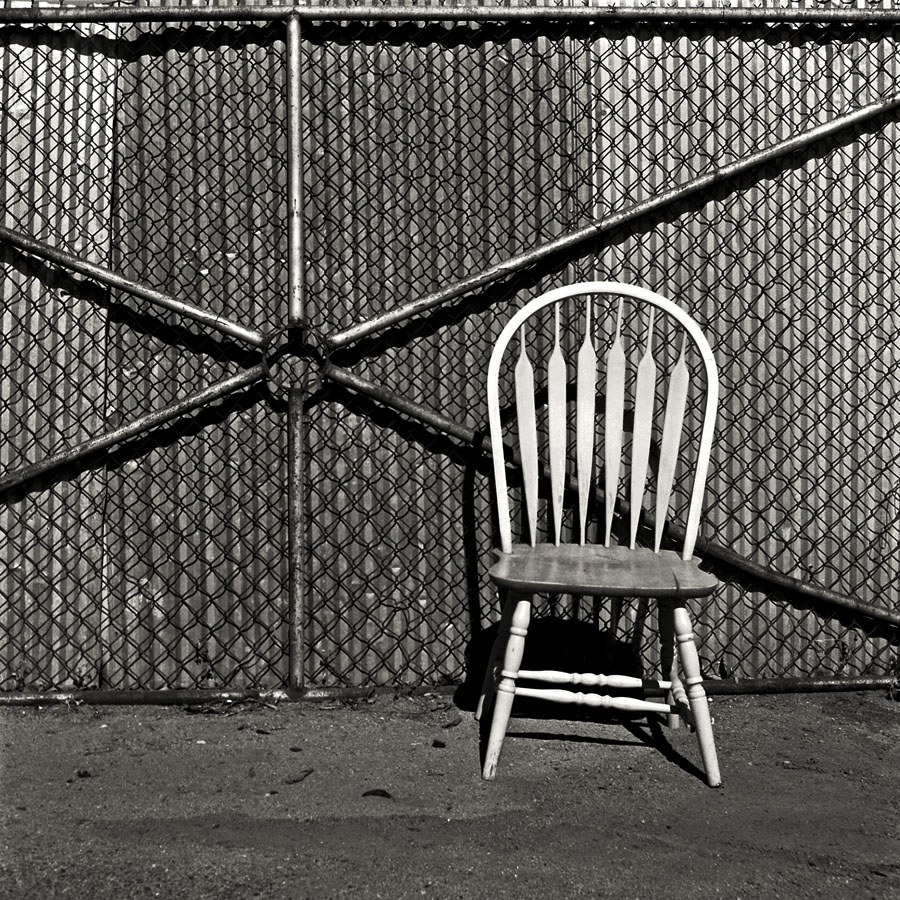
White Bug by SteveMPhoto, on Flickr

I've also shot tri-x at 800 iso by doubling the time in bath a...can't find an example of that at the moment.

Barry's is the only thing I'll use. Not necessarily because it's the best for every (or any) situation, but because it matches my lazy/sloppy work ethic and still delivers results that satisfy me.
 
Thank you for this excellent information. I really like the look of the White Bug and that's really what I'm after, it appears to me to have more of a "J" shaped curve to it. Do you use zone system techniques to get these results?

Thank you,

Click
 
Thank you for this excellent information. I really like the look of the White Bug and that's really what I'm after, it appears to me to have more of a "J" shaped curve to it. Do you use zone system techniques to get these results?

Thank you,

Click

The zone system is too much work for me. (Please see "lazy/sloppy" above).

That's the Mamiya 7's meter making the choices and some decent contrast tweaking in photoshop after the scan.

More delta 3200


Cradle of Love by SteveMPhoto, on Flickr

FP4


Mail by SteveMPhoto, on Flickr

PanF


Pale Yellow by SteveMPhoto, on Flickr

Tri-X


Untitled by SteveMPhoto, on Flickr

Everything I soup works well. Highlights are well controlled, which is helpful here in the desert. Results are consistent, and I don't have to worry about the best chemical for this film or that film.
I even put different films in the same tank at the same time, developing tri-x and fp4 for instance.
 
I've used Stoeckler and Thornton's two bath developers both with constant agitation and with intermittent agitation. The constant takes less time - four or five minutes per bath, while the intermittent seems to work better for me at six minutes per bath. It's not fussy about temperatures and both baths can be reused - I've done up to 12 rolls over a one month period with the same chemicals and haven't had to adjust times.
While I have done Tmax 400, I usually shoot TriX at 400 and it comes out just fine. So far, all I've done is 35 - no 120. I have tried Boax B bath and Metaborate B bath - the Metaborate gives better contrast; the Borax finer grain but often has to be printed at grade 4 or above. These two-bath developers are great for taming contrast - dark truck stuck in a sunlit snowdrift, etc. They're not as sharp as Xtol diluted, however. If this is too much information, I apologize.
 
Last summer I did some Stoeckler stuff. I shot about 20 -25 rolls with both the Borax and the Kodalk (in both cases 10 gram/1000ml). Films were XX/TriX/NP 400. I found that it worked best with continious agitation. Grain is not super-fine - but mid-tones held up very well in bright sun (wish we had that now!).
Times were 4min A/4 min B in most cases - extended it to 5 min in B after having run 15-20 rolls through the A bath.
There are about 250 shots on our Flickr site done with both Borax and Kodalk and A4/B4 and A4/B5.
Speed was either rated film speed or close to it (TriX # 320/400, XX at 250-320).
It is a very simple and reliable developer. I do mix a fresh B bath for every batch of films - though if you run 2x5 rolls (1500 ml in Paterson tanks) you can safely re-use the B bath.
 
Additional info: I mix it as a 2000 ml batch (A) and the fresh B bath as 1500 ml (Paterson 5 reel tanks).
You do loose between 5-6 ml/roll in the A bath (soaks into the emulsion) and I usually do 50 rolls in one A bath ( volume reduced to 1600-1650 ml due to the loss). I also recommend that you filter the A bath after every 10 rolls. Lots of dust and occasional filmchips come off and instantly migrate to the smooth mid-tones otherwise.
 
I sincerely appreciate this information and I welcome all of it. In my journey to create the pictures I see in my mind I need all the help I can get. Frankly, I never was that scientific of a person but I can humbly follow directions. I probably do need to try TRI-X but in fourteen years of photography I've pretty much stuck to the basic (Tmax 400), which has worked fairly well but was never really what I wanted.

The thought of developing fifteen rolls of film with one developer blows my mind! I've only used a developer one shot and never even tried to it twice because I assumed it wouldn't work properly.

My current pictures with Tmax 400 look okay, my bottom end is seriously lacking and most of the time I can peg my highlights. I don't mind grain, unless the subject demands a fine grain feel.

I do want to take my pictures to the next level by establishing a bottom end and creating more depth in the shadows and particularly creating a contrast curve that is shaped like a "J" where there is significant dark textured tone that sharply rises into white. I recognize that this is wholly unnatural but I come from a drawing and painting background and this is how I have always seen and drawn things. So I'm going to actually buy a light meter and start with a two bath developer so I can create the look I want.

Tom, do you filter it with a coffee filter? Did you use the basic in camera meter with the FLICKR shots?

Again, thank you to everyone who contributed to me making a mess with a bunch of chemistry, I sincerely appreciate it.

Click
 
I do use a coffee filter for filtering. Works reasonably well - not ideal. A proper filter (lab-type) is better - but takes a long time to go through.
As for metering - most of my stuff is shot "Sunny f16" - i.e guestimated exposures. I shoot primarily 400 iso film so the variables are small.
The trick is to shoot a couple of rolls, bracket exposures and run it through the Stoeckler and see what comes out. There are variables to contend with. We all meter and "judge" exposures differently and also we have different taste in how the negative should look.
 
Back
Top Bottom