Synthetic imaging comes mainstream

marcr1230

Well-known
Local time
2:43 PM
Joined
Jul 29, 2008
Messages
1,379
unconventional photography - computational? Merging images from multiple lenses and sensors, light field stuff, what more awaits us


Looks like Apple is testing dual lens cameras in which the whole is greater than the parts

Given the heavy usage of mobile phone cameras - this stands to be a big improvement of already great image quality along with even more flexibility


http://www.macrumors.com/2016/02/02/iphone-7-plus-dual-lens-camera-samples/

I'm aware of lytro's light field camera - the illum:

http://www.theverge.com/2014/7/30/5949913/lytro-illum-review

Also the Light L16

http://www.theverge.com/2015/10/7/9473793/light-l16-16-lens-camera-specs-price
 
You can add pixel-shift cameras to that list as well. These cameras shift the sensor while taking multiple exposures to:

A) eliminate bayer filter artifacts to increase apparent sharpness, get full color measurements at each pixel, and eliminate moire, and
B) increase apparent resolution.

(A) requires a one-pixel shifts, while (B) requires 1/2 pixel shifts. Hasselblad and Olympus do both (A) & (B), while Pentax has only implemented (A) so far.

All of these implementations currently require the use of a tripod, but they do give very convincing results for static subjects. Olympus has also discussed using their best-in-class sensor stabilization to one day offer the high-res mode in hand-held shooting.


Hasselblad 200MP H5D-200c MS (released 8/14) -- uses 50mp sensor to produce 200mp images by combining 4 or 6 exposures: http://www.dpreview.com/articles/4410648565/hasselblad-unveils-pixel-shifting-200mp-h5d-200c-ms

Olympus OMD EM5 MKII (released 2/15) -- uses 16mp sensor to produce 64mp RAW images by combining 8 exposures: http://www.imaging-resource.com/PRODS/olympus-e-m5-ii/olympus-e-m5-iiTECH2.HTM

Pentax K-3 II (released 5/15) -- uses a 24mp sensor to produce a 24mp RAW that is 3x+ bigger than the standard raw by combining 4 exposures: http://www.imaging-resource.com/PRODS/pentax-k3-ii/pentax-k3-iiTECH2.HTM

Olympus Pen-F (released 2/16) -- uses 20mp sensor to produce 80mp RAW images by combining 8 exposures (same tech as EM5 II, but w/higher native res sensor)
 
I forgot about this one - thanks!
As you state, it currently does require multiple exposures and tripod

You can add pixel-shift cameras to that list as well. These cameras shift the sensor while taking multiple exposures to:

A) eliminate bayer filter artifacts to increase apparent sharpness, get full color measurements at each pixel, and eliminate moire, and
B) increase apparent resolution.

(A) requires a one-pixel shifts, while (B) requires 1/2 pixel shifts. Hasselblad and Olympus do both (A) & (B), while Pentax has only implemented (A) so far.

All of these implementations currently require the use of a tripod, but they do give very convincing results for static subjects. Olympus has also discussed using their best-in-class sensor stabilization to one day offer the high-res mode in hand-held shooting.


Hasselblad 200MP H5D-200c MS (released 8/14) -- uses 50mp sensor to produce 200mp images by combining 4 or 6 exposures: http://www.dpreview.com/articles/4410648565/hasselblad-unveils-pixel-shifting-200mp-h5d-200c-ms

Olympus OMD EM5 MKII (released 2/15) -- uses 16mp sensor to produce 64mp RAW images by combining 8 exposures: http://www.imaging-resource.com/PRODS/olympus-e-m5-ii/olympus-e-m5-iiTECH2.HTM

Pentax K-3 II (released 5/15) -- uses a 24mp sensor to produce a 24mp RAW that is 3x+ bigger than the standard raw by combining 4 exposures: http://www.imaging-resource.com/PRODS/pentax-k3-ii/pentax-k3-iiTECH2.HTM

Olympus Pen-F (released 2/16) -- uses 20mp sensor to produce 80mp RAW images by combining 8 exposures (same tech as EM5 II, but w/higher native res sensor)
 
So, "already" means "just few months ago".
And I can't confirm yet the 6S quality. 🙂

No I'm pretty sure apple comes out with a new model every year.

Wiki says:

The iPhone 5 is a smartphone that was designed and marketed by Apple Inc. It is the sixth generation of the iPhone, succeeding the iPhone 4S and preceding the iPhone 5S and iPhone 5C. Formally unveiled as part of a press event on September 12, 2012, it was released on September 21, 2012.
 
I forgot about this one - thanks!
As you state, it currently does require multiple exposures and tripod

Whether the new approach uses multiple exposures from a single lens or multiple exposures from multiple lenses -- both end results reply on computational progress to increase image quality beyond what the native sensor(s) are capable of. That was the point the of the thread, correct?

Actually, there is nothing new or unique about either of these approaches. Specialized scientific sensors have used this technology for more than a decade and there is nothing stopping people with regular cameras from creating super-resolution photos from multiple exposures either. The main difference with these new approaches is that all the fancy computing takes place IN THE CAMERA and it gives you a single RAW file as the output. Yeah progress!

By the way, as part of my business, I have to document vintage posters. I originally bought a Sony A7II thinking that 24mp would be plenty for my needs. However, camera resolutions have gotten so high that they were picking up the half tone patterns in the printing -- resulting in terrible color artifacts and moire. The A7II was simply unusable. Enter the EM5 MKII and I get near perfect, artifact-free images at a very high resolution and at a VERY low cost. Basically a museum camera on a budget!
 
The point was that what was available for special purpose and using custom or expensive equipment, is coming soon to a cell phone near you

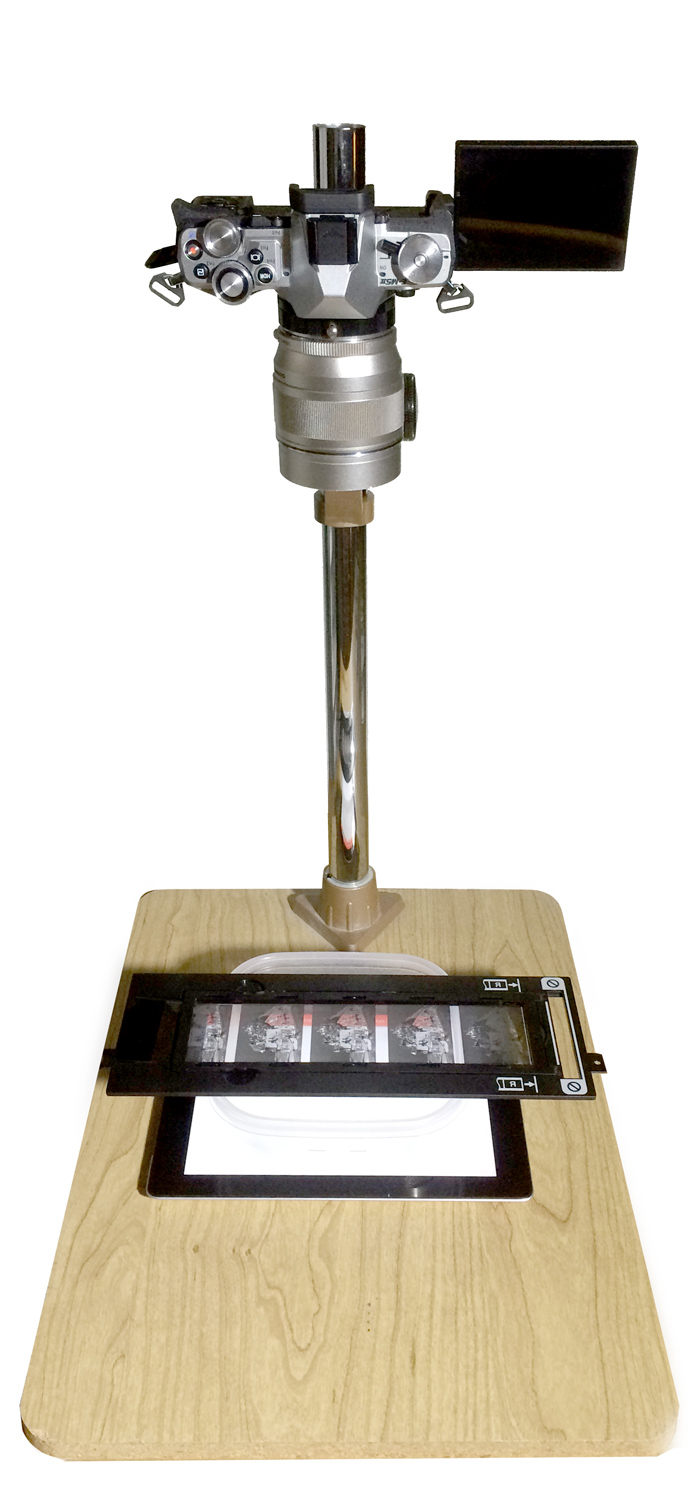
Has anyone used the EM5Mk2 to "scan" a negative? I wonder how that would come out
 
Sorry, I didn't realize you were primarily talking about mobile phone cameras. I was thinking more along the lines of "computational photography"...

Yes, scanning negs was one of the first uses I read about with the Olympus:

http://www.43rumors.com/using-the-olympus-e-m5-mk-ii-as-a-film-scanner-guest-post-by-jl-williams/

scan_rig-700px.jpg


The cheapy version 🙂

get
 
Back
Top Bottom