


bmattock
Veteran
What was the very first rangefinder camera?

Some think it was the Leica II (1932).
Some think it was the Contax I (1932).
Was it the Voigtländer Prominent? No, also 1932.
Some even think it was the Kalart rangefinder on the Graflex Speed Graphic (1936). Morris Schwartz, the inventer, apparently thought so too (although he did invent some really interesting stuff, and the Kalart rangefinder was very cool).
Historical documents may be misinformed, however: there is no disputing that Schwartz invented the 'Focuspot' device in 1936, and this may have been what he meant when he claimed to have invented the range finder (he used two words instead of one to describe his device, but always took pains to say he had invented the Kalart "Range Finder and Focuspot"). The Focuspot was essentially a backwards rangefinder - it shone a light through the rangefinder onto the subject for shooting at night - adjusting the light until the two images came together ensured that the camera was in focus.
Since it was none of those, which camera was it?
It was the Kodak No. 3a Autographic of 1916 - an accessory coupled rangefinder was available (not all had them).

And it was based on an earlier design by Professors Barr & Stroud for the British Army and Navy. In fact, their device was used on all British warships from 1888 right up until the advent of rader during WWII. The company they founded is still around, still making rangefinders - laser rangefinders. Well, they are called the Thales Group PLC now. Barr & Stroud ceased to be in 1977.
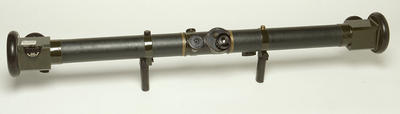
The rangefinder concept itself was much older even than that, but the Barr & Stroud device was pretty much the concept for the optical rangefinder used in today's rangefinder cameras.
Of course, completely common to the Kodak experience - having been there first with the most, they then essentially abandoned the concept of the coupled rangefinder until the Kodak Bantam (1936) and used it only sparingly after that. They just didn't like it - too bad that the rest of the world did.
Best Regards,
Bill Mattocks
Web Biblio:
http://www.theglasgowstory.com/image.php?inum=TGSE00890
http://www.1911encyclopedia.org/R/RA/RANGE_FINDER.htm
http://www.prairienet.org/b-wallen/BN_Photo/KodakRangefinders.htm
http://en.wikipedia.org/wiki/Morris_Schwartz
http://www.whnpa.org/join/inmemoriam.htm
http://www.kodak.com/global/en/consumer/products/techInfo/aa13/aa13.shtml
http://homepage.mac.com/cameradecollection/folding/Pages/19.html
http://www.thalesgroup.co.uk/thales_corporate/about/history/history_home.cfm
NOTE: All images are copyright their respective owners - these are links, not my drawings/photos.
Some think it was the Leica II (1932).
Some think it was the Contax I (1932).
Was it the Voigtländer Prominent? No, also 1932.
Some even think it was the Kalart rangefinder on the Graflex Speed Graphic (1936). Morris Schwartz, the inventer, apparently thought so too (although he did invent some really interesting stuff, and the Kalart rangefinder was very cool).
Historical documents may be misinformed, however: there is no disputing that Schwartz invented the 'Focuspot' device in 1936, and this may have been what he meant when he claimed to have invented the range finder (he used two words instead of one to describe his device, but always took pains to say he had invented the Kalart "Range Finder and Focuspot"). The Focuspot was essentially a backwards rangefinder - it shone a light through the rangefinder onto the subject for shooting at night - adjusting the light until the two images came together ensured that the camera was in focus.
Since it was none of those, which camera was it?
It was the Kodak No. 3a Autographic of 1916 - an accessory coupled rangefinder was available (not all had them).
And it was based on an earlier design by Professors Barr & Stroud for the British Army and Navy. In fact, their device was used on all British warships from 1888 right up until the advent of rader during WWII. The company they founded is still around, still making rangefinders - laser rangefinders. Well, they are called the Thales Group PLC now. Barr & Stroud ceased to be in 1977.
The rangefinder concept itself was much older even than that, but the Barr & Stroud device was pretty much the concept for the optical rangefinder used in today's rangefinder cameras.
Of course, completely common to the Kodak experience - having been there first with the most, they then essentially abandoned the concept of the coupled rangefinder until the Kodak Bantam (1936) and used it only sparingly after that. They just didn't like it - too bad that the rest of the world did.
Best Regards,
Bill Mattocks
Web Biblio:
http://www.theglasgowstory.com/image.php?inum=TGSE00890
http://www.1911encyclopedia.org/R/RA/RANGE_FINDER.htm
http://www.prairienet.org/b-wallen/BN_Photo/KodakRangefinders.htm
http://en.wikipedia.org/wiki/Morris_Schwartz
http://www.whnpa.org/join/inmemoriam.htm
http://www.kodak.com/global/en/consumer/products/techInfo/aa13/aa13.shtml
http://homepage.mac.com/cameradecollection/folding/Pages/19.html
http://www.thalesgroup.co.uk/thales_corporate/about/history/history_home.cfm
NOTE: All images are copyright their respective owners - these are links, not my drawings/photos.


