
This "soft" B/W style

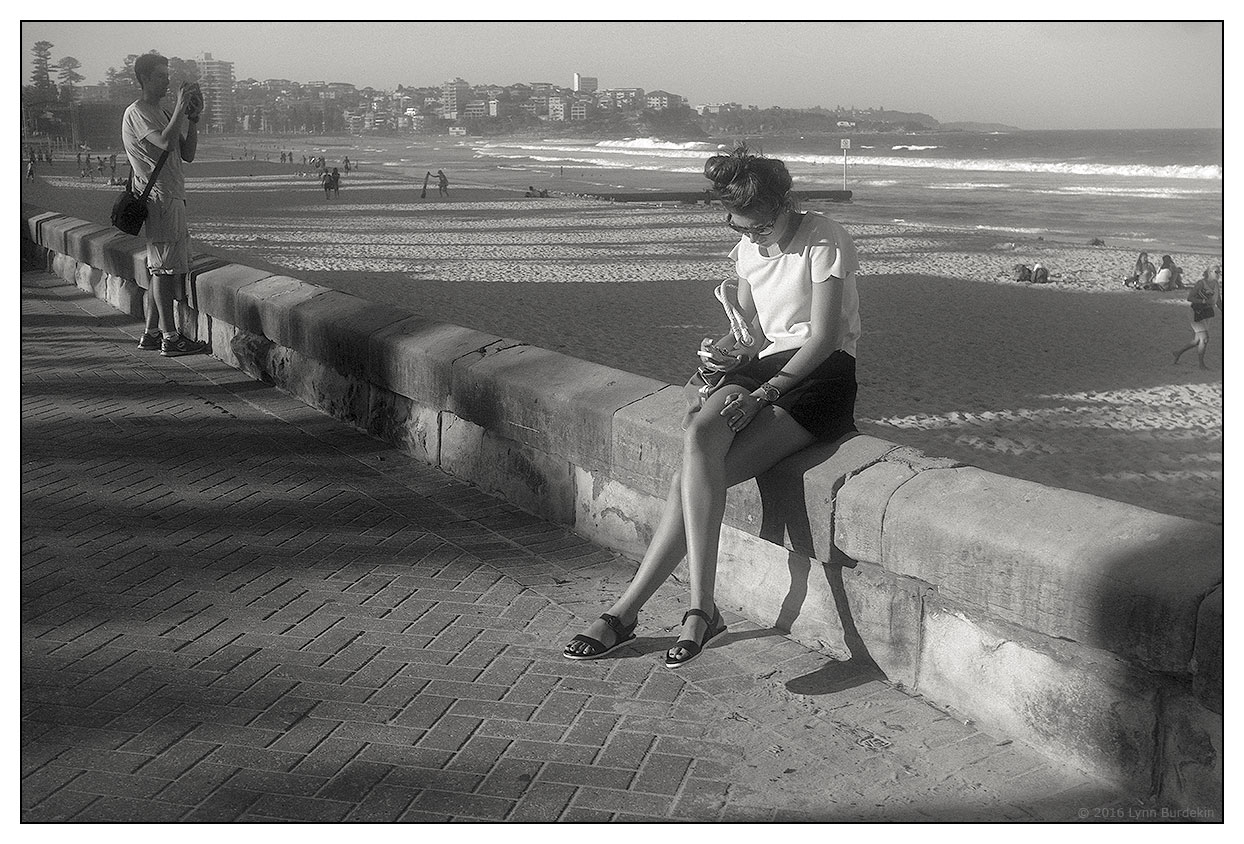
Here's a scan of a neg from an Adox Start 6x9 folder with a simple 105mm f6.3 Steinheil-Cassar lens (a basic three element anastigmat lens design). TMY400 in Rodinal 1+50.

Sharp but a soft, low contrast image.
U27021I1456397652.SEQ.0.jpg
 
Another lover of Paolo Roversi here. In his site there is this interview "On The Mysteries of Light" which can help a little.
robert
PS: in the same site other interesting pages to read 🙂
 
T-maxes have a much softer highlights roll off, but I have seen my friend do very soft look on hp5, you have to know your light and your film, and your developer, and your printing, and your scanning. So you have to know photography well. It's not in a certain film, or a certain combo, nor a certain lens. It's all. Primarily quality of light. Begin there.
 
Personally I wouldn't look to lenses if you wanna lift the floor on your blacks. Some of them *can* open up shadow detail a smidge but really you should look to your metering and development. Try shooting a 400 speed film at 640 and don't push. Purposefully under expose. If you're printing try matte papers. Faster film for sure. Delta 3200 is pretty soft generally, just remember to expose it at 1600.

As for the two images you linked, it's often simply because they had master technicians at their side dialing in their look. Another thing to consider, we've become "used" to high contrast as the norm. Magnum hasn't helped with this. In fact the ultra-contrasty and grainy images coming from photographers in the Middle East or in poverty stricken areas in my opinion do more harm than good as they almost look like still from a science fiction movie. It gives the effect of a completely foreign world and it makes it hard to see the subjects for what they are, which is people. (But this is WAY off topic). A photograph with a full range of tones to the modern eye may appear low contrast, but in reality the blacks are there and at proper density. The whites simply may not be smacking you in the face.
 
I would. This was once a standard professional trick when dealing with high contrast transparency films, and it works equally well with B+W.

Cheers,

R.

I agree it can help. Older lenses with single coating (or even no coating for the very old ones) are decidedly lower in contrast than modern lenses. Lynn's image, which looks to have been made at Bondi Beach is lovely (whether shot on such a lens or not) and reminds me very much of some images I have taken with both an early version 1 Summicron 50mm and an early 50mm Summarit f1.5. The latter lens is particularly low contrast till stopped right down. I recall some of the Voigtlander lenses for the Prominent rangefinder camera (such as the 50mm f2 Ultron) being similar in this respect. Many others of that generation are too.

But as others have said care is also needed in exposure.
 
You might try a solvent developer like the old Kodak Microdol-X. Use it straight and it will definitely soften your image. Microdol is no longer being made, but Freestyle sells an equivalent developer with their Legacy Pro Mic-X.

Jim B.

That is exactly what I have been using for the last couple of years. With the same gallon of replenished Legacy Pro Mic-X.
Kodak has info out on the internet about how to make the replenisher. This stuff gets better as it "seasons".
 
I guess it is to do with the lighting since most of those shots are studio based. I'll give Tri-X a go? I've only ever been using HP5 my entire life. *gasp*.

Very little difference. HP5 looks like the old Tri-x, before they changed the emulsion in the early 2000s.
 
The comments here seem to be equating "low contrast" with "soft".

I will have to think about that.

I has understood him to mean soft in tone as opposed to harsh high contrast tonality. Not soft as in unfocused or diffuse and lacking in image sharpness.

It seems others do too.
 
The comments here seem to be equating "low contrast" with "soft".

I will have to think about that.
Not entirely, and besides, the whole thing is interrelated. I've never quite understood how platinum/palladium prints combine a very subtle tonal range, which looks very long indeed, with a very short tonal range as measured with a densitometer. An overly contrasty but soft-focus shot just doesn't look "soft".

There's also the question of paper surface. Old-fashioned "soft" prints were always on more or less matte-surfaced papers, not glossy. Low contrast on a glossy print often just looks muddy.

It's all illusion, and there's at least as much alchemy in it as science.

Cheers,

R.
 
This is to illustrate how on print it looks softer.
Taken at 1/5 and 2.8.

U57736I1472858378.SEQ.0.jpg
Oh WOW.

I think it is the left that is what I am trying (or near) aiming for.

Another pic I like (nudity) - https://s-media-cache-ak0.pinimg.com/564x/ad/eb/41/adeb4199e94c87490c95250f64753851.jpg

and another of Paolo's:

5d202067c76127f078c0cd690b8a2cf2.jpg


I don't think I have the access to do any self-developing soon on my own papers :bang:...so I think I have to depend on light and film for now!

lynnb - nice photograph! But that is not the "soft" I am looking for. Maybe not the right word as Helen said. Going to quote her "tres cinematic" haha!
 
Last edited:
Where do you get this info, I'm always looking for cameras and details photographers use but am never successful? I use a body cap mounted Polaroid Lens from a Color Pack II to get soft 'look' then used with my Pentax 6x7.

American Photo magazine used to show 5 or 6 images in the last pages, and they'd list the gear used. Also, as a fan of both of these guys, I've read interviews featuring them and noted certain information back when I was trying to shoot fashion. The French photo mags also had good tech information. I think the bit about D-76 was in an article where Lindbergh was interviewing Helmut Newton and they were both sorta excited about the fact that they used the same film and developer.

Pretty sure Lindbergh was not using soft focus filters. Roversi used vintage lenses on the Deardorff, and i think the softness would be due to the lighting (continuous) and Polaroid emulsions. I don't think Lindbergh used flash much either, so neither guy would have that crisp 'strobe aesthetic.'

Regular Nikon and Pentax 67 lenses, Tri-X and plus-X with sun, hmi, and big cinema fresnel lighting for Lindbergh. Simple, classic stuff. I think he also preferred to use a 50mm as much as possible. Also shot with a Hexar AF for more casual, BTS stuff.
 
For sure in the case of Paolo Roversi the combination light, lens and Polaroid emulsion is part of the equation. B&W by Impossible are quite contrasty specially last version but could be worthwhile to try.

I did this with an old SX70 and the B&W film by Impossible.
robert

U3692I1472925176.SEQ.0.jpg
 
For sure in the case of Paolo Roversi the combination light, lens and Polaroid emulsion is part of the equation. B&W by Impossible are quite contrasty specially last version but could be worthwhile to try.

I did this with an old SX70 and the B&W film by Impossible.
robert

Nice one Robert!

i did not realize how good those Polaroid SX70s were.
 
Back
Top Bottom