Thanks for the info about the Helios-44, I wasn't aware of its heritage. No big surprise that the Soviets copied the Germans' design.
Well, one man's copy is another man's derivation. The Biotar is a double Gauss design, copied (derived from) the Gauss of the early 1920s, in turn derived from an even simpler Gauss telescope objective. Almost every lens manufacturer worldwide has/had a double Gauss design in their portfolio. The Russians didn't invent copying in photography.
Everything new in photography has already been done by the early years of the 20th. century (ecxept digital).
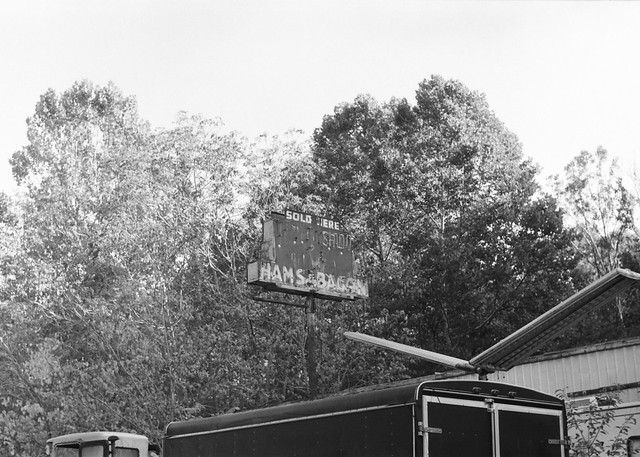
Hi Farley, good shots but ye need a filter on that lens (or mebbe the metering's a bit off?)
Ah have several Helios lenses
44 -13 blades ( silver) M39 screw
44 - 8 blades (black lacquer)
44-2 (KMZ) 8 blades
44-2 (MMZ) 8 blades
44-2 (Valdai) 8 blades
44-M (kmz) A/M switch - kit lens on Zenit EM)
44-m-4
They are all double Gauss, differences being in coatings from different factories, although some coatings look the same colours but appear tae be different thicknesses (thin-nesses).
The different numbering denotes different optical resolutions; the higher the number the greater the resolution.
Ah find that choice of background+aperture by the photographer determines the bokeh tae a greater extent than the lens model.
PS Not many folk know that the American Zeiss operations were "nationalized" and run by the US government from WW2 'til 1960.
Russians weren't the only Socialists copying photographic engineering...
😱😎
PPS Ah'll try and get time tae put up shots from the different lenses...
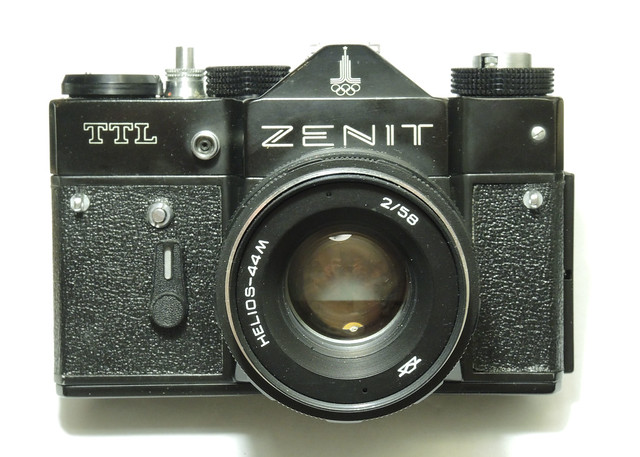
My Zenit, bought new in 1980 - Had a Zenit B and a Zenit E before this...
https://dl.dropboxusercontent.com/u/31085243/DSC01690.JPG