The Mandler 35mm f2

You seem to have been driven into an awful emotional tizzy over this. There is an irony here, seeing a guy who has posted multiple times railing against fakes and using ARTIFICIAL intelligence to defend his position. People don't buy these lenses to fool themselves or anyone else. They're bought by real photographers who like the image quality but have been priced out of the original, which has been discontinued for 30 years.

Voigtländer, TTArtisan, and Thypoch deliver great quality for the money. LLL, on the other hand, charges a big premium mainly for that ‘Leica replica’ aesthetic.
My two cents — like it or leave it.
 
I am old enough to remember when anything made it Japan was assumed to be of lower quality if not outright junk. That, obviously, changed over the past 70+ years. I wonder if we're in the same mindset with items made in China?
I have two of the LLL lenses - both M mount - and enjoy using them. So far, they have held up well and I like the smaller size, similar to early rangefinder lenses. Has anyone seen or used the new Mandler lens?

Made in China Lenses are not all junk, The Artisans and Thypoch lenses are excellent quality.
 
LLL has absolutely made innovations. They made the 8element 35mm summicron into a collapsible LTM lens……
And before anyone comes again with this fake Rolex nonsense. I also have an Original 8element - actually the very rare original LTM version, too.
However I now prefer the smaller and lighter collapsible - it's cheaper and…….People who buy gear so that others can see that they have a "proper" Leica instead of shooting pictures need their heads checked.

Whether the LLL collapsible Summicron 35mm is truly innovative or not depends on how you look at it.
It basically follows the collapsible Elmer lens design. For a compact 35mm lens, do you really need a collapsible mount? The aperture ring/index is placed on the lens hood - the lens plus hood is not that small compared to rigid form, and the sloping focus cam used on different LTM bodies is notoriously unforgiving — even a tiny positioning error can cause misfocus at the film plane. I suspect that’s exactly why LLL only made one production run and then quietly dropped it.
I’d encourage you to pull out your real first-version Leica Summicron 35mm f/2 and actually shoot with it, otherwise you’re just the temporary caretaker, and it’ll end up being donated to Goodwill by your kids. After all, these lenses were not that expensive. I bought all four versions of the Summicron 35mm f/2 (V1–V4) back in the day for only $500–$700 each.
 
Last edited:
The Rise and Fall of Replica Leica Lenses
—A story pieced together from scattered internet threads

The Chinese replica lens scene works very differently from the Western Kickstarter model. It all begins in closed WeChat groups—China’s version of private Facebook groups. You either know someone on the inside or get invited by scanning a QR code. No public campaign page, no Indiegogo link—just trust and connections.
The man who started it all is from Sichuan province, home to fiery Sichuan cuisine and, more importantly, one of China’s oldest optical factories (the same plant that once made the Pearl River SLR). Today these state-owned or half-private factories will happily take almost any order as long as you meet their minimum run—usually a few hundred pieces. (Another replica group, for example, used the Jiangxi Optical Factory for their lenses.)
After the WeChat group grew large enough, people started throwing in money. One participant suggested naming the first project, a 35mm f/2 clone of the legendary 7-element Summicron, “Solaron”—“Sol” for sun/light + the end of “Summicron.” The name stuck, and Solaron was born.
After several prototypes and delays, the final lenses were delivered. From a distance they were indistinguishable from the real “King of Bokeh.” You could even buy genuine-looking Leica-style aperture rings separately. Mount one of those, and you could fool just about anyone—especially the kind of collector who only looks at gear instead of using it.
Success bred ambition. The group immediately started a second project: a replica of the famous Leica 50mm f/1.4 with the E43 filter thread. Everyone was hyped—another dream lens that most of them could never afford. Money was collected fast.
Then… nothing. Months of silence. Eventually the organizer refunded everyone and announced the project was dead. Rumors exploded: some said he had gambled the funds on the stock market, others were just relieved to get their money back—unlike the countless P2P lending scams where the boss disappears to somewhere with the cash.
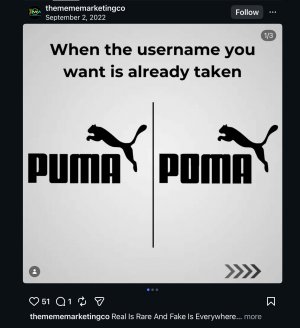
The blueprints didn’t die, though. They were handed over to a new player who named the lens after the famous Leica designer Walter Mandler. The reborn replica came in a box that shamelessly copied Leica’s packaging, with the name “SUMMI-CRON M” (the classic knock-off trick: change one or two letters to dodge trademark lawsuits—think “POMA” sweater instead of Puma).
Today you can buy a “Mandler” 35mm f/2 from Southeast Asian sellers for as little as US$365, and some claim the domestic Chinese price is closer to $200. That rock-bottom pricing tells you everything about how cheap these lenses are to manufacture.
Meanwhile, the market has split in two directions:
Some brands (like 7Artisans or TTArtisan/Thypoch) went to legit, selling original designs at prices that compete with Japanese makers.
The pure replica makers took the opposite path: get a shout-out from a famous Leica influencer, slap on words like “limited,” “collectible,” or “heritage,” and mark the same lens up to $1,000–$1,700—still a fraction of a real vintage Summicron, but with fat margins.
From WeChat group buys at cost to “endorsed” shelf queens sold for X times the production price—that, in a nutshell, is the short and dramatic saga of the Chinese Leica replica lens scene.

 

Attachments

  • IMG_2900.jpeg
    IMG_2900.jpeg
    211 KB · Views: 8
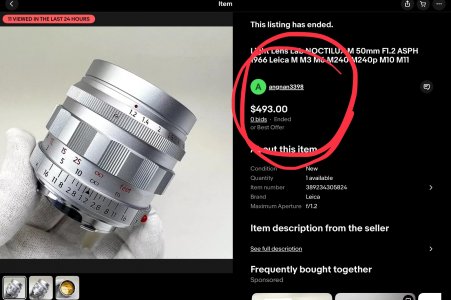
Some buyers paid big money for just a couple of months ago — just closed at $493 with zero bids. At that price the seller is probably still making a profit, just not the fat margin they were hoping for.
 

Attachments

  • IMG_2901.jpeg
    IMG_2901.jpeg
    364.9 KB · Views: 32
Some buyers paid big money for just a couple of months ago — just closed at $493 with zero bids. At that price the seller is probably still making a profit, just not the fat margin they were hoping for.
And this is on eBay at the moment, a Mandler by any other (and previous) name:

IMG_1442.jpegIMG_1441.jpeg
 
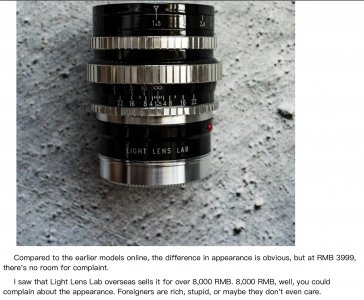
This guy is a well-known Hong Kong blogger famous for testing tons of lenses, with that sharp, elitist, white-collar Hong Kong sense of humor. Here’s a screenshot from his review of a 50mm f/1.5 lens: it sells domestically for under $600 USD but goes for around $1,100 overseas—the official website lists the same price worldwide. Not sure if this is because of stricter QA for export units or, as the blogger bluntly (and rather un-PC) put it, “overseas buyers are rich, even do not care (about higher price).”
 

Attachments

  • IMG_2904.jpeg
    IMG_2904.jpeg
    388.8 KB · Views: 18
Last edited:
This guy is a well-known Hong Kong blogger famous for testing tons of lenses, with that sharp, elitist, white-collar Hong Kong sense of humor. Here’s a screenshot from his review of a 50mm f/1.5 lens: it sells domestically for under $600 USD but goes for around $1,100 overseas—the official website lists the same price worldwide. Not sure if this is because of stricter QA for export units or, as the blogger bluntly (and rather un-PC) put it, “overseas buyers are rich, even do not care (about higher price).”
It's not that overseas buyers don't care about the higher price, it's that most of us don't speak/write Mandarin and are probably more than a little shy about buying a lens using Google translate from a vender where (worst case scenario) the return/refund process is potentially challenging. This leaves us with buying from available/trusted sources using the lingua franca...paying a higher price.

Count yourself lucky - you seem to speak Chinese! Celebrate that you bought Leica lenses when they were less expensive! Show us some of your photos - we'd love to see what you can do with that prestigious glass.
 
It's not that overseas buyers don't care about the higher price……Celebrate that you bought Leica lenses when they were less expensive! Show us some of your photos - we'd love to see what you can do with that prestigious glass.

Good point!
 I’m here to share a few thoughts and bits of info.
Photography is purely a hobby for me, not my profession. I work in a highly regulated field where privacy is taken very seriously, and having seen the chaos and bullying that can erupt online, I’ve become quite cautious—I simply don’t post photos publicly on the open internet.
As for my skill level? The only thing I’ve ever won was a local photo contest, which netted me a grand total of $300… which I promptly donated to a local charity. 😄
 
I’ve never been a fan of replica lenses—doesn’t matter if they’re labeled Solaron, LLL, or anything else. I only buy lenses I actually enjoy using. I don’t collect for prestige or investment—stocks have always given me far better returns than parking money in Leica glass ever could.
 
Last edited:
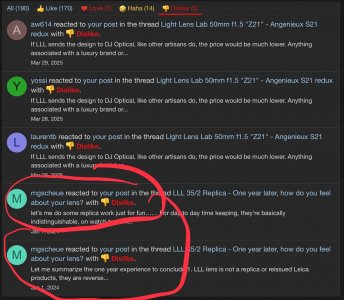
In my many years of doing business with partners across East and Southeast Asia, I’ve noticed that buyers from a few specific regions sometimes create accounts, remain completely inactive, and then suddenly leave negative feedback (often without ever having purchased or communicated). Unfortunately, user “mgscheue” appears to fit that exact pattern.
 

Attachments

  • IMG_2909.jpeg
    IMG_2909.jpeg
    419.5 KB · Views: 28
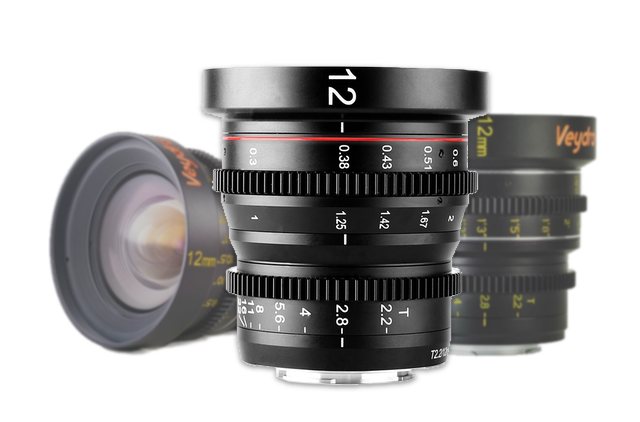
@Duofold RF Thank you for that breakdown and explanation of the Chinese homage lens scene, very interesting. It reminds me a little of the Veydra/Meike connection. Back in the 2010s, micro four thirds cameras like the GH4 were very popular with low budget owner operators for video, and Veydra created a series of native m43 cinema primes. Reportedly, they were excellent quality in build and optics, and manufactured in China.

Aggravatingly, there was a break in at their warehouse and their entire inventory was stolen, tens of thousands of dollars worth of lenses. They folded shortly after.

But what happened later was unexpected. The company Meike came on to the scene with lenses very similar to Veydra lenses with apparently better optical quality, and at lower prices. It appears that the Chinese fabricator used the optical designs and improved quality control.


@Archiver That’s an interesting story. With advancements in optical manufacturing, the replica market is booming, and more players are expected to join this niche market. My friend told me, the Mandler 35mm was priced at RMB 1,588 in China, approximately $230 per unit.
 
Back
Top Bottom