
Carry-on Bag - Camera Bag

I just checked out Crumpler's website as when I was last shopping for a camera bag a few years ago, they were not making any. Looks like they are back in the business. I have one of their bags I bought 15+ years ago and it's held up great.
Crumpler was recently reacquired by its founders and they are returning their roots in bag design. They coincidentally discovered a hoard of illegally procured stock from 10+ years ago on a cargo ship! This NOS is on their website and can be purchased.

This week I was interstate for a short trip, which required two cameras and clothes to be carried on the flight. This is what I used:

Old rectangular bag from a company called Ricardo Beverly Hills, called the Big Sur boarding bag. It is so old that it does not have a laptop sleeve or the usual charger compartments
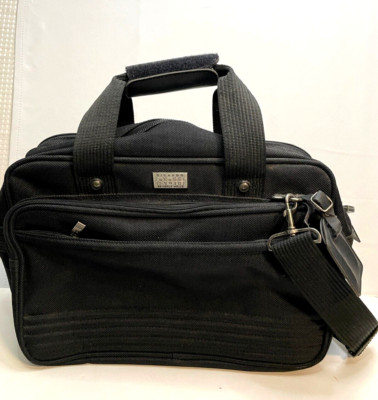

rbh big sur black.png

Into this bag went my Panasonic S5 + 24-105, a change of clothes and underwear, sneakers, two chargers, cables, batteries and toiletries

Crumpler Dry Red Boarding Bag #2

e9eb916134928e66555070eb955e240bad000e23d05f2afede10f7b48498b332.jpg

This carried my wallet, earphones, Leica SL2-S with Summicron 35 SL, Panasonic 50/1.8, and other small bits and pieces.

The whole lot was under 9kg, and I had 14kg carry on allowance. Both bags fit under the seat in front of me, alleviating worries about someone going through my bag in an overhead locker. They are discreet bags without flashy labeling or style. The Ricardo bag has an excellent wide shoulder strap which distributes the bag's weight perfectly.
 
There are times when I think back to the days when I had only one pocket camera and feel nostalgic for that simplicity. Then I think of the variety I have come to expect, and affirm that there's no way I could travel with just one camera with a fixed lens. I take 500+ images each day on a trip, and carry two mirrorless cameras and a pocket camera, but I'm probably an outlier.
Josef Koudelka once said that he needed to shoot at least three rolls a day to keep the visual chops up.

Content trumps form in the selects. And, I'm with you on the frames/day ratio. The heavy gear has all gone from Nikon to Canon mirrorless in the last few years, but.....

Here's something to consider: for travel, I migrated from two M bodies to one body and two lenses. That got replaced in the digital revolution by (eventually) a Fuji X100F and a Sony RX100M7. Before you blow off the digital or the "smallness of the Sony sensor" consider the concept. The Sony kills in "decent-enough" light and in the golden hour at low ISOs will replace just about any DSLR for technical image quality in focal lengths of 24-200mm. Not as convenient to use, but it is an incredible camera-lens combo. The Fuji just cruises along at 35mm equiv. (or if you like 28mm) with absolutely stellar TIQ.
 
Crumpler was recently reacquired by its founders and they are returning their roots in bag design. They coincidentally discovered a hoard of illegally procured stock from 10+ years ago on a cargo ship! This NOS is on their website and can be purchased.

This week I was interstate for a short trip, which required two cameras and clothes to be carried on the flight. This is what I used:

Old rectangular bag from a company called Ricardo Beverly Hills, called the Big Sur boarding bag. It is so old that it does not have a laptop sleeve or the usual charger compartments


View attachment 4875506

Into this bag went my Panasonic S5 + 24-105, a change of clothes and underwear, sneakers, two chargers, cables, batteries and toiletries

Crumpler Dry Red Boarding Bag #2

View attachment 4875507

This carried my wallet, earphones, Leica SL2-S with Summicron 35 SL, Panasonic 50/1.8, and other small bits and pieces.

The whole lot was under 9kg, and I had 14kg carry on allowance. Both bags fit under the seat in front of me, alleviating worries about someone going through my bag in an overhead locker. They are discreet bags without flashy labeling or style. The Ricardo bag has an excellent wide shoulder strap which distributes the bag's weight perfectly.
This is 100% the way to go. I don't have a Crumpler (but I love the re-reacquiring story) I have a Patagonia cross-body sling thingy. My carry on is an older Goruck ruck that slides under the seat in front. I've been all over the world for up to 6 months at a time with that set up. Passport etc., Fuji, and Sony RX100M7 in the Patagucci and the rest in the goruck. patagonia_x100f_rx100M7.jpgGR2.jpgpatagonia_x100f_rx100M7.jpgGR2.jpg
 
Josef Koudelka once said that he needed to shoot at least three rolls a day to keep the visual chops up.

Content trumps form in the selects. And, I'm with you on the frames/day ratio. The heavy gear has all gone from Nikon to Canon mirrorless in the last few years, but.....

Here's something to consider: for travel, I migrated from two M bodies to one body and two lenses. That got replaced in the digital revolution by (eventually) a Fuji X100F and a Sony RX100M7. Before you blow off the digital or the "smallness of the Sony sensor" consider the concept. The Sony kills in "decent-enough" light and in the golden hour at low ISOs will replace just about any DSLR for technical image quality in focal lengths of 24-200mm. Not as convenient to use, but it is an incredible camera-lens combo. The Fuji just cruises along at 35mm equiv. (or if you like 28mm) with absolutely stellar TIQ.

The Sony RX cameras are gold, it's amazing what they can do now. The VII is more camera than a lot of people need.

My usual two mirrorless cam and one compact cam kit is the Leica M9 + 3 lenses, small micro four thirds like the GX85 + 3 small primes, and the Sony RX0. This provides three levels of image quality and size which can be scaled to fit the situation. Were I to go on your route, I'd get a Leica Q2 and use my Panasonic LX10, or maybe get a Sony RX100 VI or VII instead. This kit would alleviate a lot of 'which camera do I use now' decisions as the gear suggests itself for various situations. These two cameras could easily fit in most shoulder bags.
 
Travel ... for a not "photography centric" trip:

- Carry as little as possible. This varies depending upon your preferred gear to use.

- Use a modest backpack or rollaway that will fit in the overhead bins of your transport. It should have just enough space for your required clothing, toiletries, miscellanea, and the camera/computer gear. For any given bag, keep whittling the total kit down until it fits ... you'll still have more than enough if my experience is any indication. Current regulation on carry on luggage is available at any of the airlines' websites ... note that some rules/sizings have changed recently.

- Have a modest, foldable/compactable shooting bag with you as well. I use this while in transit for my on-plane incidentals, then empty it at destination and fit my camera gear when I go out walking/doing photography. I think my current is an old Lowepro Terraclime 100 (long discontinued, I fear; but I have two of them).

- Don't forget that any modern smartphone is a useful photographic tool. Try and select a couple of camera apps until you find one or two that work well for you. It's not the same as using a regular camera, but in a pinch getting a picture is the goal, not what you use to get it.

Have a good trip.

G
 
The Sony RX cameras are gold, it's amazing what they can do now. The VII is more camera than a lot of people need.

My usual two mirrorless cam and one compact cam kit is the Leica M9 + 3 lenses, small micro four thirds like the GX85 + 3 small primes, and the Sony RX0. This provides three levels of image quality and size which can be scaled to fit the situation. Were I to go on your route, I'd get a Leica Q2 and use my Panasonic LX10, or maybe get a Sony RX100 VI or VII instead. This kit would alleviate a lot of 'which camera do I use now' decisions as the gear suggests itself for various situations. These two cameras could easily fit in most shoulder bags.
Interesting. With the tilting screen and the viewfinder, the Sony occupies, by turns, various spaces in which I used TLRs, SLRs, view cameras, and rangefinders. The trade off: I always, always, put two extra batteries in my pockets. The good thing about small cameras is that their batteries are small. The bad thing about small cameras is that their batteries are small. I think of Winogrand's comment, "There are no photographs when I'm reloading."
 
Interesting. With the tilting screen and the viewfinder, the Sony occupies, by turns, various spaces in which I used TLRs, SLRs, view cameras, and rangefinders. The trade off: I always, always, put two extra batteries in my pockets. The good thing about small cameras is that their batteries are small. The bad thing about small cameras is that their batteries are small. I think of Winogrand's comment, "There are no photographs when I'm reloading."
I have an MK1 that I bought new and I've thought long and hard about whether I really need anything else. I've made 8x10 prints from it that look fantastic. 5 extra batteries will fit in a tiny case/pouch and I can charge it via USB-C. At this point, the only reason I'd get another camera is to get a newer variant with the EVF.
 
I was given a Think Tank Urban Disguise 60 many years ago. Always impressed how flexible the various pockets and dividers are and the quality is excellent. After more than 10 years it still looks new.
 
The Mexican provinces bordering the US are the trouble spots and I won’t go there for any reason, but further south is ok. Tons of US retirees around San Miguel de Allende. I have walked around Mexico City with a Leica around my neck. At night though there were cops with machine guns at every street intersection which made me uneasy enough to make me go back to my hotel and wait for an early morning street photography walk. I have flown with my 4x5 to Europe and Asia when the Quickload and Readyload films were still available. The standard film holders weigh more than the camera and lenses so yes I will leave them for road trips. The hassle with medium format is the second bag with at least 50 rolls of 120 film for a 3 day trip. A Rolleiflex is small and light enough but 12 shots per roll will go fast. Now it’s a non issue with film killing X-ray. Film for road trips and digital for flying.
When I used to go to Las Vegas every year for the ISC show, I would mail or ship by UPS my film ahead to my hotel about 4-5 days before I left. On the day before my return fight, I'd ship all but 1 roll of 35mm and 1 of 120 back home. And I have that hand inspected each trip.
 
On my last trip (Maui, Hawaii - Nov 2025, 10 days there), I carried a Leica X2, two batteries, charger, and my iPad Pro 11" in the Terraclime 100 bag. That was stuffed into my minimum size rollaway for transit on the airplane with my clothes and other necessities. It did the job nicely.

Next time I do that kind of trip, I'll grab an M and a second lens, 75 or 100 mm. And maybe my travel tripod ... there's more than enough room in the rollaway for it and it presents the possibility of a lot more photo opportunities in the early morning and late evening.

G
 
I was given a Think Tank Urban Disguise 60 many years ago. Always impressed how flexible the various pockets and dividers are and the quality is excellent. After more than 10 years it still looks new.

I have two Thinktank Urban Disguise bags which I bought around 2009-2010. I used the smaller version as an everyday bag for a year or two, and the larger one for transporting gear. The quality of materials, design and construction of these bags is top notch. I don't use them as much now as I have other bags which are less boxy, but I will always pick up the UD bags if I need something to reliably carry gear.
 
I have an MK1 that I bought new and I've thought long and hard about whether I really need anything else. I've made 8x10 prints from it that look fantastic. 5 extra batteries will fit in a tiny case/pouch and I can charge it via USB-C. At this point, the only reason I'd get another camera is to get a newer variant with the EVF.
100%. I do the odd license of an image and the question has never come up when it's been done with a "little camera." One thing I've done however, is get a filter adapter and put a 52mm filter on the front of the thing. These cameras are getting so expensive and that front element is vulnerable to anything that winds up in the same pocket and pushes the iris apart. In my case, often car keys.
 
Back
Top Bottom