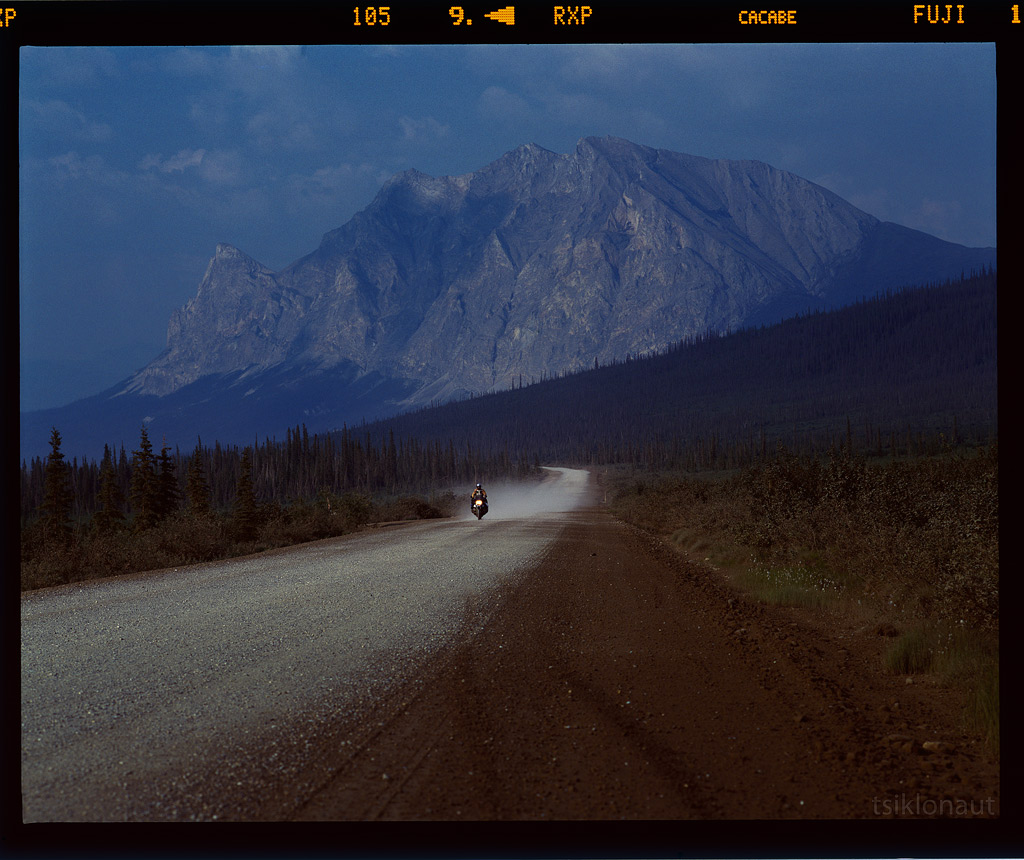
Wow. Such beautiful work. I'm very hesitant to shoot E6 because it has so little lattitude.
Forget that. It has much more than you think. Don't judge it by all the crappy scans you see on the internet. Most of them are done by cheap scanners, and with those you cannot exploit the full dynamic range of slides.
What reversal film can really deliver you see when you look at it on the light table with a good slide loupe, and especially in projection, where slides are absolutely unsurpassed in picture quality. It is impossible to get the same quality with digital or prints from negative film.
Generations of photographers have shot slides and got well exposed results. And they did that even without all the excellent light meters we have today.
It is
not difficult!
Are you a normal intelligent person who is able to use a light meter (either a build in camera meter, or an external meter, it does not matter)?
If yes, you will not have any problems exposing slide film.
Did you get proper exposed shots with your digital camera?
Then you will also get it with slide film.
Provia 100F, 400X, Elitechrome 100, E100G, Wittner Chrome 200D etc. all have a dynamic range of 8-8,5 stops (tests from Tim Parkin even result in a higher dynamic range).
So the contrast range from a little texture in the shadows to a little bit texture in the highlights is about 8 stops, that is more than enough for most subjects.
That is even more than lots of digital cams have, especially those with APS and smaller sensors.
And you always can extend the contrast range with diffuse pre-exposure, fill-in flash, gradual filters, reflectors.
This thread truly is inspiring. If only E6 weren't so darn expensive!
E6 is even cheaper than using colour negative film:
With slide film you always have a finished picture:
Just hold it to the light and look at it, even better use a daylight light table and a very good slide loupe (like the Schneider and Rodenstock loupes), then you have an enlarged picture in outstanding quality (much much better than scanning and watching the scan on the computer monitor, which has an extremely low resolution and cannot display real halftones).
And of course the best of all: slide projection with its unsurpassed image quality.
With CN film you need prints, that is what they are designed for. But very good prints are expensive. So if you consider all costs, CN film with good prints is more expensive than using slide film, where you don't need prints.
If you compare your 120 format slides on a light table with a 3x Schneider loupe (18cm x 18 cm image in best quality) with a 18cm x 18 cm print, you will immediately see the much better brillance, better sharpness and resolution of the slide.
You get better quality at lower costs with the slide.
Even much much bigger is the difference when you enlarge bigger:
With slide projection you can enlarge as big as you want.
Let's say you project your image on a 1meter x 1,5 meter screen. That costs you less than a buck. But you get the best picture quality.
A print from negative film in that size in good quality costs you more than 100 bucks! And it can't compete in quality (and excellent slide projectors are very cheap, even new ones).
So if you use slide film in the right way = best quality options (light table with good slide loupe and projection), it is
- much cheaper than using negative film
- you get even better quality compared to prints.