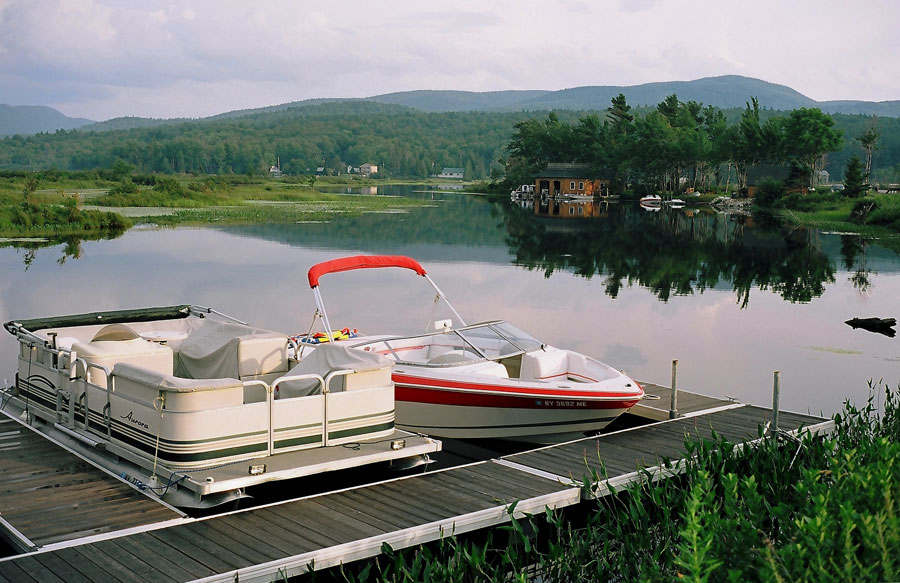
Colour Film has Soul

original.jpg

Ektar 100 and Leica M6 at the Oregon Coast

Ellen

 
Wow, just wow
I cannot scan color negatives for the life of me
Can't tell if its because I keep shooting in horrible lighting or poor scanning or both
 
For the screen, it seems to me, scanning can make or break the image. I'm pretty hopeless at it but have come across some people who know what they're doing. This is from a batch I had done a few years ago, when I was in Kitzbuhel...

11826133056_3362191b1e_o.jpg

Sejanus - this picture took my breath away, but it probably is not only because of the lovely color. I think among the hardest things to portray in photographs is height and depth, but this photo does that beautifully, breathtakingly, and then the appealing color added the frosting.
 
How do you guys get such nice scans from Kodak Ektar 100?

I've tried it several times but I just can't seem to get that "slide film like" pop out of it that some people can. I find I get more pleasing results with Kodak ProFoto 100, which is a much cheaper film (some sample shots scanned with my Coolscan 5000 below).


Awesome work...

What scanner are you guys using?
Im in the hunt for scanner myself cos i feel my local lab doesnt really do justice to the development. 🙂
 
Even transparencies have something that my digitals can't do. Blacks that are black, etc. A color transition that is not harsh. The difference reminds me of the difference between electronic flash and bulbs. Or even more dramatic between electronic flash and non flash tungsten lighting.

This is 1965 Ektachrome on a big sun day:

11142360336_78eb7a9fb2.jpg


11176495774_c68785edf1.jpg


Even in this harsh lighting there is a softness.
 
Sejanus - this picture took my breath away, but it probably is not only because of the lovely color. I think among the hardest things to portray in photographs is height and depth, but this photo does that beautifully, breathtakingly, and then the appealing color added the frosting.

Thank you for the kind words but I really can't take the credit. It's the astonishingly clear air in the Tirol, which provides a sense of depth that we low level dwellers simply never see.

Colour film captures that much more effectively than the best digital sensor, I think, because the randomness of the silver crystals and the dyes corresponds better to our visual perception.
 
I was hoping you were going to pitch in at some point.
I'm sure everyone will agree... exceptional photos.

Which is the camera that is marking the EXIF data on the neg, very useful. Mamiya?

I’m not sure about the 645’s but could the 67’s be Pentax?

Thanks, no actual EXIF in my case - I write down the data manually for flickr by memorizing and drum scanner shows film corners for film info, since I don't have many film cameras and lenses so it's easy to figure the rest.
I know it's possible to add EXIF data manually through some editor but never bothered with it.


Some little more various color film frame scans:


Valle de la Luna (Moon Valley) by tsiklonaut, on Flickr

Yellow by tsiklonaut, on Flickr

Old Believers church by tsiklonaut, on Flickr

Planet Hiiumaa by tsiklonaut, on Flickr

Absolutely stunning images makes me wanna take out my old P6X7 and put some slidefilm though it again. Would fancy an 67II and another 165 f/2,8 which was probably the best lens I ever tried.
Which lenses do you use (and filters)?

Best regards
 
Which is the camera that is marking the EXIF data on the neg, very useful. Mamiya?
He wrote about having a fuji GA645. IIRC The P&S AF fujis have this feature, together with other modern 645's.

Even transparencies have something that my digitals can't do. Blacks that are black, etc. A color transition that is not harsh.
Agreed. It is demanding with the limited latitude but the results are amazing. Great color right out of the box.
A guy said somewhere around the web that film is "pre processed" as it comes defined by the characteristics of the product, and digital needs postprocessing for good results. I tend to agree. I'm quite disastrous with digital PP however.


Absolutely stunning images makes me wanna take out my old P6X7 and put some slidefilm though it again. Would fancy an 67II and another 165 f/2,8 which was probably the best lens I ever tried.
Which lenses do you use (and filters)?

Best regards
It makes me want to jump to Medium Format. I should get my act together some day and together with it, get a scanner... Neither of which I haven't done yet, ahh the student life and the low budget.
I had a few slides scanned in a local lab and the thing couldn't cope with the demanding range of the slides.
And specially being Kodachrome some of them. I liked its "biting" it had with the gray textures.
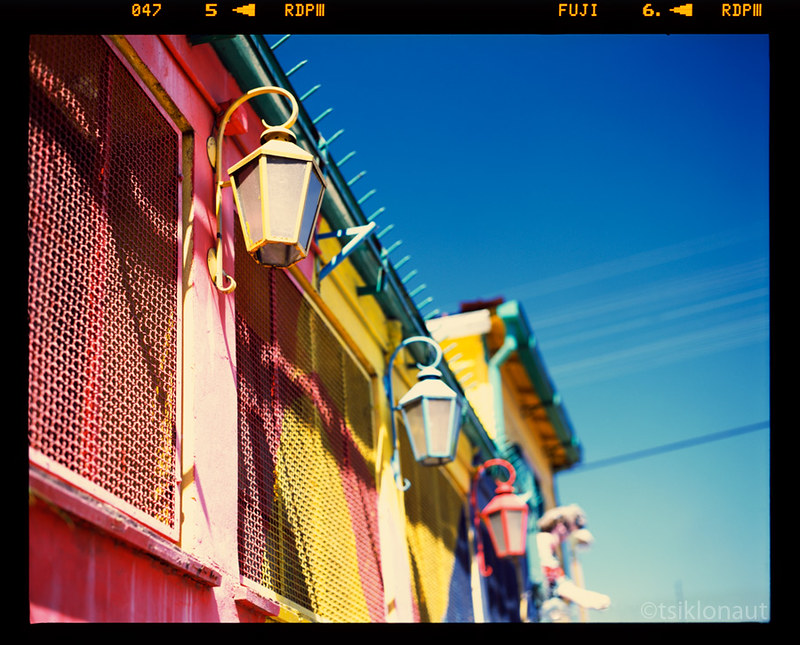
 
Thanks Thomas. I'm going to seek some 400H out.

outbr3akxal, I use a Minolta Elite 5400 scanner for Ektar 100. Works well for b&w and chromes as well.


M6 50 cron Fuji e6
 
Thank you for the kind words but I really can't take the credit. It's the astonishingly clear air in the Tirol, which provides a sense of depth that we low level dwellers simply never see.

Colour film captures that much more effectively than the best digital sensor, I think, because the randomness of the silver crystals and the dyes corresponds better to our visual perception.

I’m not sure about the 645’s but could the 67’s be Pentax?

Absolutely stunning images makes me wanna take out my old P6X7 and put some slidefilm though it again. Would fancy an 67II and another 165 f/2,8 which was probably the best lens I ever tried.
Which lenses do you use (and filters)?


The most used workhorses are 45, 105, 200mm. On chromes I mostly run Lee & Heliopan filters. On color-negatives - rarely since their dynamic range is outwordly when you scan and PP them skillfully. Personally I prefer the limited-DR of chromes since it inspires me to take better photo and put more technical skills into play with precision exposure (I never bracket) and use of various filters/grads and the results 90% of the cases look better than anything on color-negatives (minus people and portraits in my case). I do keep trying out CNs on verious occasions though, i.e. Ektar on landscapes in case when my worst nightmare happens and E6 film dissapears forever.


Why the color film is so good is the analog color film has full color-depth on each point unlike CCD/CMOS sensors where colors are mathematically calculated combining various points (pixels). Only Foveon X3 digital sensor has similar technology to film, but as we know Foveon has other problems the bayer or x-trans sensors lack.

Theorethically when you scan 30 MP of color film you get 30 MP equivalent of real color data. With the digital you have to devide it by around 3 (between 3 different sorts of pixels - R, G & B pixels), i.e. you actually get approx 10MP of real color data out of 30MP shot.

Yet the digital has considerably better edge-sharpness compared to (common non-technical-) film due to artificially perfect pixel distribution (film particles are random) and übersmart debayer+interpolation engines. I.e. when you have 30MP digital and scan 30MP of film for comparison then the digital definitely trumps it (provided the sensor sizes were similar), film you have to probably dowsize 2-4X (between 15 to 7 MP) to get similar edge sharpness. Note it's not the resolution but the edge-sharpness I'm talking here - those perfect 1-1.5px cutoffs around details, you may see similar amount or even more of details on film but they're never that sharp as the digital.

So I wouldn't bash digital since it has it's own advantages. As they say it's different strokes for different folks.


He wrote about having a fuji GA645. IIRC The P&S AF fujis have this feature, together with other modern 645's.

Yep, the shooting data written on frames are from GA645i (and now I see what was ment under "EXIF") - it's a lovely feature not just remembering the dates but also shooting data. If anyone's interested there's a GA645i review here.


Agreed. It is demanding with the limited latitude but the results are amazing. Great color right out of the box.
A guy said somewhere around the web that film is "pre processed" as it comes defined by the characteristics of the product, and digital needs postprocessing for good results. I tend to agree. I'm quite disastrous with digital PP however.


Agree on the post processing terms and E6s - they're somewhat pre-processed with their own dominant "signature" (which I love). You can notice an E6 shot a mile away, whether on a print or from a computer screen, so indeed in this sense they're "pre-processed" or "signature" analog media. Yet I'd say color-negatives are like film world's equivalent to digital RAWs - they need lots of PP and there's so much of personal 'interpretation room' on how to approach and edit color negatives. When you know how to scan, invert and edit them then there's no real limits really.

Personally often I find it's the limits where the true art derives and strives from, it's something what inspires you to do better, hence with a couple of exceptions I tend to prefer the E6 over C41 for my personal color work.


It makes me want to jump to Medium Format. I should get my act together some day and together with it, get a scanner... Neither of which I haven't done yet, ahh the student life and the low budget.
I had a few slides scanned in a local lab and the thing couldn't cope with the demanding range of the slides.
And specially being Kodachrome some of them. I liked its "biting" it had with the gray textures.

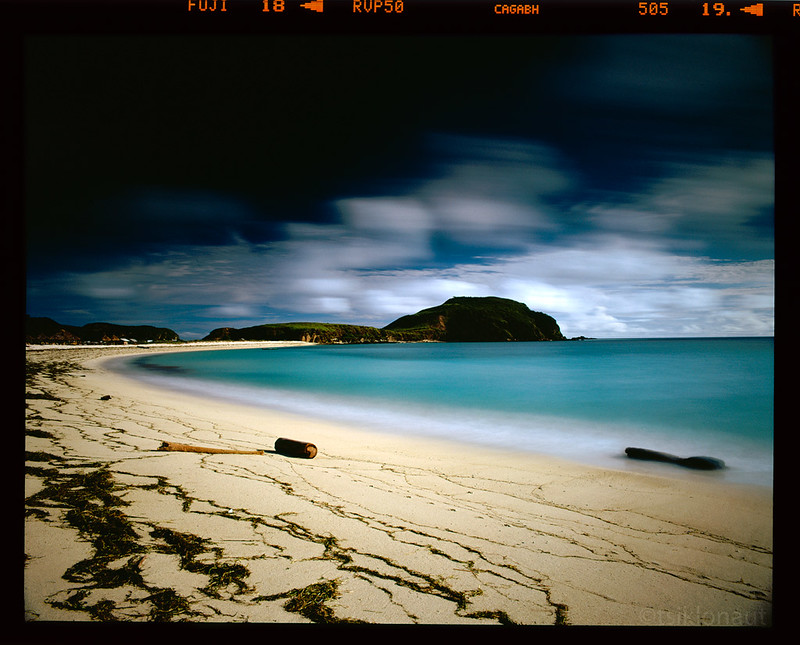
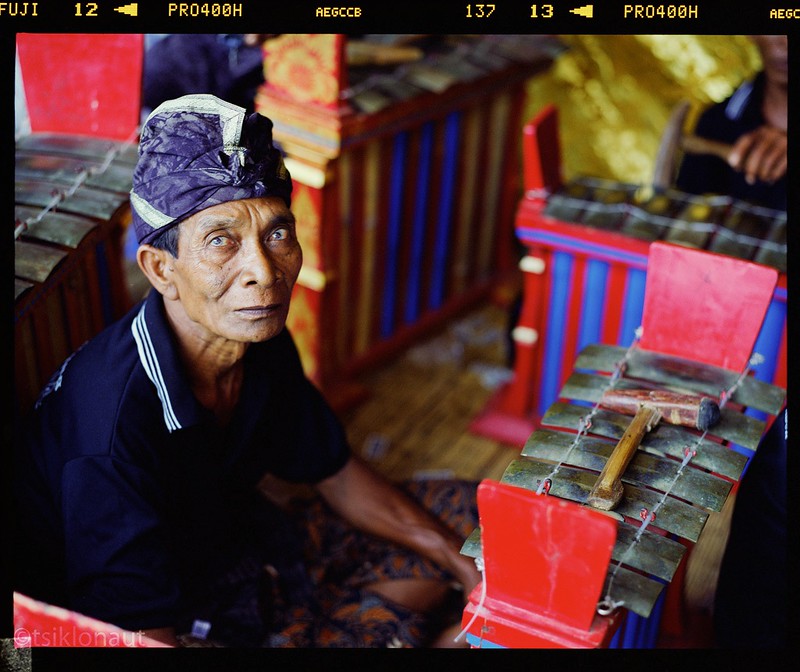
Yep, a decent scanner is the way to go or learning to live with what you have and minimize it's weaknessess and maximize its strenghts. I started with Epson 3200 scanner which I got to use in my local art school when I was a student myself, it wa a decent flatbed in it's time, but nowhere near to dedicated film scanners I didn't have access to, but in time I learned to squeeze out reasonable results from it - took me more than a year of "trial & error" practice though and teached me how to scan and PP in conjunction. As they say the worst equipment to learn on makes the most skillful engineers. 🙂
 
Back
Top Bottom