Depth of field

MelanieC

Well-known
Local time
12:46 PM
Joined
Dec 28, 2005
Messages
655
Location
Oregon
I have been using my M3 for about three months now and am starting to sort of kind of get a clue about composition and what I like in a photograph. (It doesn't mean any of my photographs are any good; just that I am starting to figure out why some of them work better than others.)

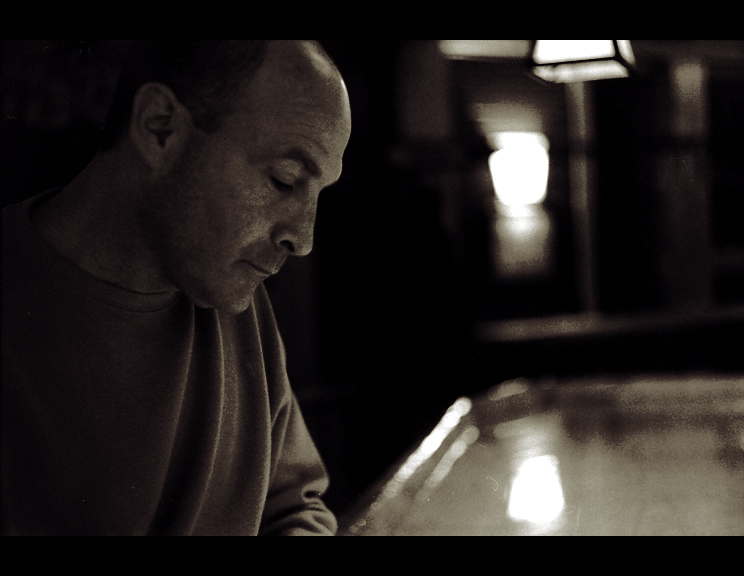
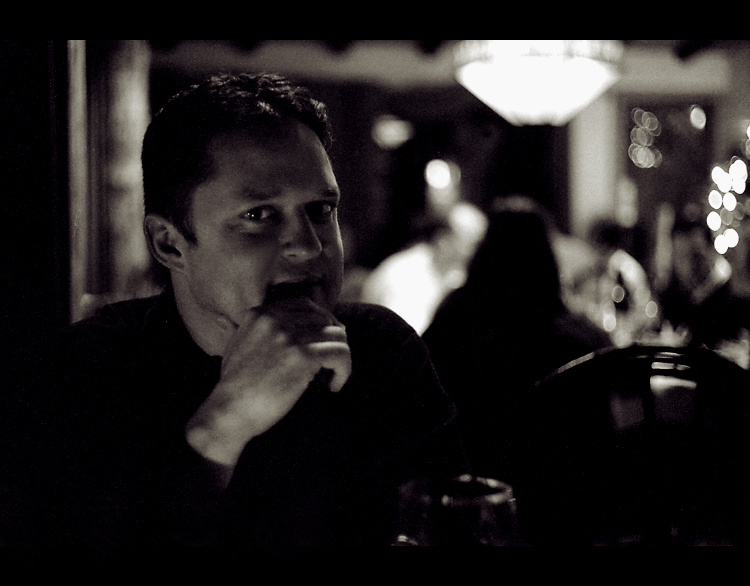
Before I got my M3 CLAed I didn't really have slow shutter speeds. I also wasn't metering (and am still mostly not metering, heh) and was paranoid about underexposing so I shot most of my photos up to now really wide open at 1/250 and faster. As a side effect they all have a very narrow DOF. Somewhat accidentally, I find that I really like this look. I don't know if this is necessarily good technique, however.

This may be an incredibly kindergarten-esque question to be asking here, but I was wondering about your preferences regarding DOF in the context of rangefinder photography and basics about how to strategize use of DOF for different situations.
 
DOF is a personal thing, some like the effects more than others, and some like it for different effects than others - there is no 'right' answer. However, in general - landscapes tend to do well with maximum DOF, and portraits with minimum. DOF is also known as 'selective focus' for a reason - it can become a tool to draw the viewer's attention to what you want them to concentrate on. Diagonal lines, rule of thirds, tonal values, and now DOF - all ways to tell the story the way you want it told, rather than making the viewer try to figure out what you want them to get from your photo. Part of the creative control possible - if you want it.

Good that you're thinking about it.

Best Regards,

Bill Mattocks
 
At least you did not ask about... 'bokeh'. Well, I sure it is comming up next 🙂

Bill did a good job with his post. Lenses that are sharp and render nice smooth/creamy out of focus are few and each with its characteristics which you may love, hat, or not care. An SLR can be fun to use and learn to see the world a plane of focus at a time.
 
Another very good way to begin to understand just how DOF and the plane of focus can impact your image is to borrow a view camera and settle in under the dark cloth for awhile using the movements to see just how many different ways the same subject can be seen from the same location. Obviously the miniuture camera will be more limited, but the principles are the same and easier to learn that way.

William
 
wlewisiii said:
Another very good way to begin to understand just how DOF and the plane of focus can impact your image is to borrow a view camera and settle in under the dark cloth for awhile using the movements to see just how many different ways the same subject can be seen from the same location. Obviously the miniuture camera will be more limited, but the principles are the same and easier to learn that way.

William

Just to point out - the larger the format, the shallower the DOF for any given focal length and aperture combination. That's why digital point-n-shoots can have such incredible deep DOF and not be able to produce DOF 'out of focus background' effects except for extreme macro shots. So a LF, as William points out, will have very little DOF for the same focal length and aperture as a 35mm camera. More extreme effects, as he correctly points out, are easier to observe.

However, the LF is upside down and backwards when viewed on a ground glass - this can be somewhat disconcerting for a new LF photographer.

Best Regards,

Bill Mattocks
 
I think there are two main reasons why shallow depth of field is used.
1) To achieve a certain effect or look (selective focus, blurry background, etc), and
2) Due to the lighting situation.

RF photography and a the use of more shallow depth of field can also sometimes be explained by the fact that many people that are into RF photography prefer to use available light only.

A small camera with fast lenses and no mirror slaps are the perfect ingredients for 'low, available light photography'. Canon's 50/0.95 and Leica's Noctilux (50/1) are examples of lenses that deliberately cater to this style of photography.

When I bring any RF camera with me after dark I find myself setting the aperture to wide open and then simply adjust the shutter speed whenever I can squeeze another bit of light out of some available light source. I think you see a lot of RF photos with a more shallow dof for that particular reason.

Having said that, I also love the look of very shallow dof and would one day love to start playing around with a LF camera with some movements.

Examples of - 'it's so dark in here and i'm too much of a man to use a flash'-photos (all shot wide open on some Leica lens):

56941176.jpg


56941177.jpg


38992462.jpg
 
I fully agree with the posters above, selective focusing and available light are the raison d' etre for shallow DOF. It also seems to me that DOF effects probably imitate the viewing capacity of the human eye which of course is a lens itself. (For instance, when your eye focuses on a subject close to it, it throws out of focus the background). This can be a desired effect esp. when used with a normal lens immitating the human angle of view, hence producing photos that are very close illusions of what the unaided eye would have seen.

There are cases of course where one needs DOF, like landscape photography or perhaps where the background of the photo brings some kind of information about the foreground. As far as I know, film cinematographers really strived to maximize DOF (Citizen Kane is an example where you have DOF despite the lack of light). But at the dawn of the digital era we are giving a different battle. Like Bill said above the DOF of digital cameras is incredibly deep and out of focus effects become near impossible. (Correct me if I am wrong but I believe the reason for that is that digital cameras have sensors which are smaller than the area of the 35mm film camera, so they have to use shorter focal lengths to produce the same result as a longer one in a film camera - alas, shorter focal lengths have much greater DOF). As a result the average user of point and shoot digital cameras seems to have completely forgotten about the ability of the camera to focus selectively (I know, I was like that before my rangefinder epiphany).

Every now and then I get a comment in flickr about how cool is the shallow DOF in this or that photo by people who use exclusively digital. Of course you can create shallow DOF in photoshop but most people do not bother. Ultimately, the ability of your camera to maximize or minimize the DOF at will is an optional creative bonus.
 
I like the motion blur too! I think it adds to the story of the photograph and will be something you can laugh about later together, maybe when you're teaching him about photography.

You guys may have finally explained to me why it is that all digital photos looks sort of the same to me -- flat. It may be because everything seems to be in focus, and therefore there doesn't seem to be the same sort of perspective that I'm seeing in my RF photos.

The explanation of medium and large format photography and DOF also clears up for me why I got such interesting (to me anyway) DOF effects with my first roll through the Rollei, even though I was using the meter and therefore wasn't going hog wild with the huge apertures for every single photo. The Rollei of course makes it easy by sort of showing you what's going to happen via the viewfinder before you even take the shot. Now I'm motivated to drag it around and use it more.

Thanks guys!
 
The Rolleiflex only stops down on the taking lens, not the viewing lens, so you actually don't see an indication depth of field at all in the viewfinder.

You need a single lens reflex to see depth of field not a twin lens reflex or a rangefinder.
 
Last edited:
bmattock said:
Just to point out - the larger the format, the shallower the DOF for any given focal length and aperture combination. That's why digital point-n-shoots can have such incredible deep DOF and not be able to produce DOF 'out of focus background' effects except for extreme macro shots.
Actually, it's not, at least not that simple.

Digital P&S can have focal lenghts as small as 5mm, hence the incredible DOF. Large format cameras have to use longer focals for same field of view; 300mm or so is a normal lens for 8x10", hence the very narrow DOF.

Then you need to factor in enlargement and viewing distance. Enlargement is obviously not going to be extreme with LF negs, so acceptable circle of confusion on the negative can be larger. Also, a 8x10 contact is typically viewed from a distance.
 
telenous said:
I fully agree with the posters above, selective focusing and available light are the raison d' etre for shallow DOF. It also seems to me that DOF effects probably imitate the viewing capacity of the human eye which of course is a lens itself. (For instance, when your eye focuses on a subject close to it, it throws out of focus the background). This can be a desired effect esp. when used with a normal lens immitating the human angle of view, hence producing photos that are very close illusions of what the unaided eye would have seen.

There are cases of course where one needs DOF, like landscape photography or perhaps where the background of the photo brings some kind of information about the foreground. As far as I know, film cinematographers really strived to maximize DOF (Citizen Kane is an example where you have DOF despite the lack of light). But at the dawn of the digital era we are giving a different battle. Like Bill said above the DOF of digital cameras is incredibly deep and out of focus effects become near impossible. (Correct me if I am wrong but I believe the reason for that is that digital cameras have sensors which are smaller than the area of the 35mm film camera, so they have to use shorter focal lengths to produce the same result as a longer one in a film camera - alas, shorter focal lengths have much greater DOF). As a result the average user of point and shoot digital cameras seems to have completely forgotten about the ability of the camera to focus selectively (I know, I was like that before my rangefinder epiphany).

Every now and then I get a comment in flickr about how cool is the shallow DOF in this or that photo by people who use exclusively digital. Of course you can create shallow DOF in photoshop but most people do not bother. Ultimately, the ability of your camera to maximize or minimize the DOF at will is an optional creative bonus.


DOF has little to do with digital or non-digital, but as you rightly surmise with the size of the receptive area, be it film or electronic. Thus a medium format camera will have a far more shallow DOF than a Minox or 110 camera and a Canon 35 mm sensor DSLR will have the same DOF as a 35 mm film camera at the same subject distance. It is to be noted that DOF is NOT a function of focal length, but solely of subject distance and film format.Having said that it is a subjective value anyway. Although the industry uses a circle of confusion of 0.03 mm diameter on 35 mm filmformat and at 3m as a guideline (this is based on the resolution of 1930's 125 ASA film), each photographer will adjust his/her wishes to the print he/she envisages at the making of the photo, i.e. the size of the print and the viewing distance. The only thing we can really agree on is that the only sharp place in any photograph is the plane of focus, which obviously is infinitely thin. All else is illusion.
 
varjag said:
Actually, it's not, at least not that simple.

Digital P&S can have focal lenghts as small as 5mm, hence the incredible DOF. Large format cameras have to use longer focals for same field of view; 300mm or so is a normal lens for 8x10", hence the very narrow DOF.

Then you need to factor in enlargement and viewing distance. Enlargement is obviously not going to be extreme with LF negs, so acceptable circle of confusion on the negative can be larger. Also, a 8x10 contact is typically viewed from a distance.

Sorry, I should have said 'equivalent' DOF. You're quite correct, of course.

Let it be understood, however, that most of us think in terms of equivalent-to-35-mm focal length. A digicam might have a 4mm focal length lens (at the short end of the zoom), hence the very deep DOF and complete inability to render selective focus effects (except for macro). However, it is known to be 'equivalent' to a 28mm lens on a 35mm camera instead of 4mm, and that's how we tend to think of it.

You are quite correct that a 28mm lens on a 35mm camera or a digicam would produce the same DOF for any given aperture - but a 28mm lens would be a long telephoto on a digicam.

Best Regards,

Bill Mattocks
 
jaapv said:
DOF has little to do with digital or non-digital, but as you rightly surmise with the size of the receptive area, be it film or electronic. Thus a medium format camera will have a far more shallow DOF than a Minox or 110 camera and a Canon 35 mm sensor DSLR will have the same DOF as a 35 mm film camera at the same subject distance. It is to be noted that DOF is NOT a function of focal length, but solely of subject distance and film format.Having said that it is a subjective value anyway. Although the industry uses a circle of confusion of 0.03 mm diameter on 35 mm filmformat and at 3m as a guideline (this is based on the resolution of 1930's 125 ASA film), each photographer will adjust his/her wishes to the print he/she envisages at the making of the photo, i.e. the size of the print and the viewing distance. The only thing we can really agree on is that the only sharp place in any photograph is the plane of focus, which obviously is infinitely thin. All else is illusion.

And here we disagree. Not in terms of your explanation, which is technically quite correct. But rather, in terms of human understanding. Non-engineers just don't think that way.

Yes, the actual plane of focus is the only sharp area in the photograph - unless you look at the photograph. Any fool can tell you what is and is not in focus - and they'd be technically wrong, but their eyes are what they will choose to depend upon, and for that, they'd be right.

Like Zeno's arrow that never quite reaches its destination, the scientific reality does not jibe with what we observe - so something has to go. Most of us choose to embrace our subjective reality.

Subjective reality says there is no such thing as a circle of confusion - just in and out of focus. Longer lenses make shallower DOF for any given aperture, assuming the distance to the subject remains the same. Shorter lenses produce deeper DOF.

Incorrect? Yes. Can we pretend it is correct and have it be correct-to-our-eyes? Every time.

I like to understand the weenie science myself - I may not choose to pass it on in a simple explanation of what's happening. You spin the propeller on your head and people's eyes glaze over.

Best Regards,

Bill Mattocks
 
Indeed we disagree- up to a point. I do think that understanding the basics helps to create the illusion we call a photograph. If one doesn't understand the relationship between subject distance, DOF and perspective, how can you choose the relevant focal length? How can one switch between formats, as often happens nowadays if we use film camera's beside different format digital camera's without understanding at least the basic implications for the way our photo will turn out? Once these tools are mastered you are totally right, we can concentrate on the picture we want to create without trying to work out all kinds of formulas. Once in a blue moon I even get it more or less right! 😉
 
Right! I agree with that!

Let me give you an example. If I'm out shooting with my Bessa R, I am not going to be thinking about circles of confusion or what size I'll be printing (other than for composing/cropping in camera). Instead, I'll be thinking of my DOF tables - when I take a shot, I'll briefly consider what lens I have screwed on, what aperture I'm shooting at, and how far away the subject is from me. From this, I will have an idea about DOF - will it be 3 feet in front and back of the subject, or will it be 3 inches on the face, and if I focus on their eyes, their ears go out of focus?

That's a lot to remember and try to keep in mind while shooting. And although one can argue that DOF tables are not really 'real' - they are real enough to depend upon.

Best Regards,

Bill Mattocks
 
Of course Bill, but you are such an experienced and knowledgeble photographer that it is nearly instinctive for you. You probably even compensate for the 1/3-2/3 rule of DOF when you are shooting close up without even thinking about it. But for a lot of newcomers that only know about automation and dozens of little goblins inside the camera to do the thinking for them, the (disappointing) results that come out of the camera are unexplainable until they start understanding the theory. The more so when switching from auto-everything (digital) camera's to real photographic tools like the Bessa R. No matrix-metering, so one has to read up on exposure, even the zone-system. No AF and auto diaphragm and full-sized film replaces the mini-sensor - DOF and plane of focus become esoteric alchemy. My human understanding is that by showing what there is behind these phenonema there will be better results and less RF camera's sold within a few months of aquisition. 🙂 Sorry-my personal Zeno's arrow. May it never reach its target 😀
 
Back
Top Bottom