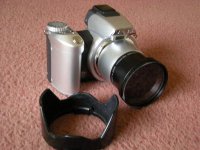
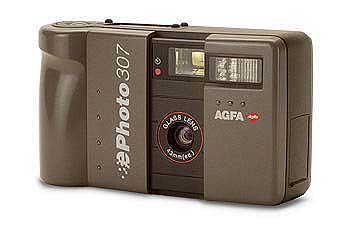
It's a real shame the camera manufacturers have eliminated innovation and experimentation from camera design. It seems that in the 90s they actually thought outside of the box about how cameras could be. Remember the Wim Wenders film, "Until the End of the World" where the heroine used a horizontal digital camera?
I guess chimping on the LCD killed all of that. On the pro DSLR side Kodak really set the standard for workflow (raw files, conversion software, LCD previews) that everyone else adopted. Looking back, Kodak was brilliant and it is a shame they are no longer active in the market (I think their patent income is huge).
I had the first consumer digital still camera, a Canon Xap Shot from 1989. I still have the mini-floppy disc. It was really a video camera that did stills I believe. I think it was $800 and worthless to use, I got better quality from a video frame grabber on my Mac. Probably should have kept it though, someday it will be worth millions....
Then I rented the $$$ Kodak DCS that based on the manual Nikon F3 body and had a huge SCSI drive you could sling over your shoulder. I actually shot a catalog with it and used it for the tiny shots. I also used a remote access set-up to upload images of a press conference to a corporate server, but that was more an exercise in PR than practicality.
I had one of those Fuji vertical digitals around the turn of the century... the one Leica rebranded. Mine had a fixed focal length and was a pretty darn good camera, I used images from it, converted to B&W, for a local guide book (4x6 reproductions) and also used it to shoot art for illustrations, some of which became billboards, so I could claim to have shot a billboard with a 2mp consumer camera, lol. All those bikes and beer glasses were shot with it.
Attached is from the old Fuji, I did a lot of Photoshop work obviously but it made good files for what it was. Imagine a compact with a metal case and only 12-15 menu options, a solid control dial... simplicity itself.