
Found a Summicron in a camera bag

Fjäll

■̷̛̈́̉̓́̽&
Local time
6:55 PM
Joined
Aug 5, 2015
Messages
349
Location
Gothenburg, Sweden
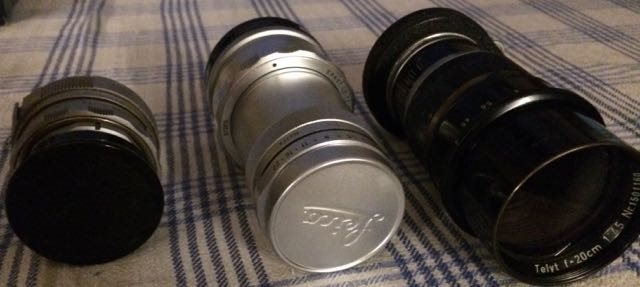
So the other day I came across someone selling a bag of Leica goods. He advertised a Leica M3 and a few assorted lenses + accessories. I managed to identify the far left lens as a Summicron Rigid DR and quickly bought the lot.
289550320_3431a913-a57b-4411-a7b2-0c7f2fe7b91a.jpg


I had no intentions keeping the M3 nor the lenses. But I figured I'd shoot a quick roll with the M3 and the Summicron to better advertise them as at least tested when re-selling them.
I have a regular Summicron Rigid since before and it's one of my favorites. But I was surprised how much I liked using the DR. I even did a few close focusing guess-shots ala Rollei 35 when testing it.
I would probably sell my own Summicron at this point and keep the DR but it's a little hazy.

My Summicron from before is very clean optically without any haze, and I actually unscrewed and swapped the optical elements between both lenses and it seemed to have solved my problem. But does this actually function in practice?
I'm aware that each lens has a matching serial number both on the front ring as well as inside the focusing helicoid. I guess I could swap the front rings as well to make them match or are there any reasons to advice against swapping elements?

I figured I'd do a little research before getting ahead of myself.

Serial number 1: 1834***
Serial number 2: 2235***

9autyw.jpg
 
That is a dual-range Summicron in the last picture. The rigid Summicron of the same vintage is the version without the dovetail fitting. They optically the same. However, there can be slight variations (between and within these two versions) in actual focal length that could affect rangefinder focusing so it is best to keep the lens portion together with the focusing portion of your lenses.
 
I would worry about potential changes in focal length and overall optical performance, but I don’t pretend to know much about Leitz lenses specifically. That said I don’t think it’s good policy unless a glass is so severely compromised its usability and ability to be repaired is grim.

Would you be informing potential buyers about the absence of originality in the lens you’d be selling? Because if not I think it’s unconscionable. If it was mine I would keep both lenses original and have the affected one cleaned.
Cheers
Brett
 
That is a dual-range Summicron in the last picture. The rigid Summicron of the same vintage is the version without the dovetail fitting. They optically the same. However, there can be slight variations (between and within these two versions) in actual focal length that could affect rangefinder focusing so it is best to keep the lens portion together with the focusing portion of your lenses.

Both optical elements were identical when unscrewed and even fitted each others helocoids. You're probably right about the slight variations between copies. It got me wondering. Thank you.

I would worry about potential changes in focal length and overall optical performance, but I don’t pretend to know much about Leitz lenses specifically. That said I don’t think it’s good policy unless a glass is so severely compromised its usability and ability to be repaired is grim.

Would you be informing potential buyers about the absence of originality in the lens you’d be selling? Because if not I think it’s unconscionable. If it was mine I would keep both lenses original and have the affected one cleaned.
Cheers
Brett

I really should've tested this before I finished my test roll earlier. I agree on that policy. I don't feel authorized tampering with german precision optics.

And yes. Transparency in item description is crucial IMO. People are willing to go to authorized dealers and pay top dollar for the insurance the item is received as described. I subscribe to the same policy.
 
Summicrons and a few others have the actual focal length engraved on the lens. I have on of my 50 Summicrons in front of me and on the distance scale, by the feet/M marking is 19 engraved in small numbers. I'm told that this allows matching of optics to the focusing mount and in my case would indicate a lens of 51.9mm focal length. Hope this helps. Joe
 
All DR Crons are 51.9mm and have a 19 on the optical block. Some rigid Crons are 51.9mm and are similarly marked, but most are 51.6mm and have a 16. This is really crucial when using the goggles close up. You see the difference instantly on a digital M body. If they are both the same focal length, feel free to swap and let your buyer know. I looked for almost a year to find a rigid helical for a 51.9mm Cron so I didn't have to butcher my DR in order to shoot at infinity using my M8 and M9. Those cameras are gone but I still have the focusing unit for just when I want to walk around with a few ounces less on my M4.

Phil Forrest
 
That is a dual-range Summicron in the last picture. The rigid Summicron of the same vintage is the version without the dovetail fitting. They optically the same. However, there can be slight variations (between and within these two versions) in actual focal length that could affect rangefinder focusing so it is best to keep the lens portion together with the focusing portion of your lenses.

Yes. It was sometimes claimed (though I am not sure of the provenance or reliability of the claims) that Leica took special care with DR Summicrons to make sure the elements were matched to produce a final result in focal length that was correctly within tolerance.

Mind you according to the "bible" on Leica (Leica Lens Compendium) they did (do?) this anyway. Especially back in the day, when there was a far greater human element in lens production there was more variability in making the elements. These days when there is far greater computer control this is less necessary. Simple fact of life. If they did not do this mixing and matching, this variability would mean that the average cost of production of lenses (especially more complex designs) would be even greater than it was as a greater proportion of the production run of each element would be "lemons" that could not be used.

I seem to recall it was often necessary to, for example, swap out an element that was a little over tolerance with one that was a little under tolerance to produce the best final result for that element group and ultimately that specific lens. Of course any elements that were too far off spec had to be discarded to keep QA up. So said Erwin Puts, unless I am mis remembering. If so, swapping individual elements to mix and match from one lens to another could be a crap shoot. If on the other hand you were to swap them out in total then the post below by Phil_F_NM would seem to be the one to take note of specifically.

PS Have you determined that the haze is not able to be corrected by cleaning?
 
Summicrons and a few others have the actual focal length engraved on the lens. I have on of my 50 Summicrons in front of me and on the distance scale, by the feet/M marking is 19 engraved in small numbers. I'm told that this allows matching of optics to the focusing mount and in my case would indicate a lens of 51.9mm focal length. Hope this helps. Joe

All DR Crons are 51.9mm and have a 19 on the optical block. Some rigid Crons are 51.9mm and are similarly marked, but most are 51.6mm and have a 16. This is really crucial when using the goggles close up. You see the difference instantly on a digital M body. If they are both the same focal length, feel free to swap and let your buyer know. I looked for almost a year to find a rigid helical for a 51.9mm Cron so I didn't have to butcher my DR in order to shoot at infinity using my M8 and M9. Those cameras are gone but I still have the focusing unit for just when I want to walk around with a few ounces less on my M4.

Phil Forrest

I did indeed find the engravings. A small number "19" by the Feet/Meters on the Rigid and 51,9 on the optical block on the DR.

I guess they should in theory be interchangeable then?

n562v.jpg


Yes. It was sometimes claimed (though I am not sure of the provenance or reliability of the claims) that Leica took special care with DR Summicrons to make sure the elements were matched to produce a final result in focal length that was correctly within tolerance.

Mind you according to the "bible" on Leica (Leica Lens Compendium) they did (do?) this anyway. Especially back in the day, when there was a far greater human element in lens production there was more variability in making the elements. These days when there is far greater computer control this is less necessary. Simple fact of life. If they did not do this the average cost of production would be even greater than it was as a greater proportion of the production run of each element would be "lemons".

I seem to recall it was often necessary to, for example, swap out an element that was a little over tolerance with one that was a little under tolerance to produce the best final result for that specific lens. Of course any elements that were too far off spec had to be discarded to keep QA up. So said Erwin Puts, unless I am mis remembering. If so, swapping individual elements to mix and match from one lens to another could be a crap shoot. If on the other hand you were to swap them out in total then the post below by Phil_F_NM would seem to be the one to take note of specifically.

PS Have you determined that the haze is not able to be corrected by cleaning?

This too makes sense, this is why I felt like I should do the homework before proceeding.
Obviously a cleaning would be the first thing I would consider if it wasn't for all the bad copies of this lens I've come across labeled as serviced/cleaned by professional where the coatings in fact have been partly wiped off in the process. Since I'm only keeping one of them I'd rather sell one as is and let someone else make that decision.

A sidenote:
A local camera auction house has 2(!) clean front elements up for auction. Is there a way to determine if any of those would perhaps be a suitable replacement for my hazy DR optics? Both seem to lack the engraving my DR has. The description of both items reads: Lens head of second type rigid M-mount lens.

Direct links:
Front element 1
Front element 2

Thanks a bunch for the responses! Glad to have leaned something today.

37726_3_mid.jpg


37727_3_mid.jpg
 
Your lens optics and helicals are indeed interchangeable. The only issue you may run into is the aperture witness marking not lining up exactly with the focus mark. Not that it makes any difference other than cosmetic.

Phil Forrest
 
One caution here is that the lens unit's serial number is engraved on the focusing mount as well. You can see it from the front, with the lens removed. So if you swap in a different lens cell, the lens is no longer as it left the factory, no longer really right, even if you manage to find another 51.9mm lens unit. So rather than changing the lens unit, why not send it in and see if it can be cleaned up?
 
One caution here is that the lens unit's serial number is engraved on the focusing mount as well. You can see it from the front, with the lens removed. So if you swap in a different lens cell, the lens is no longer as it left the factory, no longer really right, even if you manage to find another 51.9mm lens unit. So rather than changing the lens unit, why not send it in and see if it can be cleaned up?

I am inclined to agree with this suggestion as a first step. (Being a bit of a purist). But it is also true that it is most likely that the irregularity as to the serial number would not affect resale value much if at all so long as the lens is only a user not a pristine collectors piece. Never the less I still think cleaning if possible to be the best approach.
 
I guess I'll send it in and hope for the best. I'm sending in the M3 for CLA anyway.
The shots from the test roll came out fine though.

ev87zk.jpg
2s6pjxi.jpg
 
I would not replace elements in such a precision lens even if the overall blocks are marked with the same focal length. Each individual element is not going to have the same focal length as the same element in the other lens although they make sum to the same.
 
Teemō;2848462 said:
I would not replace elements in such a precision lens even if the overall blocks are marked with the same focal length. Each individual element is not going to have the same focal length as the same element in the other lens although they make sum to the same.

This makes the most sense.

That is a great looking M3/DRS combo! It is giving me GAS!

It's as pleasant to look at as it is to shoot!
 
Ohhh creamy BW!


What was the film and the developer if you don't mind me asking?


A.

Thanks!

Ilford HP5 400 pushed to 800 in stock Ilford ID-11
10.5 min with one agitation every 2 minutes
Summicron DR at f/8.0, overcast day
Scanned on Pakon F135 with third party software to enable B&W

Contrasty films/developing works very well in older lenses. The Summicron DR really sings in B&W.
 
I'm not necessarily encouraging the swapping of the optical block between helicals but I'm not discouraging it either. Leica made these lenses this way specifically for this purpose. Any measurable difference between Summicron optics this old would be completely negated due to age, wear, decentering and especially due to the lack of precision in the cam of the lens and cam follower of the camera itself. The Leica Rangefinder system is inherently imprecise when talking in reference to identical lens elements and their microscopically measurable differences. The Vintage and formulation of your film as well as the temperature and humidity of the day you are shooting will have far greater an effect than the imperceptible difference in lens curvature.

Phil Forrest
 
Back
Top Bottom