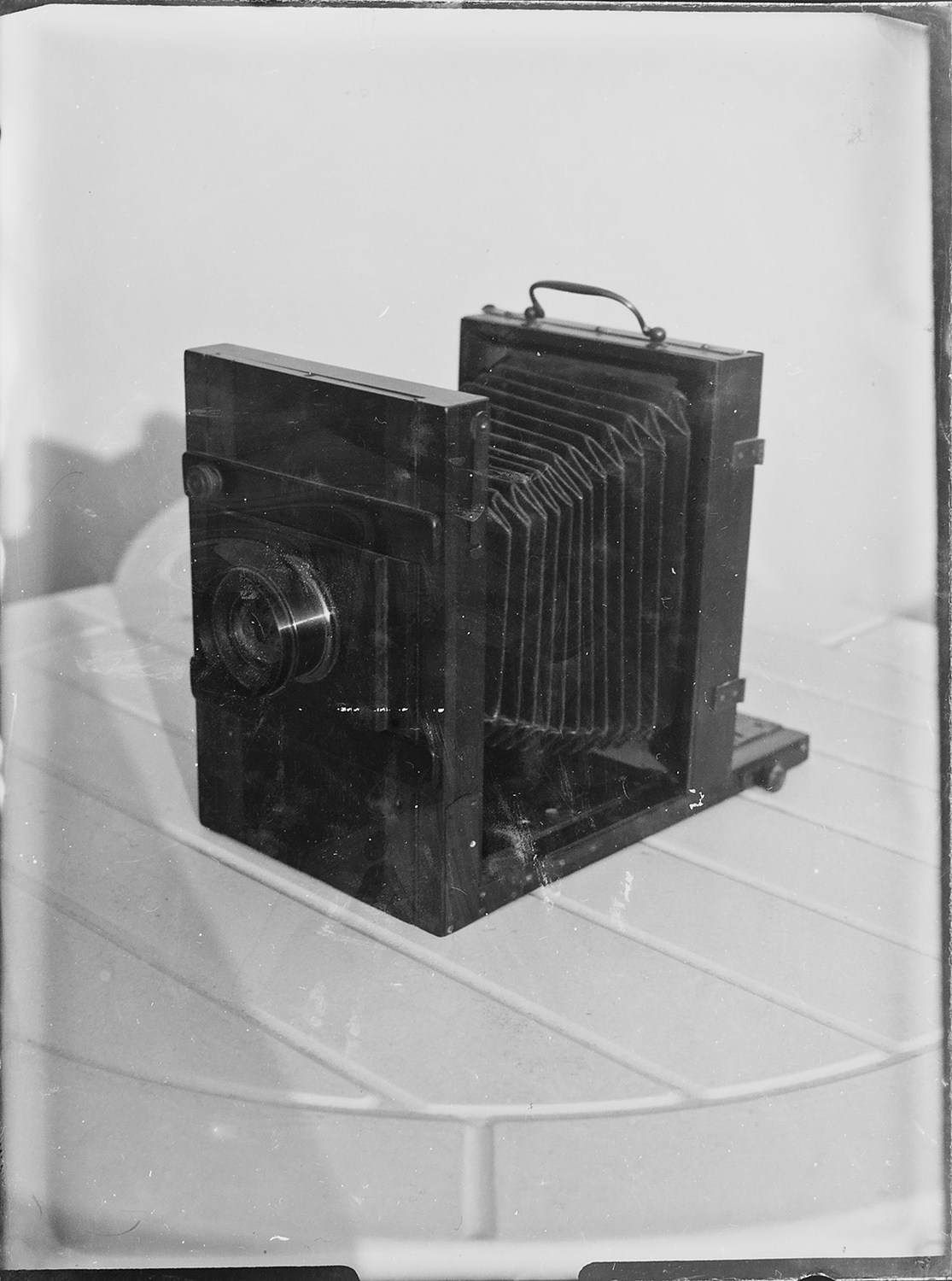
J. Lane Glass Dry Plates

Sounds like a lot of people here are chasing that Wet Plate look. These plates aren’t the way to do it. Just sayin’.

 
Sounds like a lot of people here are chasing that Wet Plate look. These plates aren’t the way to do it. Just sayin’.

I know a guy that does wet plate portraiture close by, in his home, to earn income. I'm going to meet him soon, he's not far away from where I live. We've talked at length on the phone, I want to watch him do it. He's quite an artist. But really I've not much interest in that process. Too messy, caustic, and dry plates can be exposed, and processed a year later. Come out fine. Dry plates truly revolutionized photography. Also this guy and I have a common interest in exotic and sometimes extremely old optics.

Just saying. Answer is "nope". If I wanted the "wet plate" look, I'd shoot wet plates 🙂
 
Sounds like a lot of people here are chasing that Wet Plate look. These plates aren’t the way to do it. Just sayin’.

Too complicated. Trying to chase wet plates I would get a divorce. I am just fine with J Lane plates. First ones look promising. And my ultimate goal anyway are kallitypes, and i can do that even with film, or even with digital negatives.
 
I enjoy struggling to get the results I want, and I find it very personally satisfying when I achieve my objective.

I like clean work, no processing defects. I know one view is that defects add to the experience of the photograph, that they add to the presentation. I just happen to generally not hold that view. Defects turn me off for the most part. I can deal with some, depending on the circumstances. When you go to the next level, and make your own dry plates, defects are common. Some think these are beautiful. Making your own dry plates is intensive and involves weeks of work. Jason is a scientist, I'd rather let him do the heavy lifting. His day job is designing optics to be used in space observation.

All I want are pristine, perfect glass negatives. I already know I am not going to get that right away. But I am in favor of shortening the learning curve. And lots of good friendly help is available from those who are already doing it.
 
I'm quite suspect of the light leaks of one of the cameras, so I shoot a picture inside home with artificial light but with an exposition of 45s (at f8 as far as I remember).

I've taken inside pictures with leaky bellows cameras and holders, I carefully (and quickly) wrapped a dark cloth around the camera, once the slide is pulled.

It worked! But you should properly light trap your cameras and holders so you can use them as they were intended.
 
Ilford Commercial Ortho 4x5 by Nokton48, on Flickr

Ilford Commercial Ortho is the modern product that most closely resembles J Lane glass plates in terms of sensitivity. I will be testing these two side by side.

Commercial Ortho is one of my favorite sheet emulsions.
I've used Rollei Ortho 25, but only in 120 format.

About the light leaks, I've also tried that approach, of wrapping the back of the camera in dark cloth, and maybe is the best idea. In my Paten Etui I successfully repaired the light leak with part of a velcro. I'm trying to do the same with the other camera, but the "bald" velvet refuses to be disgorged, even with a cutter!😡
 
I've used a razor blade, or a sharp screwdriver, to get a corner started. Then I pull off the strip with heavy pliers. Go very slowly. Has worked for me.

+1 on the velcro strip. Hadn't thought of that one 🙂
 
First plates developed, both underexposed. Developed in R09 One Shot 1+50 for at least 5 minutes, probably 6 or 7, in trays and safety light. Ilford Rapid Fixer. "Scanned" with light table and Nikon D750.


Ernemann Heag I, 9x12.


KW Patent Etui 9x12. The light leak is my fault, I misplaced back the dark slide.
 
Another couple of 9x12 plates, both with the KW Patent Etui. Exposure was more balanced this time, but I have problems both with DUST, a lot, and with dirt, mainly in the back of the plate. I have to clean them with glass cleaner, I presume but what about the dust? I've tried to blow and clean the holders, but maybe it sticks to the emulsion later, or in the old bellows of the camera...


Looks like dust inside the camera to me. I have bought Sinar Norma bellows with sixty years of dust inside, so I feel your pain 🙂 Use a small strong vacuum/brush with brush head and and gently vacuum the insides/outsides repeatedly. Amazing how much dust can be inside, often hidden in cracks, corners, etc. In my case I thought I got it all and done, then more shows up! I just take my time and do it as often as necessary. The plates may have a static charge which causes the dust to attract and stick to them? Just a guess................

Film Holders too, of course. Everything needs to be spotless. Dust always gravitates to the most obvious spot in your negative 🙂

Your latest look very good otherwise.
 
J Lane Speed Plates 2 by Nokton48, on Flickr

It took a while but Jason just sent me twenty of his ASA 25 "Speed Plates". He custom cut the glass to fit my Plaubel Makina plate holders, which are an odd size. I sent him a holder so he could determine the best fit.


SPRING IS COMING! 🙂
 
Stearman SP445 Tank 1 by Nokton48, on Flickr

My Stearman SP445 dev tank is here now. Only 16 oz of chemistry to do two 4x5/9x12 Lane glass plates, or four sheets of 9x12/4x5 modern flexible film. Useful! 3D printed item.

The ASA 25 Speed Plates fog easily. Jason sent the first batch, then emailed me and told me to throw them away!!! He went more than three minutes with his old safelight and fogged the speed plates. He has since switched his safelights. I bought a 5 1/2" Wratten #2 for my ancient Kodak safelight and he says that is OK with the speed plates. Kodak says for high speed Ortho film so that agrees with Jason's findings. You can also use a Kodak Dental X-Ray wratten filter, that is OK too. Very very dark red, must be 4 feet away at least. Or load the speedies in the dark. Not much light to see but enough to load!

The second batch he sent has no fogging. I will load them in the dark into the SP445. I will use the #2 to load the Makina holders.
 
Stearman 9x12 J Lane Holders with two 4.5x6cm Lane plates by Nokton48, on Flickr

My really good news for today, is that I can drop four 4.5x6cm glass plates into Tim's 9x12 J Lane SP445 process racks. This fit my Plaubel Makinas and Makiflexes, in both sizes that I shoot. See my Avatar. These are accessory plate holders that can be purchased separately. They are 3D printed.

I've tried loading and inverting the tanks for a good bit. The smaller plates do not shift around or break.

Most excellent news! I should show the to Tim........... 😎😎😎
 
These images are all pretty good. The plates seem to be on the verge of being practical. Over the years many formulas for making dry plates have been tried tweaked and troublesome. The big difference between a dry plate and a wet plate is the wetplate is a molecular reaction on the Top of the substrate. A dry plate contains silver halides throughout the substrate, which in turn makes precision control of the Depth of the dry plate emulsion critical.
 
I know a few dry plate fine art photographers that make their own. It takes weeks and is a humungeous amount of work.

So much easier to buy from Jason. His plates seem to be defect free. Some photographers LIKE defects. I am not from that school.
 
Back
Top Bottom