

You are using an out of date browser. It may not display this or other websites correctly.
You should upgrade or use an alternative browser.
You should upgrade or use an alternative browser.
Leica M8 jpegs at iso 640. VC Nokton 50mm f1.2. It’s all about the lens
- Thread starter Harvey03
- Start date
- Latest activity Latest activity:
- Replies 27
- Views 4K

Sonnar Brian
Established
With the M8- the DNG-8 compression scheme killed the high-ISO performance of the camera.
I've been shooting uncompressed raw mode using the "Button Dance" to get .RAW files and use M8RAW2DNG to convert to uncompressed (14-bit) DNG for almost 10 years now. The High-ISO performance is dramatically better.
1/60th sec, Minolta 50mm F1.4 wide-open, MC mount lens converted to RF-coupled M-Mount.
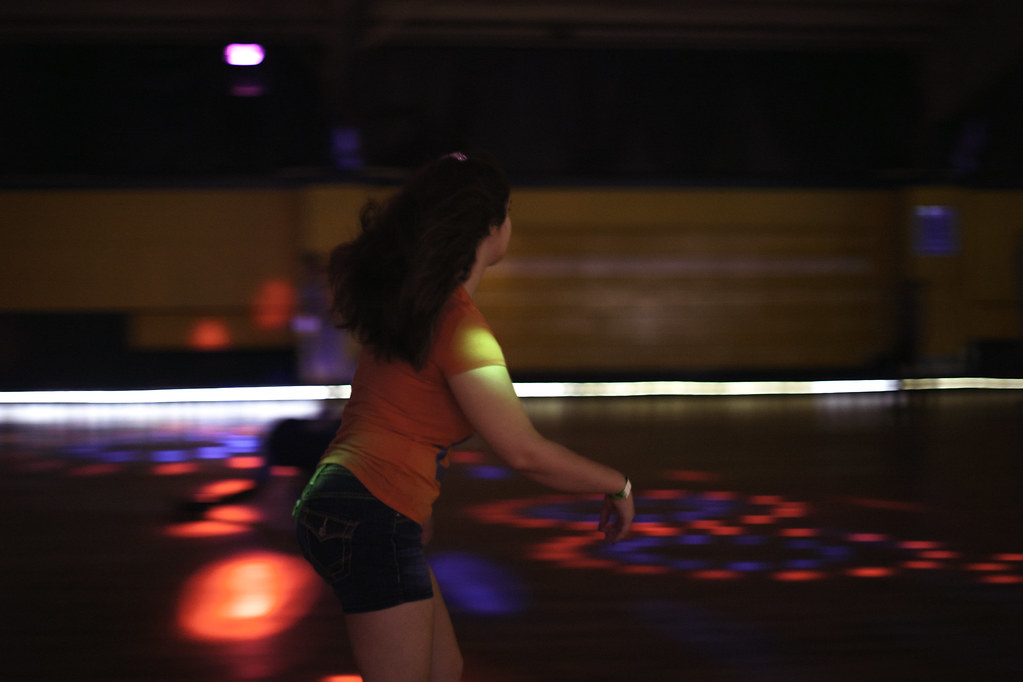 skate4_ISO2500 by fiftyonepointsix, on Flickr
This shot is ISO160 shot 4-stops under for ISO2500 equiv, converted to uncompressed DNG, then boosted in Post.
Leica crippled the performance of the sensor with their lack of understanding of effects of lossy compression.
I've been shooting uncompressed raw mode using the "Button Dance" to get .RAW files and use M8RAW2DNG to convert to uncompressed (14-bit) DNG for almost 10 years now. The High-ISO performance is dramatically better.
1/60th sec, Minolta 50mm F1.4 wide-open, MC mount lens converted to RF-coupled M-Mount.
skate4_ISO2500 by fiftyonepointsix, on FlickrThis shot is ISO160 shot 4-stops under for ISO2500 equiv, converted to uncompressed DNG, then boosted in Post.
Leica crippled the performance of the sensor with their lack of understanding of effects of lossy compression.
Harvey03
Member
This was pulled up as far as I could before the noise spoiled it
Sonnar Brian
Established


The painting is by a German U-Boat crewmember, my Dad picked it up years ago in a Trade. An imagined battle between the U-Boat and British sailing ship.
Leica m monochrom set to ISO 5000, then the M8 set to the same shutter speed and F-Stop. 5 stop underexposure, corrected in Lightroom.
I've uploaded the PDF for using M8RAW2DNG.
If interested,
Dropbox
 www.dropbox.com
Arvid's (M8RAW2DNG Author) original documentation:
Dropbox
www.dropbox.com
Attachments
Last edited by a moderator:
Harvey03
Member
Thanks
Sonnar Brian
Established
I just noticed- I put Matching 1950 Jupiter-3 5cm F1.5 lenses, both with all Zeiss optics on the cameras. I converted both the LTM mount, neither could be used as built in their Contax mounts. They were Assembly practice in Russia. The glass is perfect in each, no one could use them. I had to rearrange the Spacing of the optics on both.
jonal928
Well-known
Wow, these colors are to die for.With the M8- the DNG-8 compression scheme killed the high-ISO performance of the camera.
I've been shooting uncompressed raw mode using the "Button Dance" to get .RAW files and use M8RAW2DNG to convert to uncompressed (14-bit) DNG for almost 10 years now. The High-ISO performance is dramatically better.
1/60th sec, Minolta 50mm F1.4 wide-open, MC mount lens converted to RF-coupled M-Mount.
This shot is ISO160 shot 4-stops under for ISO2500 equiv, converted to uncompressed DNG, then boosted in Post.
Leica crippled the performance of the sensor with their lack of understanding of effects of lossy compression.
Harvey03
Member
Sonnar Brian
Established
Nik Silver Efex2- I use it for the M Monochrom, "sometimes". And I wrote my own Fortran Program to process the DNG files from the M monochrom to add a Gamma curve and convert to 16-bit DNG...
Nik Silver Efex will not restore the data lost from the DNG-8 compression scheme. It's gone by the time it hits the SD card. "The Button Dance" activates a hidden option to store uncompressed ".RAW" file. M8RAW2DNG uses that file and the stored JPEG to produce a true uncompressed DNG file.
Nik Silver Efex will not restore the data lost from the DNG-8 compression scheme. It's gone by the time it hits the SD card. "The Button Dance" activates a hidden option to store uncompressed ".RAW" file. M8RAW2DNG uses that file and the stored JPEG to produce a true uncompressed DNG file.
Harvey03
Member
So is shooting DNG ann answer to overcoming those particular shortcomings of the M8?
Harvey03
Member
I’ll rephrase that. I find the beauty in the simplicity of using the M8. Will DNG satisfy my desire to recreate a filmic style without the need to revert to film? Or is it necessary to overcome those shortcomings by employing the suggested techniques?
Sonnar Brian
Established
The Native DNG used by the M8 is awful, you are better off using JPEG.
For the full capability of the sensor- the button dance is required.
This is the compression table in graphic form. It is awful. I wrote better schemes over 35 years ago that would have given lossless compression with the same savings..
(Compute running differences between for each pixel of a particular color. Values between -127 and +127, store the 8-bit difference. Reserve 128 to indicate that a 16-bit full value is being stored. Most differences will store in 8-bits. It worked in the 1980s to store Satellite Imagery. It is lossless, and is done using simple arithmetic.)

Another shot using raw mode- low light.

For the full capability of the sensor- the button dance is required.
This is the compression table in graphic form. It is awful. I wrote better schemes over 35 years ago that would have given lossless compression with the same savings..
(Compute running differences between for each pixel of a particular color. Values between -127 and +127, store the 8-bit difference. Reserve 128 to indicate that a 16-bit full value is being stored. Most differences will store in 8-bits. It worked in the 1980s to store Satellite Imagery. It is lossless, and is done using simple arithmetic.)
Another shot using raw mode- low light.
Last edited by a moderator:
Sonnar Brian
Established
An image to show what the compression scheme discards.
Uncompressed.

This is what the DNG-8 compression scheme throws away.

I hate lossy compression.
Uncompressed.
This is what the DNG-8 compression scheme throws away.
I hate lossy compression.
Harvey03
Member
So that explains why my B&W JPEGs have been, in my opinion, pleasing. Shot at iso 640.
Last edited:
Harvey03
Member

Sonnar Brian
Established
If you try M8RAW2DNG: Shoot an underexposed image that shows the hot columns and hot pixel.
I wrote a Program that fixes them. My M8 is perfect, my Friend's M8 picked up a bad column.
The Program runs under a Windows Command Line, but asks for the file directory and processes all files it finds. A text file is used to identify the bad columns.
I adapted a Fortran program I wrote in the 1980s for this.


Sonnar Brian
Established
I also left the option to add a Gamma curve and convert pixels to 16-bits.


The Second image has a Gamma curve added. The program offers 8 Gamma curves of different parameters.
Yet another reason why I do not want to give up my M8, M9, and M Monochrom. Very easy to write code to get the images the way I want.
The Second image has a Gamma curve added. The program offers 8 Gamma curves of different parameters.
Yet another reason why I do not want to give up my M8, M9, and M Monochrom. Very easy to write code to get the images the way I want.
Harvey03
Member
Thanks for the info I will need some guidance over your recommendations as I’m not understanding the technical side of your conversation.Nik Silver Efex2- I use it for the M Monochrom, "sometimes". And I wrote my own Fortran Program to process the DNG files from the M monochrom to add a Gamma curve and convert to 16-bit DNG...
Nik Silver Efex will not restore the data lost from the DNG-8 compression scheme. It's gone by the time it hits the SD card. "The Button Dance" activates a hidden option to store uncompressed ".RAW" file. M8RAW2DNG uses that file and the stored JPEG to produce a true uncompressed DNG file.
Does your development to enhance the camera’s output lessen in anyway the M8s CCD magic?

Ko.Fe.
Lenses 35/21 Gears 46/20
For each, it's own. Silver M8 I got to give it a try was closest to film Ms by it's build.
I had no problems to use it at maximum iso. And without ir filter.
DNG were totally awesome. And not a hog sized.
I had no problems to use it at maximum iso. And without ir filter.
DNG were totally awesome. And not a hog sized.
Sonnar Brian
Established
I average the proper pixel on each side of the bad column. This is how a bad column is mapped put by Leica. The difference- doing it in software is free, sending to Leica is several hundred dollars.Thanks for the info I will need some guidance over your recommendations as I’m not understanding the technical side of your conversation.
Does your development to enhance the camera’s output lessen in anyway the M8s CCD magic?
Using the M8 with M8RAW2DNG dramatically improves HIGH ISO performance, as demonstrated by these two images both shot at the same F-Stop and Shutter Speed.
Try to pick out the one done with the M8 DNG lossy compression scheme, ISO2500.


Leica simply did not understand how compression schemes affect an image.
Last edited by a moderator:
Similar threads
- Replies
- 39
- Views
- 4K


- Replies
- 2
- Views
- 763
- Replies
- 13
- Views
- 592


