...
The beauty of film after digital is that it forces you to slow down and THINK, because each shot costs money.
That makes us better photographers, I've found. Yes, it can be done with digital too, but the temptation to try many variations.
...
I tend to work with my digital cameras in exactly the same way that I work with my film cameras, most of the time. I've never been a "make 1000 shots, pick the best two" photographer; I tend to look at a subject and make one or two exposures, that's it. With my instant film cameras, I shoot a little less due to the cost of each frame but that's a small difference. I sometimes get into a routine of carrying a camera everywhere I go and shooting when something catches my eye, and after a week I've made 10 to 20 exposures, max.
A digital camera to do B&W? I've done B&W rendering with every digital camera I've owned, from small sensor things like a smartphone to my Hasselblad 907x. I had Leica MM typ 246(?) on order for half a year, gave up on it they were taking so long to deliver and bought the SL instead. No regrets. I think if I were to buy another Leica any time soon, a Q2M or M10-M (or M10-D) would be my choice; I personally have no particular interest in the original M9M. (My M9 made some lovely photographs but I never liked that body as much as the later M240 and M262 bodies.) A Q2M is the most interesting to me at the present time.
A monochrom sensor does have various advantages in resolution and tonal qualities over a bayer matrix (or XTrans) color sensor, but they only really appear at the limits in my opinion. I only rarely work at the limits of the machinery where the differences really matter.
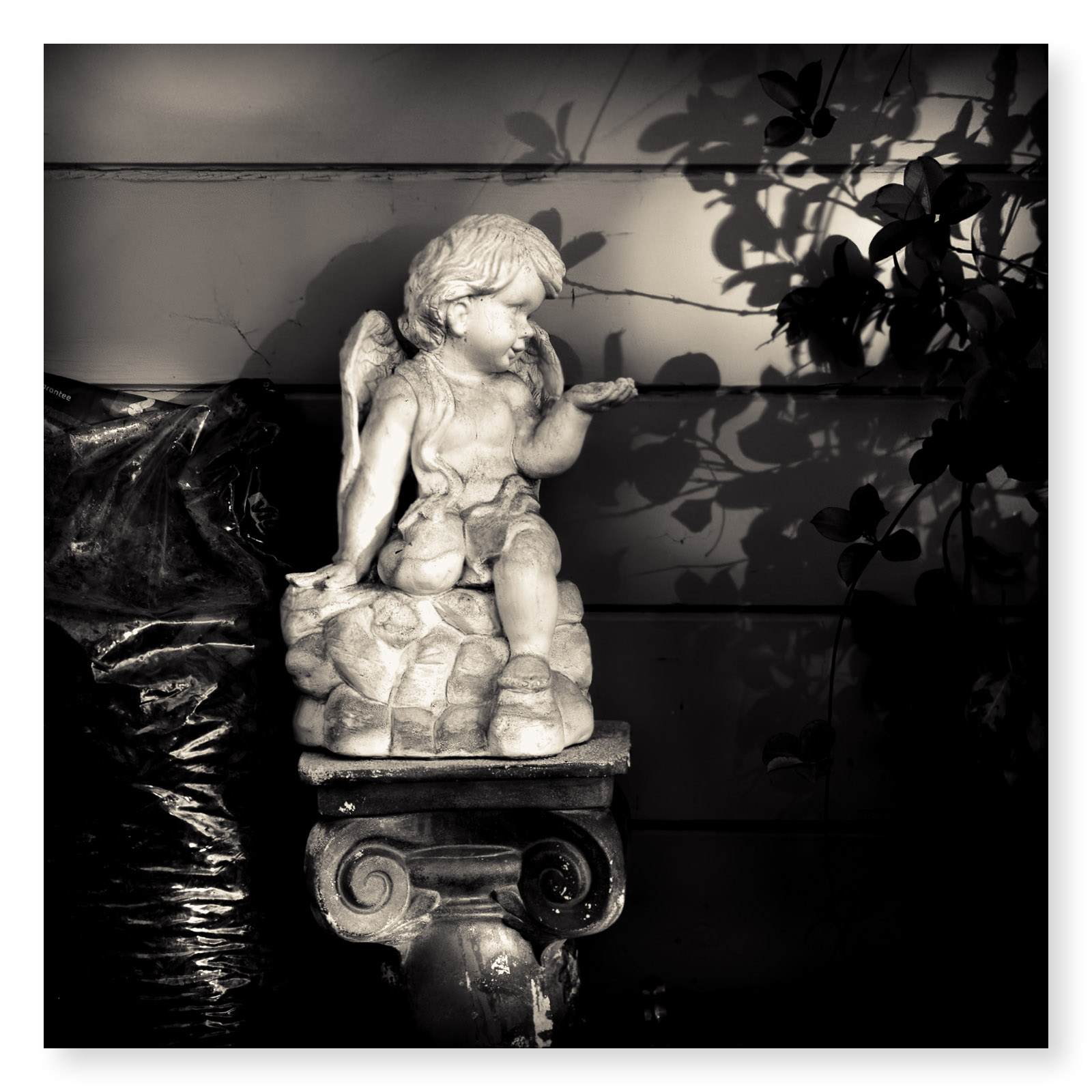 Angels of the Neighborhood - Santa Clara 2021
Light L16
ISO 123 @ f/2 @ 1/170 @ 128mm
To me, since I'm not often at the limits where it matters, B&W from a digital camera is mostly a rendering issue. Using a color sensor nets certain capabilities that are not possible with a monochrome sensor, at the cost of some compromises, and vice versa. I capture in raw format and do my rendering after the fact, never in-camera.
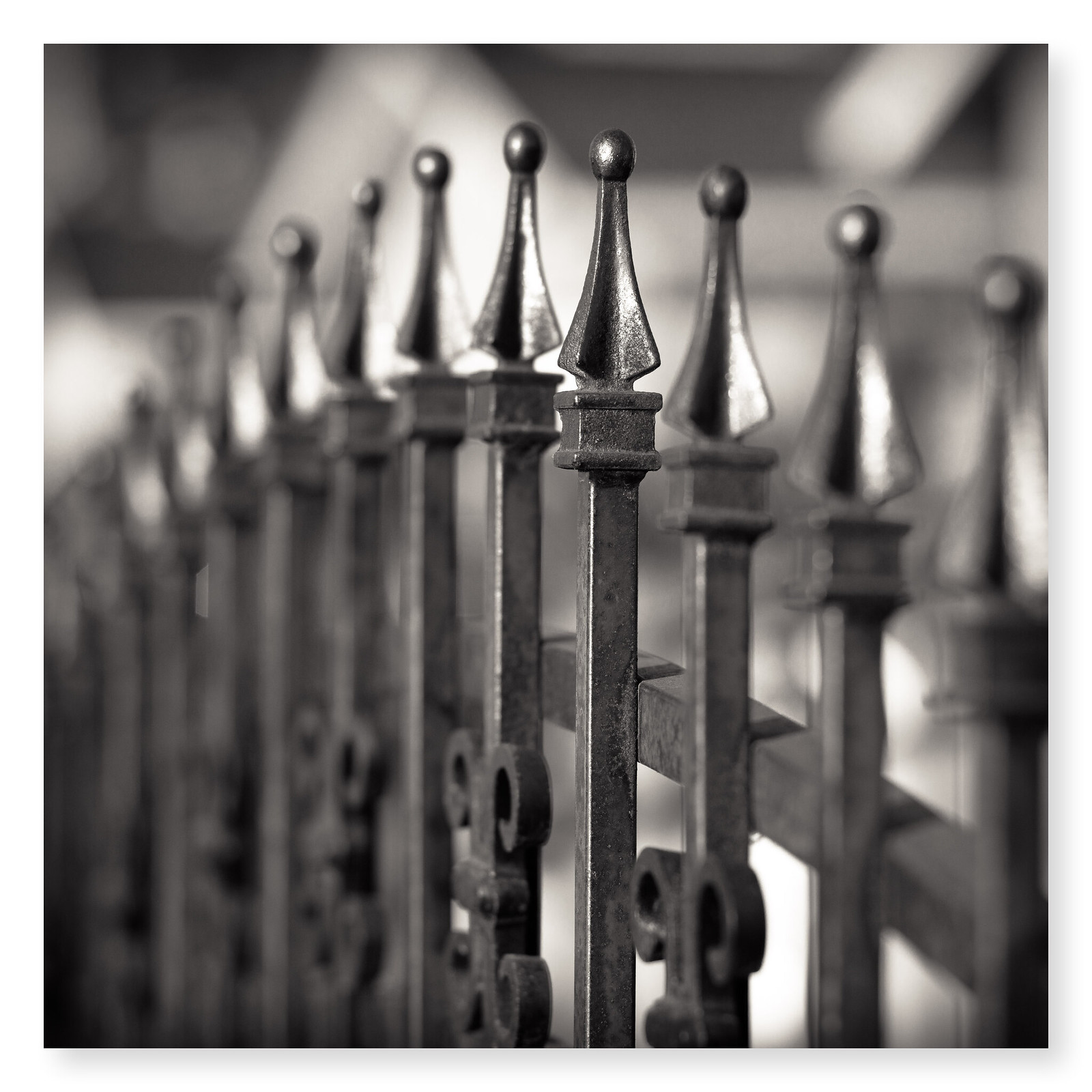 Gate on Iron Fence - Santa Clara 2020
Hasselblad 907x + Leitz Elmarit-R 135mm f/2.8
ISO 800 @ f/5.6 (?) @ 1/4000
As always, it's best to know your goals, experiment to find what works best to meet those goals, and practice a lot. You'll get far more and better photographs doing that vs buying scads of different cameras hunting for the best one.
 Art Shop Mural - San Jose 2020
SuperSense 6/66 Instant Pinhole Camera
Polaroid SX-70 B&W
Bellows position #2
0.12mm pinhole
4 seconds
Scanned with Hasselblad 907x
And every camera, every capture medium, sees differently. Pick whichever ones do the job to meet your vision and your shooting requirements.
🙂
G



