Lens with 3D look

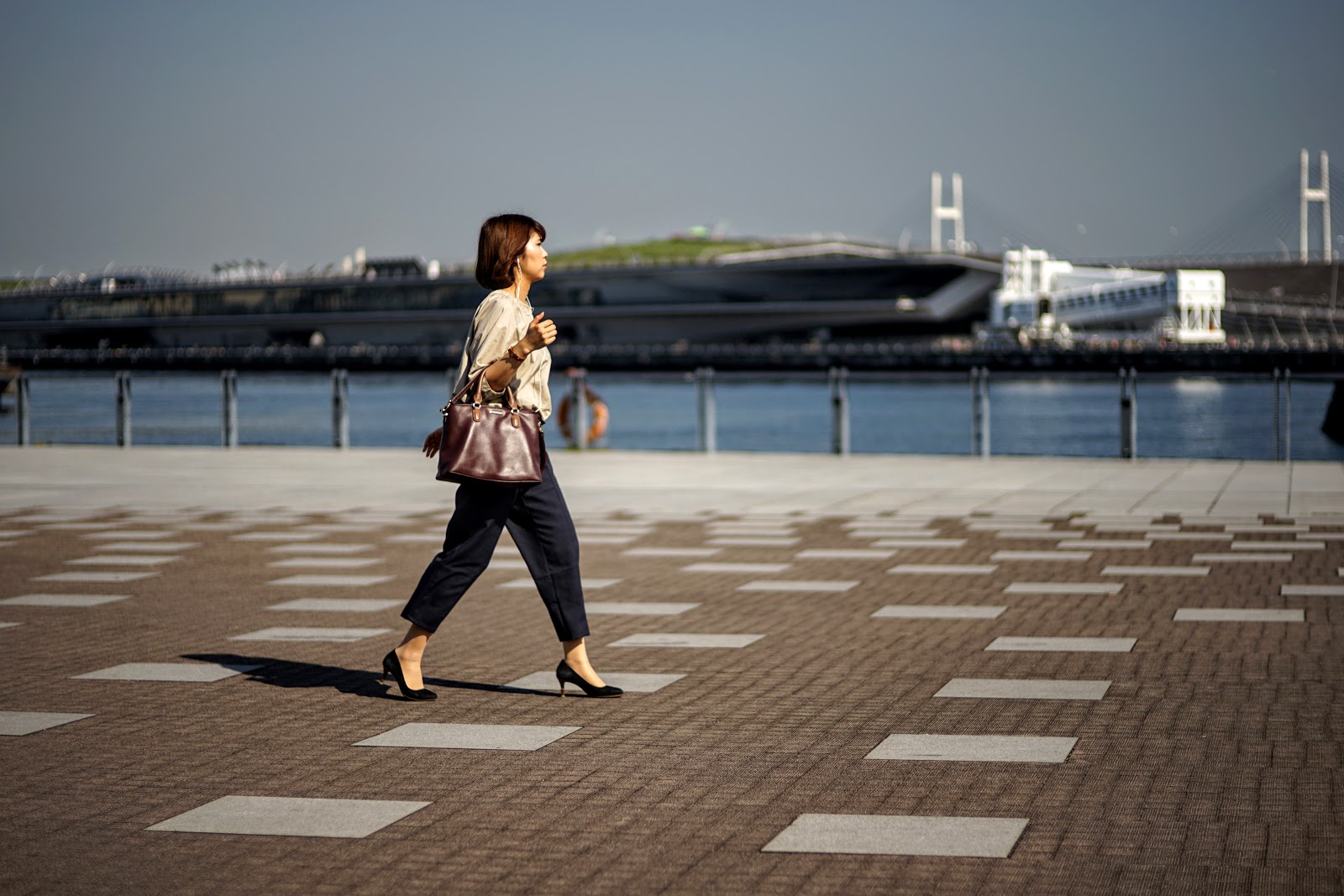
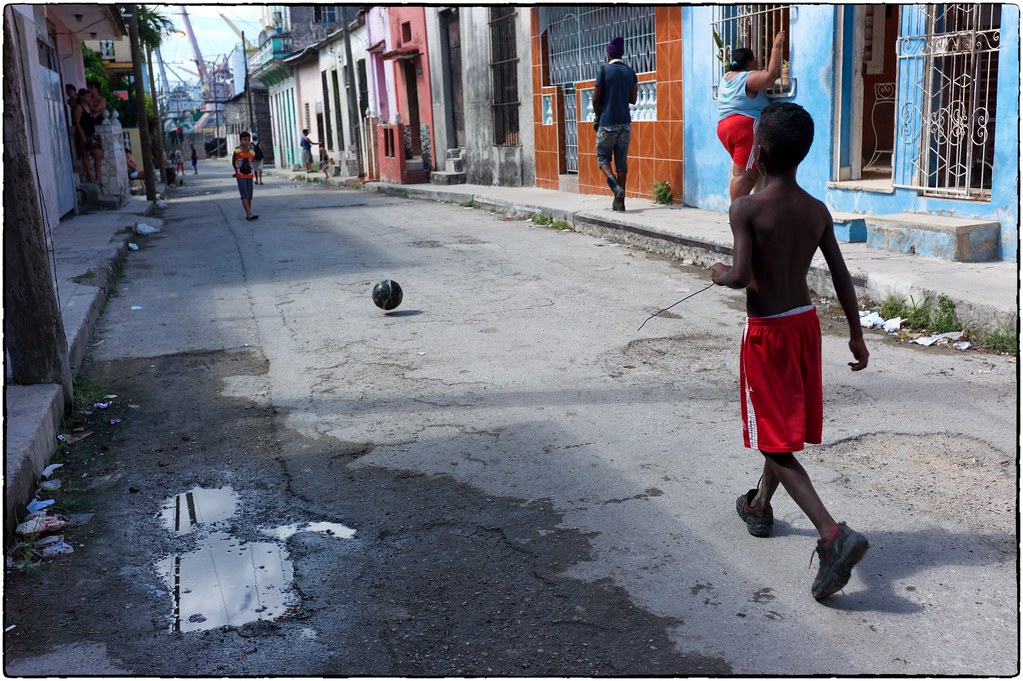
Lots of things control the "3D" effect - lighting, composition, relative sizes, DOF, focal length / camera position.
In this shot, it was governed by lighting and somewhat by DOF.
.
webprint310.jpg

.
Camera was a Panasonic LX3 P&S.
.
 
Right on the money. You're blessed that you get to go every year!

Thank you! I help out where I can. I was part of the temple crew for 2016 and spent 4 months locally in Petaluma and three weeks on-playa building last year's Japanese-style temple.

In the spirit of this thread, here are some examples for what I consider possible candidates for the "3d" look, limiting my selection from last year's behind-the-scenes at Burning Man: building the Temple. None of these images have gone through post-processing.. it's in my backlog of things to do.


For this first example, this is a 16mm lens on a crop body (~24mm) @ 5.6. Deep depth of field, where the "3D" look comes from leading shadow lines and dynamic lighting. This was taken from one of Sony NEX's worst lenses, the 16mm f/2.8.


_DSC3929 by Mathew Gilbuena, on Flickr


This example was taken on a full-frame Nikon 50mm lens @ f/8. Subject separation from the foreground, as well as a deep depth of field (with the background slightly out-of-focus) forces a pop on the subject.


_MDG1348 by Mathew Gilbuena, on Flickr


This last example was again taken with the Nikon 50mm @ f/1.8. Subject separation is achieved with shallow depth of field, strong backlighting, and leading lines uniting the foreground to the background. Areas of dynamic lighting add visual interest to the photo.


_MDG1268 by Mathew Gilbuena, on Flickr


If you're interested in learning more about Burning Man, or watching some of my personal experiences in building last year's Temple, I have a YouTube video available here: https://youtu.be/3BMegqBloUM
 
Not a Leica lens, but the 28mm Nikon 1.4 AFD provides some major 3D poppage.

I agreed.....Nikon 24/1.4 and 28/1.4

From Leica line, I love what 50 Summilux ASPH produced. Especially in wide open.....3D feel

I read in some articles, Micro contrast ( I don't know what the mean) will deliver 3D feel.


~ron~
 
Lots of things like lighting contribute. Karbe designed Leica lenses are made for main subject to be very sharp with rapid fall off before and after which is why the 75 mm APO is brought up above. Mine is the same. Did a focus test one on some street signs at 300 feet and F8. Narrow depth is very noticeable even there.

I think my 50 1.4 , which is the design basis of the 75, has it. Also my 50 2.8 elmar M. Lots of examples on the net from the elmar-M. Start with RF Forum as there is a whole thread
 
If you aren't sure if your example is 3D, then it's not 3D. The effect is very prominent. Also you should be able to see the effect at larger sizes on the web. Smaller sizes with take away that pop but but can add perceived sharpness that could fool someone into thinking the image has a 3D quality.

Typically from high quality, high contrast glass with lots of "micro contrast" for 35mm to pop. MF is a little easier but as noted, that pentax glass really makes an image pop.

Leica M5, Zeiss Biogon 35mm F2 @ 2.2, Portra 400

22735141755_4ee227b9be_b.jpg


Pentax67, SMC 105mm F2.4, Tmax 400 @ 800

26330927106_61fbc0b043_b.jpg
 
I don't have time right now to find examples, but I'll second the Zeiss C Sonnar 50/1.5 and add the Zeiss C Biogon 35/2.8.

I've pretty much only used the Zeiss lenses because of the "3-D" pop.
 
It seems that what is being discussed is more from lighting, aperture, and focus point (depth of field) than anything else?

Photos are 2D reps of a 3D world. Most will have a vanishing point. Subjectively, I understand what people are seeing, but objectively...
 
It's not just lighting or DoF or film format. When I first got my Pentax 67 105mm, I shot a roll of the same film I shot with my Mamiya C330 + 80mm and 55mm of the same subjects at the same location on the same time of day. I could see a notable difference from just looking at the slides (I was shooting trains and train terminals on Provia 400X pushed to 3200).

I shot some negative film using my school's Hasselblad + 80mm and saw a noticeable difference compared to the Mamiya C330's lens just by looking at the negatives, too.

That's not to say the Mamiya 80mm or 55mm aren't good lenses or could never produce the same effect, but it seems the Pentax 105mm and the Hasselblad 80mm did it more consistently and had more of a "3D look" to it even in the same lighting situations.

The "3D look" is definitely a subjective thing, so it's hard to quantify. Not all lenses render images the same way, so naturally some will have this type of look and some won't.

 
It's not just lighting or DoF or film format. When I first got my Pentax 67 105mm, I shot a roll of the same film I shot with my Mamiya C330 + 80mm and 55mm of the same subjects at the same location on the same time of day. I could see a notable difference from just looking at the slides (I was shooting trains and train terminals on Provia 400X pushed to 3200).

I shot some negative film using my school's Hasselblad + 80mm and saw a noticeable difference compared to the Mamiya C330's lens just by looking at the negatives, too.

That's not to say the Mamiya 80mm or 55mm aren't good lenses or could never produce the same effect, but it seems the Pentax 105mm and the Hasselblad 80mm did it more consistently and had more of a "3D look" to it even in the same lighting situations.

The "3D look" is definitely a subjective thing, so it's hard to quantify. Not all lenses render images the same way, so naturally some will have this type of look and some won't.

Subjectively, I agree the Pentax 105mm has a "look", which I notice more with colour film, that is very attractive, but it's not 3D "pop". Don't know what it is with that lens.
 
To me, imparting the the impression of three dimensionality in an image is more of a function of depth of field, layering and the directional quality of the lighting rather than the optical qualities of a particular lens. Some of the samples below that (to me, at least) have a 3-D quality, were taken with a variety of lenses, from Leica and Fuji primes to Nikon and Canon zooms.

6670031745_65d3e9397c_b.jpg


3612523611_71d08780ff_b.jpg


9503977073_092b6b50be_b.jpg


33313046766_4c6bc11836_b.jpg


20718627541_23320713bf_b.jpg


15361010939_9def346130_b.jpg
 
If I look closely at these pistures, there is indeed a clue to 3D in the very high plasticity of the out of focus areas: smooth bokeh is a key, with an evenness into the far corners.
see: Mathew Gilbuena


And Matt Long

It is opposite from the wild (Sonnar-style) bokeh pictures which have a certain appeal in which the 'rings' distract and make the separation impossible.

Still I like to add that one quality of Sonnar-type lenses is nice: the color rendering, which makes many photos 'pop'. What the M9 is known for as well.

Here a two Summi examples on the M240:

Lady bug[


Childs fantasies
 
The childrens toys don't look 3D to me.

The ladybug shot while techincally should look 3D doesnt either because of the distracting background behind it. If you had shot just earlier when her head had leading lines down the street I bet the 3D effect would be more prominent.

I think its been concluded that its not always the lens that makes the 3D look but the shot as well has to be composed and shot in a certain way also.
 
Back
Top Bottom