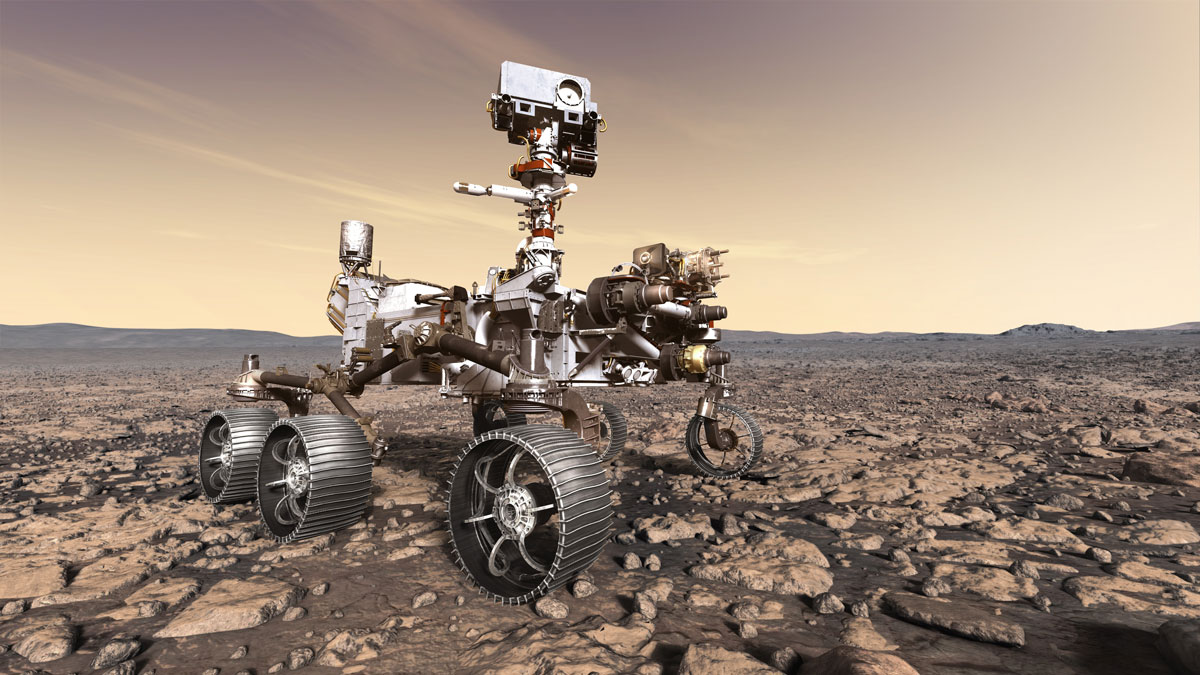
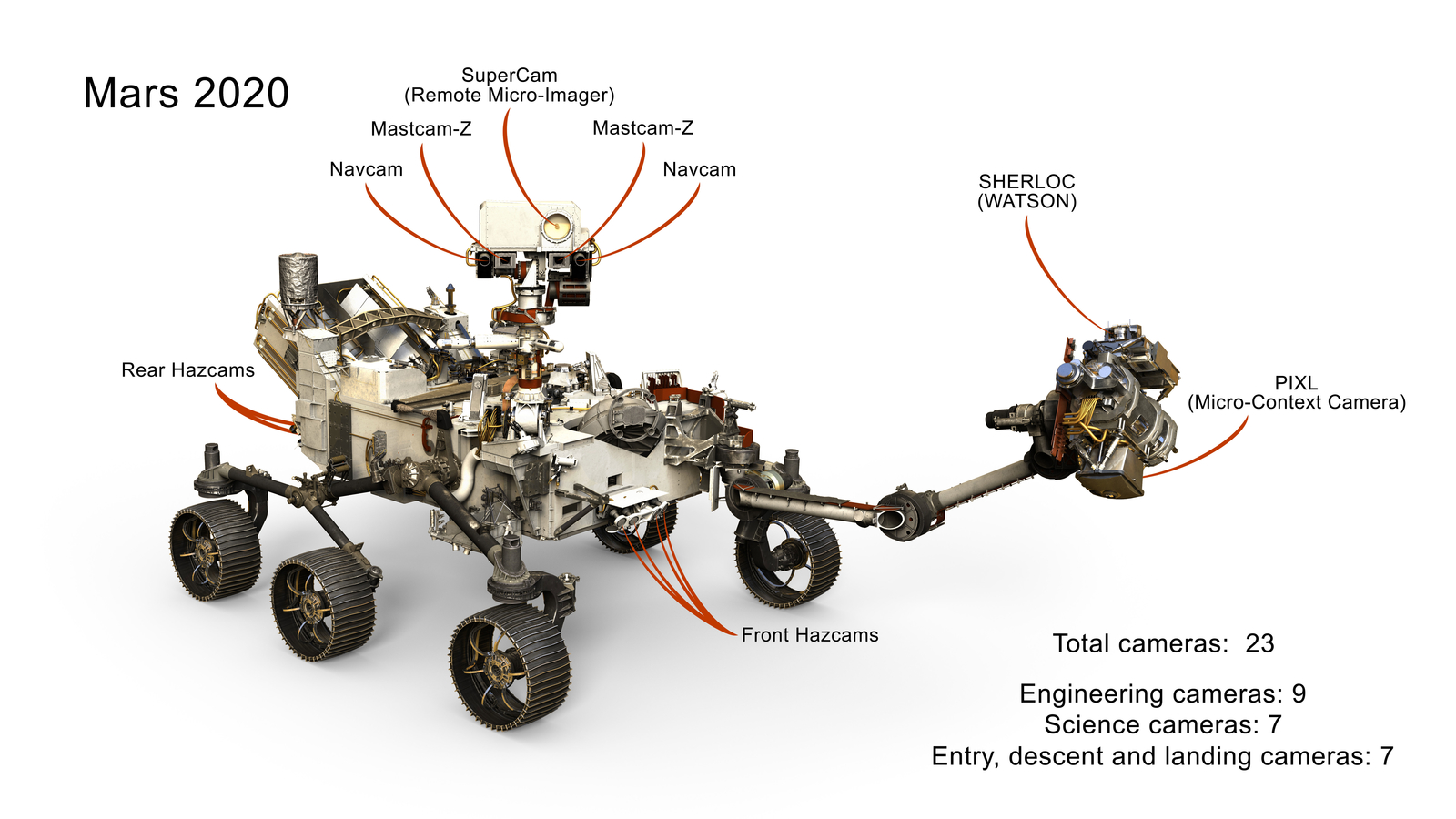
23 cameras but the transmission rate back to earth is only 2 megabits per second.
https://mars.nasa.gov/mars2020/spacecraft/rover/communications/
This link has tech specs for comms but does not explain where the images are stored (eg locally on the rover or sent to orbiter and buffered until xmitted to Earth)
Are all images are transmitted or is there a local algorithm to determine which images are worth sending?
Maybe NASA receives all low-res images and then requests the picks be re-sent as high-res images.
Because you never know what you might find later, after someone else finds something interesting, all image data is transmitted and collected at NASA. Discoveries have happened years after a mission ended, based on re-interpretation of data that some feature was at first overlooked.
NASA archives all the data, it's all just about priceless and represents the product of billions of dollars of research and effort. I remember (in 1983 or so) working on a project to revive some ancient computers/storage systems at JPL with the notion of reading and archiving all the data on mag tape written by/for those systems from missions in the 1960s and 1970s that was deteriorating... The repository of archive data is extremely important!
I don't know what they're doing for the more recent missions on Mars, but for Magellan mission ("Venus RADAR Mapper") the mission profile had the orbiter in a assymetrical profile elliptical orbit. It took data on the fast down-pass north to south, reoriented to put the high-gain antenna back to Earth, uploaded the data take on the slower up-pass south to north, took command telemetry, reoriented to put the high-gain antenna back into data capture mode, took data, etc on every orbit, for however many thousands of orbits were required. The three primary receiving stations on Earth had to capture the data stream as it came in (and as each of them had its window of visibility to the orbiter) and the data had to be re-sorted and combined back into a continuous stream for each orbital pass after that. There was a tremendous amount of work involved to arrange the orbit of the spacecraft along with the timing of the visibility to each of the three receiving stations so that the timing worked out for the capture and upload within the on-board storage capacity, with some small reserve overhead in time and storage.
(I had a small role in helping develop the user command/control interface to the Earth/ground-based spacecraft control application, which is why I know how it was designed to work in such detail.)
That was in the middle 1980s. I'm sure that similar algorithms and data comm techniques are in use between the rovers, the orbiters, and the receiving stations here... The equipment is just much, much more sophisticated now, and can do an even better job.
🙂
G