


Joao
Negativistic forever
Hello
I would like to share a recent finding.
It is common belief that direct sunlight may help prevent the growth of fungi on lenses. Based on that assumption, I have occasionally exposed some lenses to direct sunlight. I had a few ones recently facing direct sunlight, diaphragm wide open - and I left the rear plastic caps on in two of them (a Jupiter 135 and a Granit zoom) .
I found these tracks in the inside surface of the rear caps; I believe they are related to the apparent movement of the sun – the strong light, amplified/focused by the lenses, melted the surface of the plastic .The different positions of the tracks was probably due to different positions of the lenses in different days.
Image here
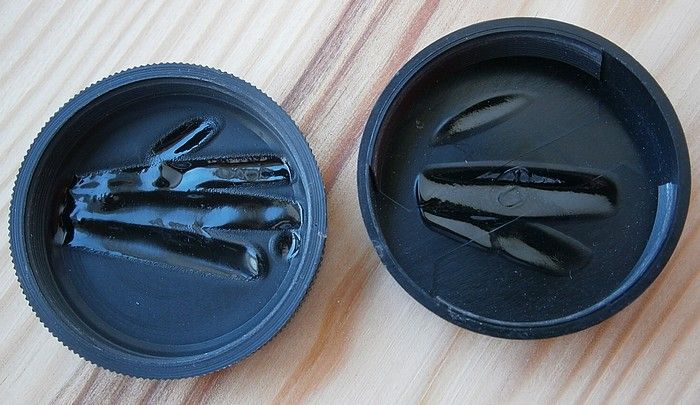
I can imagine the potential damage caused to shutter curtains if this was done with lenses attached to the cameras. Or the damage caused to any combustible surface left behind the lenses.
And a question: is there any solid evidence that this method is really valuable to prevent the development of fungi ??
Speculation (not really important) : could this be considered in some way a physical (not chemical) form of photography ?
Regards
Joao
I would like to share a recent finding.
It is common belief that direct sunlight may help prevent the growth of fungi on lenses. Based on that assumption, I have occasionally exposed some lenses to direct sunlight. I had a few ones recently facing direct sunlight, diaphragm wide open - and I left the rear plastic caps on in two of them (a Jupiter 135 and a Granit zoom) .
I found these tracks in the inside surface of the rear caps; I believe they are related to the apparent movement of the sun – the strong light, amplified/focused by the lenses, melted the surface of the plastic .The different positions of the tracks was probably due to different positions of the lenses in different days.
Image here
I can imagine the potential damage caused to shutter curtains if this was done with lenses attached to the cameras. Or the damage caused to any combustible surface left behind the lenses.
And a question: is there any solid evidence that this method is really valuable to prevent the development of fungi ??
Speculation (not really important) : could this be considered in some way a physical (not chemical) form of photography ?
Regards
Joao


