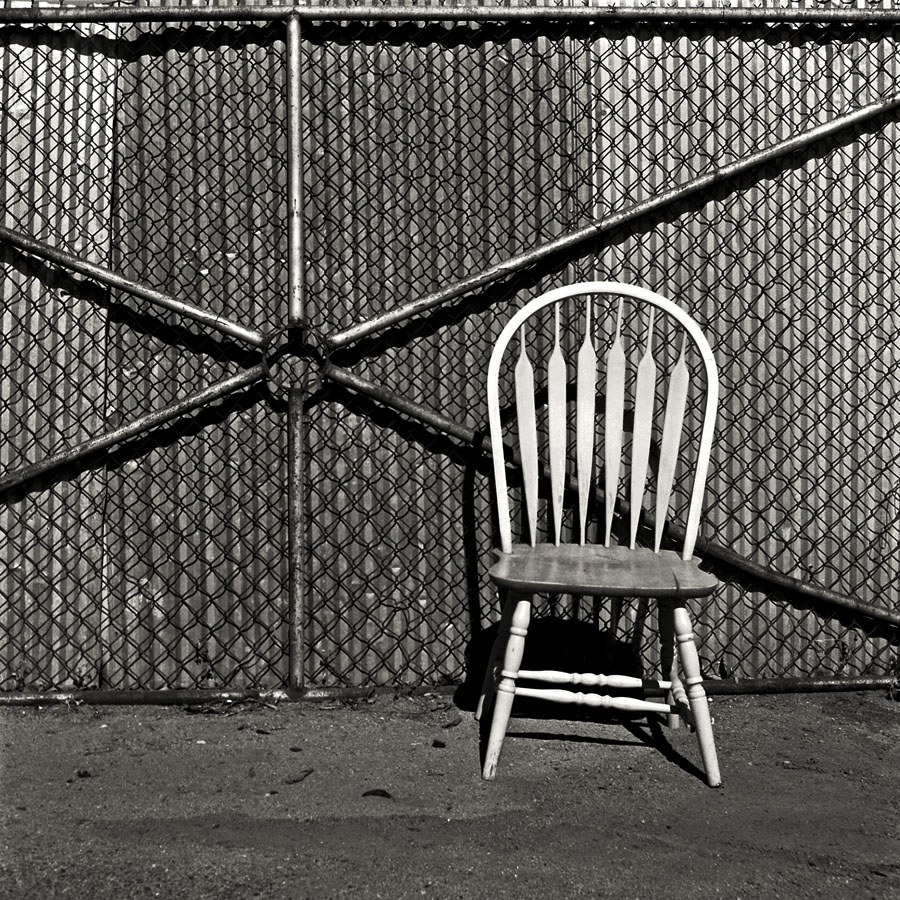
The Thornton Formula(s) work well with older type film. On"thin-emulsion" film I find that you have to let it "stew" for a bit longer in the B-bath. I suspect that it doesn't pick up enough of A to continue developing fully in B.
Some years ago I tried it with the venerable XX and it looks very good. It can create some fogging and I usually add some Benzotriazole to it to clear it.
Nice shots of the Babbage engine - as someone who does machining - it is pretty awe-inspiring to look at the complexity and the gearing. Hmm, would make one hell of a motor for a M2!
I keep reading and hearing that the subject formula is best for older films, but I haven't seen anything really to bear that out. Now, I haven't been at this all that long so I don't want to set myself up as any sort of expert. I frankly don't think I have a critical enough eye to tell the difference between Thornton's at 4 minutes or Thornton's at 5 minutes...at least not on rolls of film shot at different times and places with all the other variables involved.
Anyway...there are examples in "Edge of Darkness" of the formula used with TXP-320 that are very good. In fact, if I remember correctly, Thornton stated in that book that "his" formula was just a tweaking of older formulas to make them more appropriate for modern films.
Here are a couple of my own 4x5 TXP-320 films done in Thornton's.
Again, I'm not being sarcastic when I say I am no expert. I was drawn to Thornton's because I'm lazy and sloppy and highly distractable. I needed something that would be forgiving of time and temperature. I've gotten results good enough at least to make me happy using it with Efke 25, Efke 50, Efke 100, PanF, FP4, TXP-320 and Tri-X. I've used it on 35mm, 127, 120 and 4x5 film as well. All without regard to temperature or precise timing, all at between 4 and 4.5 minutes (ok, I once went to 6 minutes on the A bath because I forgot).