Steveh
Well-known
Hi all - thought I'd share my first experiences with this much maligned film, which have really surprised me (in a good way 😀 ).
I really got into photography in 2004 or so, so most of my experience is "post digital", but I've been getting more and more into film and rangefinders over the last year or so, and took the plunge with doing my own processing a few months back. Since then I've been wrestling with HP5 and Tri-X in ID-11 and Tmax developer, trying to get decent scans (Coolscan V) and not really succeeding.
So yesterday I thought I'd give some Tmax 400 a spin in a couple of hours I had spare after a meeting - it was a proper sunny day, unusually for this summer, so I rated the film at 200 and processed it for 5 minutes in Tmax developer. All shots were taken on a Contax G1 on fully auto, no exposure compensation and no exposure lock - just point and shoot.
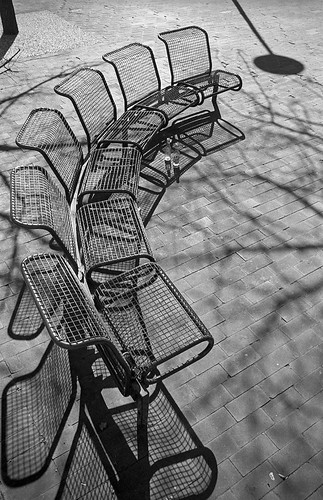
Well - the results were something of a revelation to me - no muddy tones, no blown highlights (if you ignore the bottom right cornder of shot 2, which doesn't count because the soldier was in deep shade!), just tight grained, beautifully scannable negatives, and a full tonal range. Some samples, quick scans with a small S curve and some edge burning in Photoshop:
Marble Arch:

The man who guards Prince Charles' back door:

Lost coat:

The Canadian War Memorial in Green Park

I have to say I think I might be on to something here - these negs are so much easier to work with in a digital workflow than anything else I've produced to date, and the tonality to me looks great. And if I want bigger grain and higher contrast I can add it in Photoshop - don't write this film off completely folks!
Next roll I'm going to push it to 800 and see what happens then 😱
Cheers, S
I really got into photography in 2004 or so, so most of my experience is "post digital", but I've been getting more and more into film and rangefinders over the last year or so, and took the plunge with doing my own processing a few months back. Since then I've been wrestling with HP5 and Tri-X in ID-11 and Tmax developer, trying to get decent scans (Coolscan V) and not really succeeding.
So yesterday I thought I'd give some Tmax 400 a spin in a couple of hours I had spare after a meeting - it was a proper sunny day, unusually for this summer, so I rated the film at 200 and processed it for 5 minutes in Tmax developer. All shots were taken on a Contax G1 on fully auto, no exposure compensation and no exposure lock - just point and shoot.
Well - the results were something of a revelation to me - no muddy tones, no blown highlights (if you ignore the bottom right cornder of shot 2, which doesn't count because the soldier was in deep shade!), just tight grained, beautifully scannable negatives, and a full tonal range. Some samples, quick scans with a small S curve and some edge burning in Photoshop:
Marble Arch:
The man who guards Prince Charles' back door:
Lost coat:
The Canadian War Memorial in Green Park
I have to say I think I might be on to something here - these negs are so much easier to work with in a digital workflow than anything else I've produced to date, and the tonality to me looks great. And if I want bigger grain and higher contrast I can add it in Photoshop - don't write this film off completely folks!
Next roll I'm going to push it to 800 and see what happens then 😱
Cheers, S
Last edited: