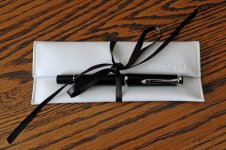
The Parker 51 is a bulletproof pen. It is the complete opposite of the Montblanc. Instead of a brittle plastic that can be polished to a high gloss (Montblanc), the Parker 51 uses plexiglass. Parker noted how durable and resistant the material was, as it was used for fighter aircraft canopies. The feed is also plexiglass as well as the material in the ink sac, if you have an aerometric version.
The reason for the use of plexiglass and for shielding the nib (14K gold) was all due to a new ink that Parker introduced at the time called "Superchrome". It sounds like the name of a slide film.
However, it had metallic dyes in it which are corrosive, and an extremely high alkalinity which would corrode most metals except gold. There was also a high content of alcohol in it (isopropyl alcohol), which would dissolve most other plastics beside plexiglass. The purpose was to create an ink that "Writes dry with wet ink". The ink would chemically react with the cellulose fibers in paper, so that the ink trace was permanent even before the ink dried. The alcohol speeded up the drying. Thus, the hooded nib to minimize drying on the nib itself.
The pen is thus a fantastic performer even today. It revolutionized people's conception of what a fountain pen could be, in the same way that the Leica M3 changed the view of a rangefinder 35mm camera from the Barnack designs.
The ink, however, is highly corrosive. If you happen to run across any vintage ink bottles that turn out to be Parker Superchrome, NEVER USE IT IN ANY PEN! It will ruin virtually any pen you put it into. Parker stopped making it after 10 years.
As a side note, the Hero factory in Shanghai was originally Parker's. That's why the Chinese Hero 616 looks so much like a Parker 51.