Why are M-mount lenses so expensive?

Do Leica users really not trust the rangefinder to accurately focus, and so check that the distance scale indicates focusing is at their expectations? If it is not to their expectations, do they really make focus adjustments based on their expectations in the normal course. This is the first time I have heard of this behavior.

Checking depth of field and setting aperture accordingly is an entirely different matter.

Yes, let's turn this into a "Leica users" behavior issue. Us and Them.

Maybe that's the subtext of the whole thread? These ignorant Leicaphiles are unjustly driving up the cost of lenses! This injustice must be addressed!

BTW in answer to your question, no they don't. But Godfrey takes his position very seriously. 🙂
 
Yes, let's turn this into a "Leica users" behavior issue. Us and Them.

Maybe that's the subtext of the whole thread? These ignorant Leicaphiles are unjustly driving up the cost of lenses! This injustice must be addressed!

BTW in answer to your question, no they don't. But Godfrey takes his position very seriously. 🙂


That was not the purpose of this thread.
If you guys need to pi$$ on each others shoes, please start your own thread.
I asked nothing about Leica brand lenses. I asked about M-mount lenses (specifically naming Konica and Minolta).

Again ..... thanks to everyone who contributed their thoughts on my questions. 🙂
 
That was not the purpose of this thread.
If you guys need to pi$$ on each others shoes, please start your own thread.
I asked nothing about Leica brand lenses. I asked about M-mount lenses (specifically naming Konica and Minolta).

Again ..... thanks to everyone who contributed their thoughts on my questions. 🙂

"I like using Hexanons and Rokkors... "

OK, there's an answer the Rokkor 28mm f/2.8 SLR lens dates from the 1970's but the M mount Hexanon dates from 2000 from memory. So both would be second-hand and so are worth what people will pay for them, the age is probably the main driving factor.

Regards, David
 
That was not the purpose of this thread.
If you guys need to pi$$ on each others shoes, please start your own thread.
I asked nothing about Leica brand lenses. I asked about M-mount lenses (specifically naming Konica and Minolta).

Again ..... thanks to everyone who contributed their thoughts on my questions. 🙂


50cron v4 by unoh7, on Flickr

Size matters 😉

Not to mention it's the strongest 50 in the 20th century.

A steal really at todays prices.
 
Can you explain the higher precision requirement? I wasn't aware of this and now it makes sense why, for example, a ZM lens costs more than a ZF lens, relatively speaking. Especially given the fact that ZF lenses have things like auto aperture stop down etc.

Also, given the higher precision required, am I mistaken to think that RF lenses suffer from focus shift more than SLR lenses?

SLR lenses have more parts, but in a couple of senses, they don't have to be quite so critical in build.

1. Rangefinders require transmitting distance data to the viewfinder through a lot of linkages. At the lens, this requires two helicoids or grinding a spiral exterior cam that is just right. It only takes 0.02mm of RF displacement to screw up the focus. Contrast an SLR lens, which is focused by a human or a computer through the lens and is essentially self-correcting. Modern SLR lenses don't have hard infinity stops, either.

2. The glass in RF lenses has to be made within a tighter range because it has to be matched to the helicoids. Leica, for example, used to have several different focusing mechanisms for each model lens, each tied to a 1/10mm deviation in focal length (and this showed up as a two-digit number near the back of the lens). I don't know how they do it now, whether it's just a lot of QC rejection or whether the numbers are hidden inside. Konica definitely had different helicoids with the 90/2.8 M lens because they are mentioned in the service manual.

3. Modern SLR lenses don't rely on the smoothness of microscopic helicoid grooves or precise greasing because they either use a clutch to manually focus or - in the case of focus-by-wire - don't have any connection between the focusing ring and the focusing mechanism.

SLR lenses shift focus too, the extent depending on the vintage of the lens. RF lenses are generally less corrected, so they shift more. But I suspect that the micro-adjustment you see on DSLRs has something to do with either focus shift or focal length variations.

Dante
 
SLR lenses have more parts, but in a couple of senses, they don't have to be quite so critical in build.

1. Rangefinders require transmitting distance data to the viewfinder through a lot of linkages. At the lens, this requires two helicoids or grinding a spiral exterior cam that is just right. It only takes 0.02mm of RF displacement to screw up the focus. Contrast an SLR lens, which is focused by a human or a computer through the lens and is essentially self-correcting. Modern SLR lenses don't have hard infinity stops, either.

2. The glass in RF lenses has to be made within a tighter range because it has to be matched to the helicoids. Leica, for example, used to have several different focusing mechanisms for each model lens, each tied to a 1/10mm deviation in focal length (and this showed up as a two-digit number near the back of the lens). I don't know how they do it now, whether it's just a lot of QC rejection or whether the numbers are hidden inside. Konica definitely had different helicoids with the 90/2.8 M lens because they are mentioned in the service manual.

3. Modern SLR lenses don't rely on the smoothness of microscopic helicoid grooves or precise greasing because they either use a clutch to manually focus or - in the case of focus-by-wire - don't have any connection between the focusing ring and the focusing mechanism.

SLR lenses shift focus too, the extent depending on the vintage of the lens. RF lenses are generally less corrected, so they shift more. But I suspect that the micro-adjustment you see on DSLRs has something to do with either focus shift or focal length variations.

Dante

Thank you for the detailed reply.
 
Slow 50s are a actually the bext example of the OP's question. I like the several Summicrons that I tried (all but the APO). But this lens felt just as good:


There are some RF lenses that are not cheaper in M mount compared to the equivalent (if available) for an SLR, like the VM 21/1.8, 50/1.1, etc.

Roland.

Roland it is huge in comparison, you will need another thick adapter. I don't know how many nikkor SLR lenses you have had apart but they show increasingly cheap materials.

You may not see the performance difference, but many tests show how spectacular the v4 cron is:
f22.jpg


F2 is slow? LOL

The SLR market was highly competitive with many price wars. Yes, there are a few SLR lenses built really well. They are the exceptions.

Canon nFD, later minolta, all have very cheap lens bodies. I have bought them. I have them lying around. They are junk compared to a minolta CLE.

I do have a few like this which really are well built:

300/2.8 ais by unoh7, on Flickr

and that lens is at level of performance you see in the best M lenses as well.

On the other hand, the legendary nikkor 28/2 AIS, which I bought believing all the hype, proved no match for RF 28s on digital. My nikkors which really are super sharp, 180 ED, 55 micro, have harsh bokeh.

My RF nikkors and Canon RF lenses have gorgeous builds.


DSC00169 by unoh7, on Flickr


DSC08099 by unoh7, on Flickr

I do also have a CY 100300 Zeiss with a wonderful build. It cost a grand.

In comparison this is a piece of crap:

Minolta_MD_200_f4.sf-2 by unoh7, on Flickr

M lenses are more expensive because far more care went into their production, at multiple levels, in general, and often many less were made. The M mount is alive and very healthy in both film and digital. Most SLR mounts are long dead. Yes there are some SLR exceptions--wonderful lenses really well made--most are also expensive, but a few are cheap. In general SLR lenses are overpriced for what you get.

The real mystery is why most of the SLR lenses on Ebay are for sale at all.
 
(bolded)
By contrast, most RF camera users are familiar with focusing using the split image focusing system and then glancing at the distance scale to see whether the set distance is close to expectations. They often check the DoF at that point, set the aperture and adjust the focus point a little bit in the normal course of using the camera.

What?? I've used RF cameras for a few years and have never done this. What's the point of using them if you have to do all these gymnastics just to get a sharper image???
 
What?? I've used RF cameras for a few years and have never done this. What's the point of using them if you have to do all these gymnastics just to get a sharper image???

+1. Been using RF for like 20 years and always trust the split image. The moment they start to fail, up for adjustment they go.

Regards.

Marcelo
 
I'm with you guys, but back to the topic:

Anybody who built a lens for the M mount knew right away against which lenses theirs would be compared. A lousy M lens is the way reputations were/are destroyed.

On the other hand how did Nikon and Canon build their reputations? Fantastic lenses in LTM and Contax RF mount.


Japan Camera by unoh7, on Flickr

If you are not Leica and you make a M lens, it's for prestige, to try to beat the germans. This landmark article was the most spectacular payoff--though in LTM. The early Nikkors really were superior. But Mandler was not standing still.

When I started buying older lenses I had no clue, and I just assumed the big SLR lenses HAD to be better. How could such a tiny toy be a great lens? Live and learn 😉
 
Roland it is huge in comparison, you will need another thick adapter. I don't know how many nikkor SLR lenses you have had apart but they show increasingly cheap materials.

- That particular Nikkor 50/1.8 in my picture is very well built, actually.

- If you read http://photo.net/leica-rangefinders-forum/00Xqaq, for instance, you'll see that some Leica lenses are built quite cheaply, which doesn't make them cheaper in the used market (the "bokeh king" runs north of US 1500 these days, used).

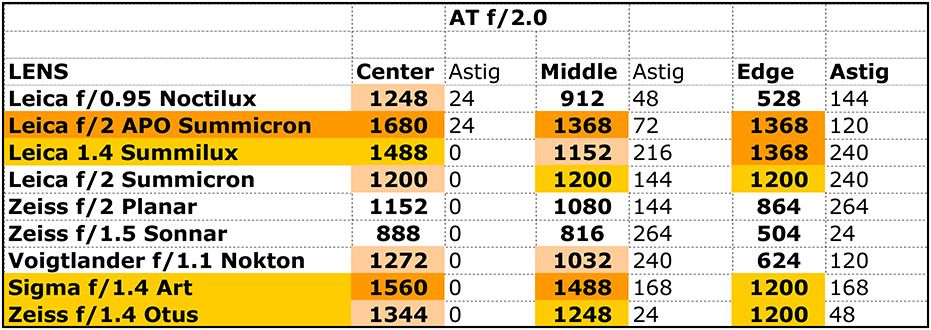
- Or compare the Noctilux 50/1.0 in your table to the Nokton 50/1.1, price difference is not justified by performance, arguably the Nokton is technically better.

- Checkout prices of the LTM Ultron 35/1.7, used today, vs. new when it came out. Why did it's value increase over the few years of its lifetime ? Is it well built ?

I'm the last to tell anybody not to buy a lens, however expensive - that's up to the buyer and none of my business. My point is that one can not in a general way correlate price to performance and/or build quality. Digital Leicas and full-frame mirror-less have only driven M/LTM lens prices up because there is more demand. Basic capitalism.

Roland.
 
SLR lenses have more parts, but in a couple of senses, they don't have to be quite so critical in build.

1. Rangefinders require transmitting distance data to the viewfinder through a lot of linkages. At the lens, this requires two helicoids or grinding a spiral exterior cam that is just right. It only takes 0.02mm of RF displacement to screw up the focus. Contrast an SLR lens, which is focused by a human or a computer through the lens and is essentially self-correcting. Modern SLR lenses don't have hard infinity stops, either.

2. The glass in RF lenses has to be made within a tighter range because it has to be matched to the helicoids. Leica, for example, used to have several different focusing mechanisms for each model lens, each tied to a 1/10mm deviation in focal length (and this showed up as a two-digit number near the back of the lens). I don't know how they do it now, whether it's just a lot of QC rejection or whether the numbers are hidden inside. Konica definitely had different helicoids with the 90/2.8 M lens because they are mentioned in the service manual.

3. Modern SLR lenses don't rely on the smoothness of microscopic helicoid grooves or precise greasing because they either use a clutch to manually focus or - in the case of focus-by-wire - don't have any connection between the focusing ring and the focusing mechanism.

SLR lenses shift focus too, the extent depending on the vintage of the lens. RF lenses are generally less corrected, so they shift more. But I suspect that the micro-adjustment you see on DSLRs has something to do with either focus shift or focal length variations.

Dante
Which also explains why Leica has always been very careful to keep the construction of M lenses in their own hand, with very few exceptions, but had no problems with farming out the manufacturing and sometimes even design of quite a few R lenses to firms like Minolta, Sigma and Kyocera.
 
What?? I've used RF cameras for a few years and have never done this. What's the point of using them if you have to do all these gymnastics just to get a sharper image???

+1. Been using RF for like 20 years and always trust the split image. The moment they start to fail, up for adjustment they go.

Note that no amount of calibrating rangefinder and focusing mount will solve a focusing problem if it is caused by a lens which exhibits focus shift.

A relatively small number of modern lenses exhibit significant focus shift (like the Zeiss "C Sonnar 50mm", some Ultrons and Noktons, a couple others).. Use these lenses and you'll find yourself making focus adjustments based on a priori knowledge of their behavior when you're not focusing them at working aperture with an electronic viewfinder. Or you'll be content with their slightly unfocused results and call it 'character'.

Most rangefinder camera users with lenses like these know exactly what I'm talking about. If you don't, it means you've been lucky enough to have only lenses without focus shift.

G
 
- That particular Nikkor 50/1.8 in my picture is very well built, actually.

- If you read http://photo.net/leica-rangefinders-forum/00Xqaq, for instance, you'll see that some Leica lenses are built quite cheaply, which doesn't make them cheaper in the used market (the "bokeh king" runs north of US 1500 these days, used).

- Or compare the Noctilux 50/1.0 in your table to the Nokton 50/1.1, price difference is not justified by performance, arguably the Nokton is technically better.

- Checkout prices of the LTM Ultron 35/1.7, used today, vs. new when it came out. Why did it's value increase over the few years of its lifetime ? Is it well built ?

I'm the last to tell anybody not to buy a lens, however expensive - that's up to the buyer and none of my business. My point is that one can not in a general way correlate price to performance and/or build quality. Digital Leicas and full-frame mirror-less have only driven M/LTM lens prices up because there is more demand. Basic capitalism.

Roland.

Hi Roland,

TY for link. It shows that not every M lens is as nicely put together as others. I think when a generalization is involved there are going to be exceptions, and I'm sure that's not the only one.

Prices for M/LTM lens rise and fall independently. 35 FLE 28Cron 50Lux Asph and many others are way down. 75 Lux 8-element cron 50 DR and others seem quite steady.

The M9 is actually going up, or so it seems LOL.

You are right, the essential element is demand, and that's based on multiple factors. You can bet prices would be higher if the Stock Sony A7 cameras shot M wides better.

But I think the fundamentals basically stand overall. The M lenses are very compact, generally good in performance and construction, the mount is alive and well, and many of these lenses were made in limited numbers. Less than 2000 Canon LTM 85/1.5 lenses made. The 85/1.8 also not many, and these are not even the rare ones.

As I noted above there are beautiful SLR lenses. Yours may well be one. 🙂

Happy New Year to you and all the best.

PS I was checking the other thread on the same lens, one that had been dropped in 2011
http://www.l-camera-forum.com/topic/167432-summicron-35-mm-in-pieces/

index.php


No excuse for the bad build but this guy, at the urging of several members, did send in the old lens and for a fee Leica completely rebuilt it, so though it cost some money, the guy ended up with a brand new "king of bokeh" which is probably worth a little extra.
I pmed him:
"They fixed the 35/2 and send it back as new. Communication with Leica was perfect. It cost me about 700 euro's but sold it for much more."
Try that after you drop an old Rokkor 😉

Thanks to you Roland, I will be avoiding that particular M lens, unless I can buy the "new" one. And there are others with plastic as well. Caveat Emptor 🙂

 
Back
Top Bottom